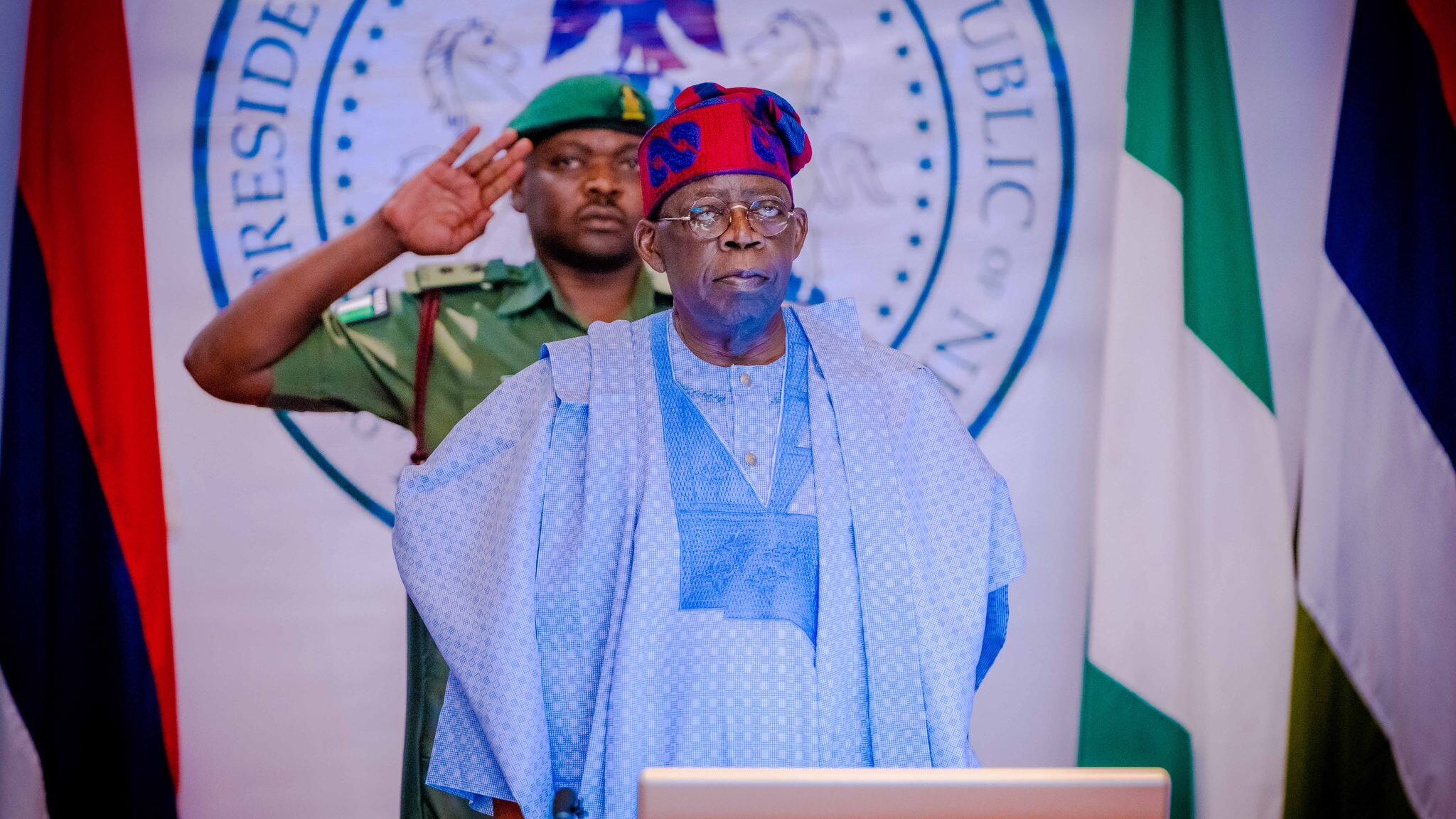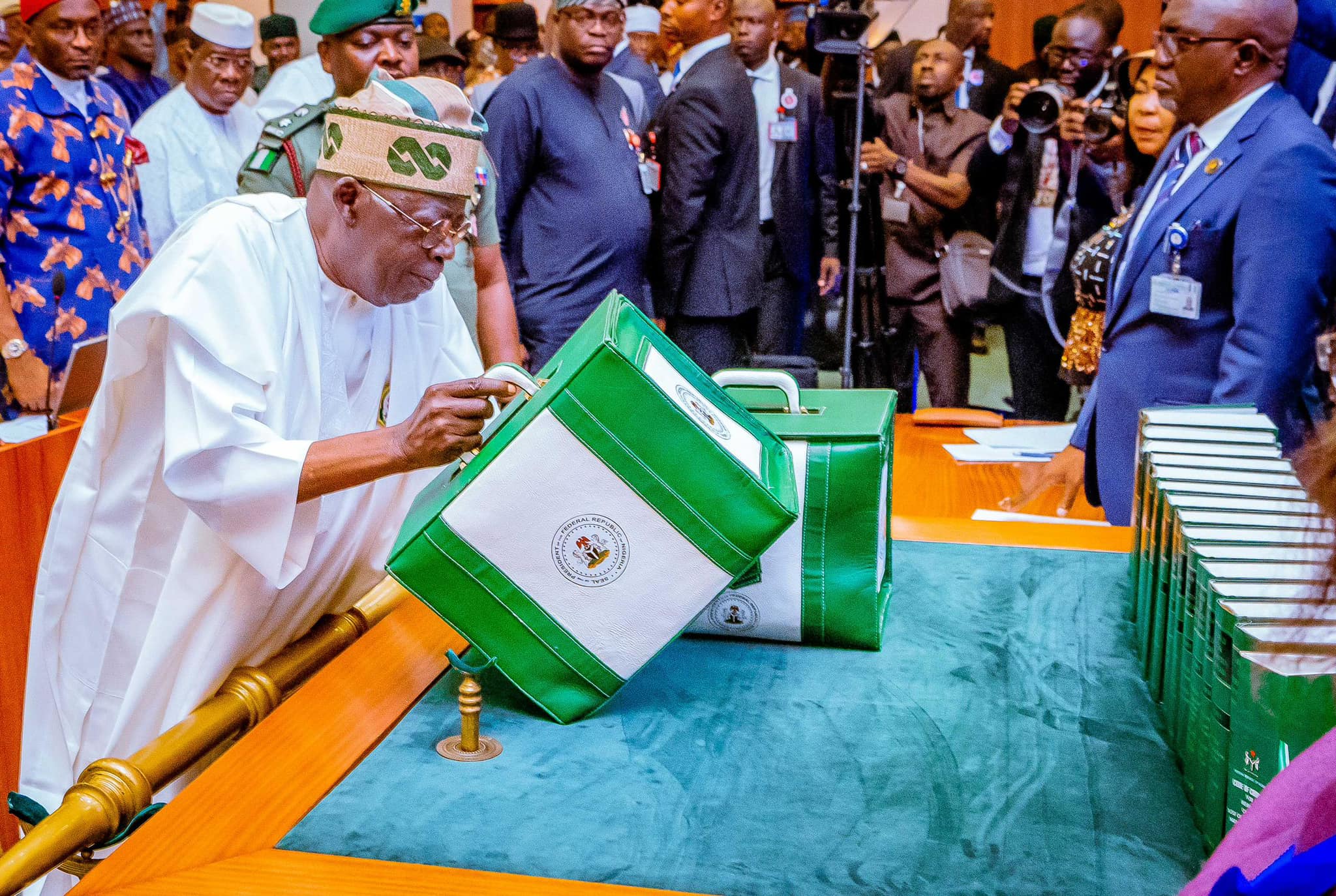
President Bola Tinubu has presented a ₦58.47 trillion budget proposal for the 2026 fiscal year to a joint session of the National Assembly, with capital recurrent (non-debt) expenditure put at ₦15.25 trillion.
The president laid the proposal before lawmakers on Friday, setting capital expenditure at ₦26.08 trillion and fixing the crude oil benchmark at $64.85 per barrel. He said total revenue is expected to stand at ₦34.33 trillion, while projected expenditure is ₦58.18 trillion, including ₦15.52 trillion allocated for debt servicing. This leaves a deficit of ₦23.85 trillion, representing 4.28 per cent of the nation’s Gross Domestic Product.
According to the proposal, crude oil production is benchmarked at 1.84 million barrels per day, with an exchange rate of ₦1,400 to the dollar for the 2026 fiscal year.
In sectoral terms, defence and security attracted the highest allocation at ₦5.41 trillion, followed by infrastructure with ₦3.56 trillion. Education received ₦3.52 trillion, while the health sector was allocated ₦2.48 trillion. The budget is titled “Budget of Consolidation, Renewed Resilience and Shared Prosperity”.
Addressing the lawmakers, the former Lagos State governor said the figures presented were not “just accounting lines”.
“They are a statement of national priorities,” the president said, adding, “We remain firmly committed to fiscal sustainability, debt transparency, and value-for-money spending.”
The presentation comes amid growing security concerns across the country, with incidents of mass abductions and violent crimes dominating public discourse. Tinubu told the joint session that security remains central to development, stressing that his administration is strengthening the Armed Forces, deploying intelligence-driven policing, enhancing border security and expanding the use of technology-enabled surveillance alongside community-based peacebuilding initiatives.
“We will invest in security with clear accountability for outcomes—because security spending must deliver security results,” he said.
“To secure our country, our priority will remain on increasing the fighting capability of our armed forces and other security agencies by boosting personnel and procuring cutting-edge platforms and other hardware.”
Reflecting on key reforms since assuming office in May 2023, Tinubu recalled the removal of fuel subsidy and the floating of the naira, measures that triggered a sharp rise in inflation. More than two years later, he maintained that the economy has stabilised and expressed confidence that Nigerians would soon experience tangible improvements.
“I commend the understanding, sacrifice, and resilience of our people,” he said. “My administration remains committed to easing the burdens of transition and ensuring that the benefits of reform reach households and communities across the Federation.”
The president also underscored plans to expand critical infrastructure and strengthen food security, describing them as strategic steps capable of unlocking private investment. He said agricultural reforms would focus on financing, mechanisation, irrigation, climate-resilient practices, storage, processing and stronger agro-value chains, with the aim of reducing post-harvest losses, raising farmers’ incomes and building a more diversified and resilient economy.
What you should know
The 2026 budget proposal reflects the Tinubu administration’s attempt to balance economic reforms with social and security pressures.
With security taking the largest share, the government is signalling that stabilising the country remains a top priority. The assumptions on oil price, production and exchange rate suggest a cautious outlook shaped by global uncertainties and domestic realities.
While debt servicing continues to consume a significant portion of spending, the emphasis on infrastructure, education, health and agriculture indicates a push to lay foundations for long-term growth.
The success of the budget will largely depend on revenue performance, fiscal discipline and the ability to translate allocations into real improvements for citizens.