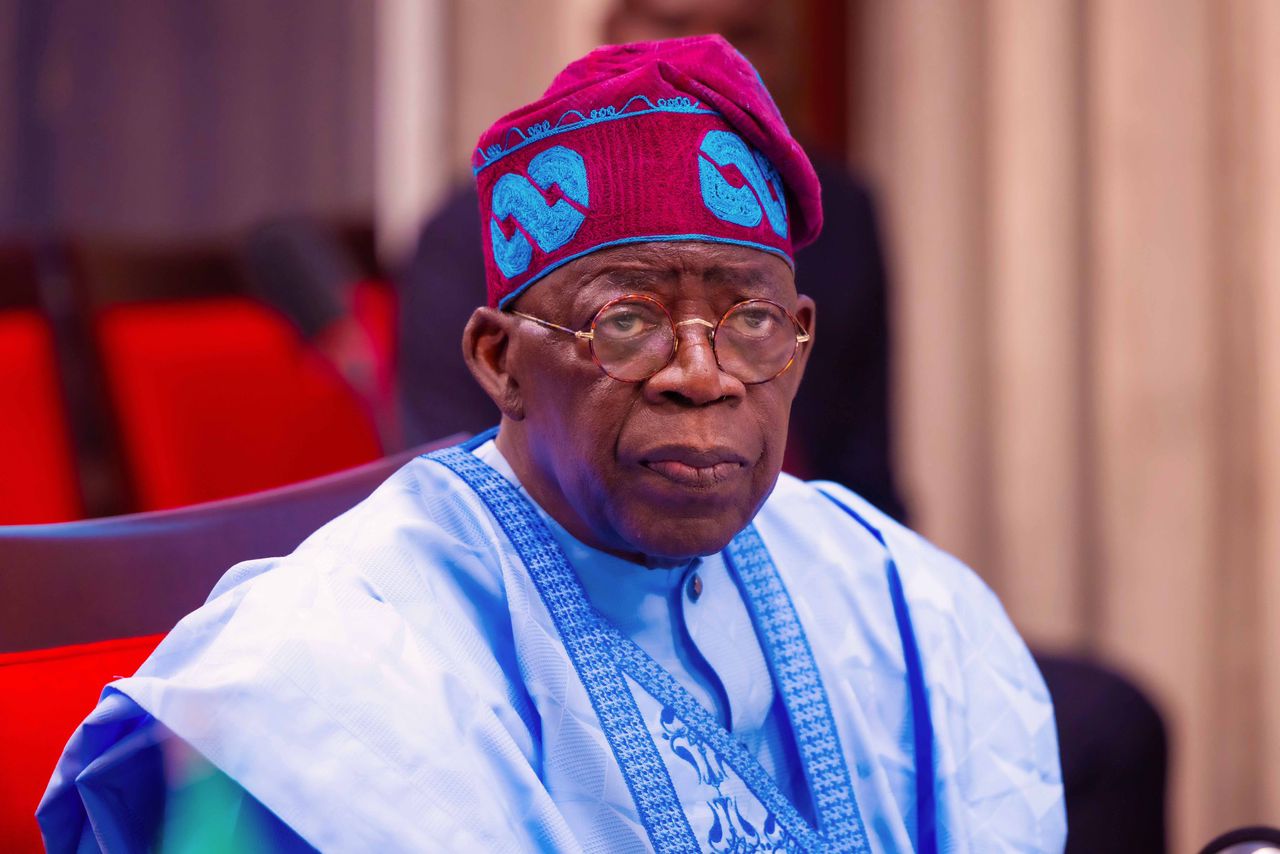
President Bola Tinubu has mandated a sweeping review of revenue retention practices across Nigeria’s major income-generating agencies, signaling an intensified push to unlock fiscal resources critical to achieving the nation’s ambitious $1 trillion economy target by 2030.
The directive, announced on Wednesday following a Federal Executive Council meeting at the State House, specifically targets deduction structures at the Nigerian National Petroleum Company Limited (NNPCL) and extends to four other key revenue agencies: the Federal Inland Revenue Service, Nigeria Customs Service, Nigerian Upstream Petroleum Regulatory Commission, and the Nigerian Maritime Administration and Safety Agency.
Finance Minister Wale Edun, speaking to reporters after the council session, revealed that the president has ordered a particular reassessment of NNPCL’s substantial 30 percent management fee and 30 percent frontier exploration deduction authorized under the Petroleum Industry Act. These deductions, which significantly impact federal revenue flows, have come under scrutiny as the administration seeks to maximize available resources.
The comprehensive review forms part of Tinubu’s broader economic restructuring agenda, which the president characterizes as essential reforms that have “dismantled economic distortions, restored policy credibility, and enhanced resilience.”
The administration credits these measures with creating what officials describe as a more transparent and competitive business environment that has begun attracting both domestic and international investment across critical sectors, including infrastructure, oil and gas, healthcare, and manufacturing.
Central to the president’s economic vision is Nigeria’s goal of reaching a $1 trillion economy within six years—an ambitious target that requires sustained annual growth of at least seven percent beginning in 2027. Tinubu has elevated this objective beyond mere economic metrics, describing it as “a moral imperative” and “the surest path to tackling poverty.”
The administration’s confidence in its economic trajectory draws support from the International Monetary Fund’s July 2025 Article IV report, which Tinubu cited as endorsing Nigeria’s current economic direction and emphasis on investment-led growth. This international validation provides crucial backing for the government’s reform agenda amid ongoing economic challenges.
Finance Minister Edun outlined encouraging macroeconomic trends that support the administration’s optimistic outlook, pointing to exchange rate stabilization, moderating inflation, rising government revenues, and debt-to-GDP ratios moving within acceptable parameters. However, he acknowledged a critical constraint: public investment represents merely five percent of Nigeria’s Gross Domestic Product, primarily due to insufficient savings.
“Savings are the foundation of investment,” Edun emphasized, explaining that the president’s directive aims to rapidly increase public sector savings by optimizing revenue collection and retention practices. This becomes particularly urgent given what officials describe as current global liquidity constraints that limit external financing options.
The revenue optimization strategy operates alongside the administration’s grassroots-focused Renewed Hope Ward Development Programme, a comprehensive initiative spanning all 8,809 wards nationwide. This program represents the government’s commitment to micro-level poverty reduction through collaboration with state governments, local authorities, and private sector partners.
During Wednesday’s council meeting, Edun presented two significant financing proposals that illustrate the administration’s infrastructure priorities: a $125 million Islamic Development Bank facility for Abia State road projects covering 161 kilometers of critical routes in Umuahia and Aba, and an ambitious plan to address N4 trillion in outstanding electricity sector obligations.
The electricity debt resolution, described as a phased approach coordinated by the Debt Management Office, represents a crucial step toward stabilizing Nigeria’s power sector. Officials expect the first phase implementation within three to four weeks, addressing longstanding financial bottlenecks that have hampered electricity supply reliability.
The Economic Management Team, under Edun’s leadership, now faces the task of translating the president’s directive into actionable recommendations for Federal Executive Council consideration. The team’s proposals will likely shape Nigeria’s fiscal policy direction as the country navigates between ambitious growth targets and the practical constraints of current economic realities.
This latest initiative underscores the Tinubu administration’s continued focus on structural economic reforms, building on earlier measures that have aimed to address longstanding inefficiencies in Nigeria’s revenue generation and management systems. The success of these efforts will prove crucial to achieving the government’s transformative economic vision while addressing the immediate needs of Nigeria’s 220 million citizens.
WHAT YOU SHOULD KNOW
President Tinubu has ordered a comprehensive review of how Nigeria’s major revenue agencies—particularly NNPCL—retain and deduct funds from government coffers. The move specifically targets NNPCL’s 30% management fee and exploration deductions under the Petroleum Industry Act.