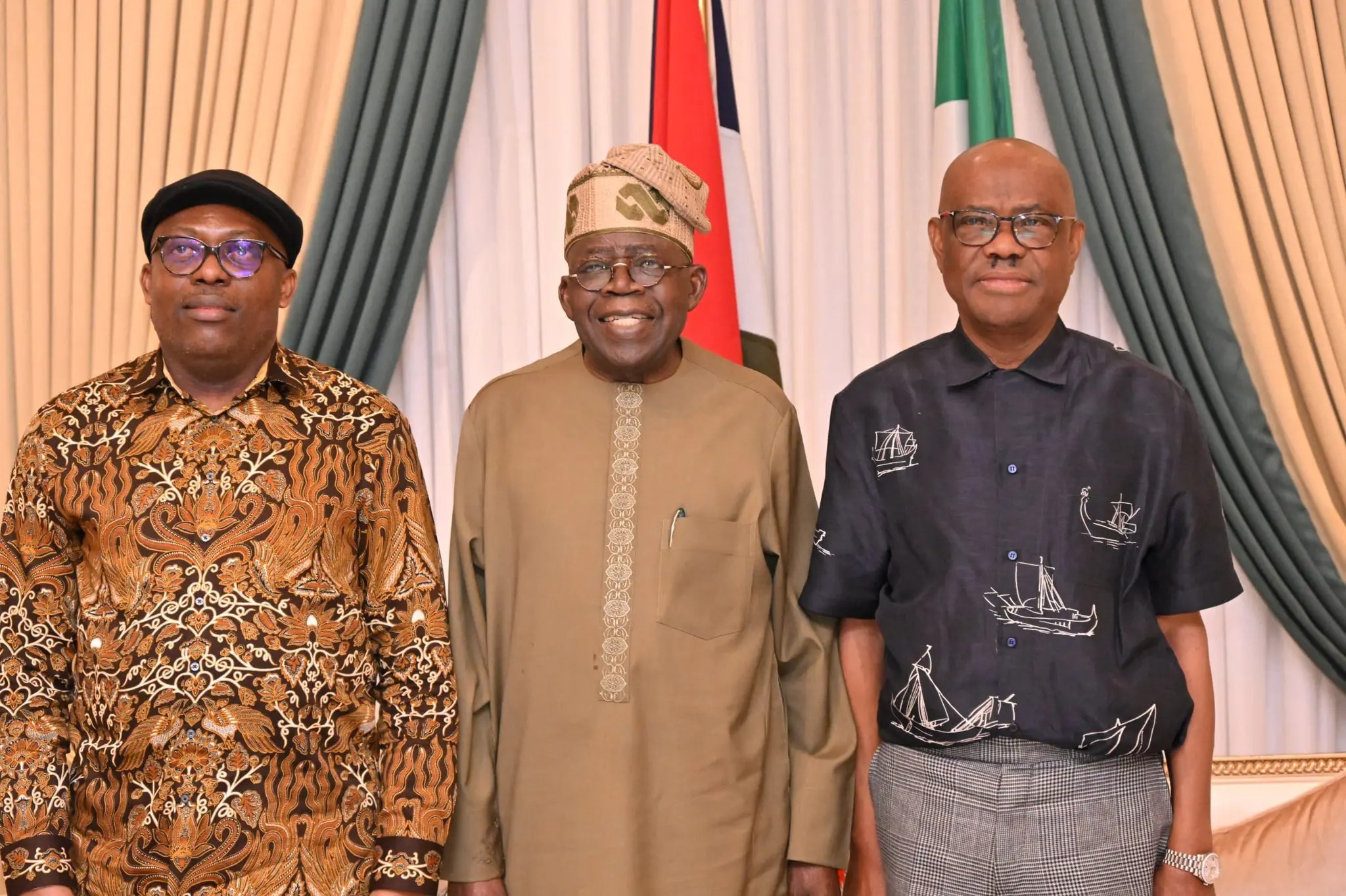
President Bola Ahmed Tinubu on Thursday convened a crucial meeting at the Presidential Villa with key figures at the heart of Rivers State’s prolonged political crisis — Governor Siminalayi Fubara, Minister of the Federal Capital Territory Nyesom Wike, Speaker of the Rivers State House of Assembly Martins Amaewhule, and several lawmakers.
The high-stakes meeting, held behind closed doors, appears to mark a pivotal turn toward reconciliation, following months of intense political unrest that culminated in the declaration of a state of emergency in the oil-rich state on March 18.
This marked the first public appearance of Governor Fubara with the President since his suspension alongside his deputy, Ngozi Odu, and the state assembly members, all of whom were sidelined in the wake of escalating political tensions.
The crisis, rooted in a power struggle between Governor Fubara and his predecessor, Wike — now FCT Minister — had fractured governance and drawn widespread national condemnation.
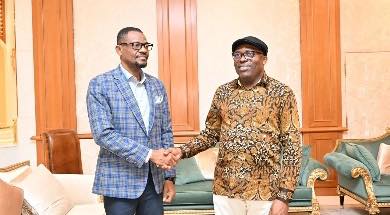
According to reliable sources from Channels Television, President Tinubu used the Thursday meeting to foster dialogue and bridge the bitter divide between the opposing camps. Though no formal communique was released by the presidency or the attendees, images and short video clips from the gathering depicted a notably different tone: Wike and Fubara were seen smiling and walking together, with Amaewhule and other lawmakers in tow — a stark contrast to the heated exchanges of the past two years.
Observers see the meeting as a potential first step toward lifting the emergency rule in the state. President Tinubu had previously justified the suspension of elected officials and the imposition of emergency rule on the grounds of their failure to resolve internal disagreements, citing Section 305 of the 1999 Constitution. A retired naval officer, Vice Admiral Ibok-Ete Ibas (rtd), was appointed by Tinubu as sole administrator of the state — a move that sparked outrage and legal debate.
The March 18 suspension drew widespread criticism from prominent national figures, legal professionals, and civil society groups. Critics — including former Vice President Atiku Abubakar, former governor Rotimi Amaechi, former Anambra governor Peter Obi, constitutional lawyer Femi Falana (SAN), and bodies such as the Nigerian Bar Association (NBA), the Labour Party (LP), the Peoples Democratic Party (PDP), and the Pan Niger Delta Forum (PANDEF) — argued that the President’s actions were unconstitutional and undermined democratic institutions.
The heart of the dispute lies in a fierce political rift between Wike and his former protégé, Fubara, who succeeded him in 2023. Their fallout became public as the Rivers Assembly, largely aligned with Wike, moved to impeach Fubara over alleged defiance of a Supreme Court judgment and governance concerns. The acrimony escalated, leaving Rivers State in political limbo and prompting federal intervention.
President Tinubu’s intervention — both the declaration of emergency and now this meeting — underscores his attempts to stabilise the state, especially given its strategic importance in Nigeria’s oil economy. The rare face-to-face encounter between all major players, coupled with their visibly cordial body language, has sparked cautious optimism that an end to the political impasse may be in sight.
This marks only the second time in modern Nigerian history that a President has invoked emergency powers to suspend elected officials — the last being President Goodluck Jonathan’s 2013 decision to impose emergency rule on the insurgency-ravaged states of Borno, Yobe, and Adamawa.
As Rivers residents await official statements and the possible lifting of emergency rule, Thursday’s meeting may yet be remembered as a significant turning point in the state’s fraught political saga.
What You Should Know
Thursday’s meeting marked the first public appearance of Governor Fubara with President Tinubu since the latter suspended the governor and imposed emergency rule in March 2025.
Though no formal announcement has been made, the smiling images and gestures of unity between Wike, Fubara, and Amaewhule hint at a possible resolution of the crisis. The political feud in Rivers had stalled governance and drawn national outcry.