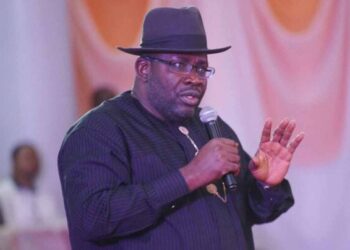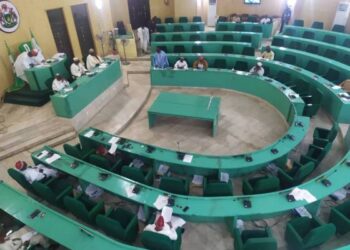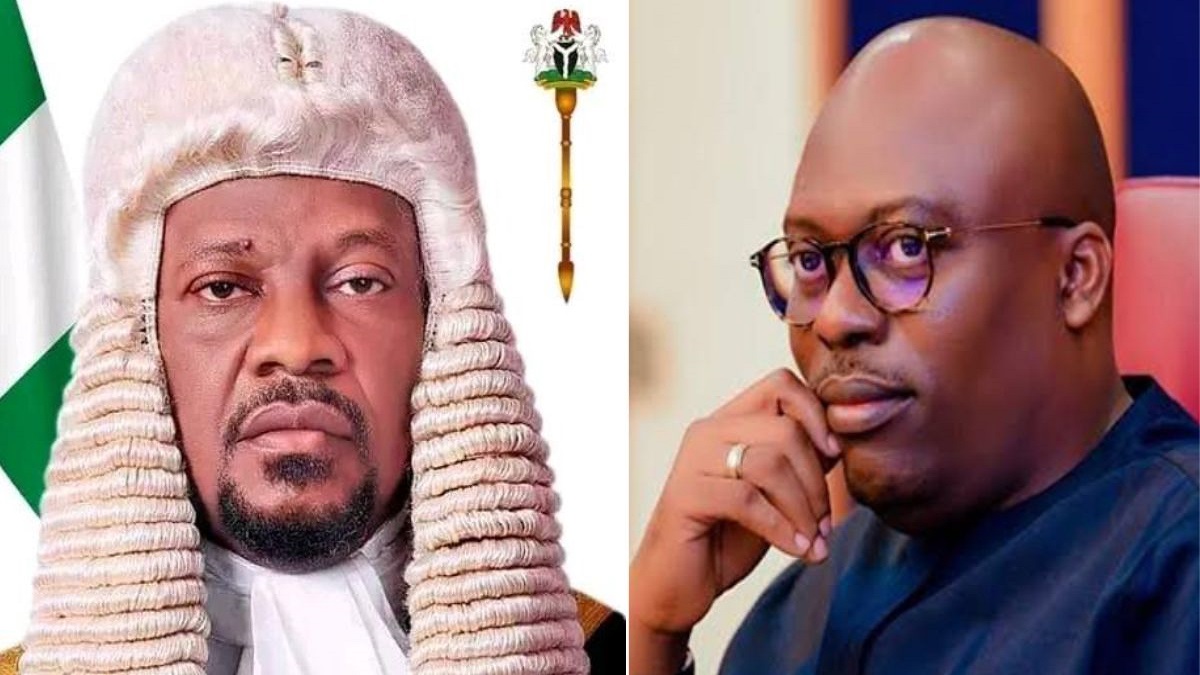
A new wave of political tension is building in Rivers State, with Speaker of the State House of Assembly, Martin Amaewhule, accusing Governor Siminalayi Fubara of deliberately reopening old wounds in the state’s prolonged political conflict.
Amaewhule directly challenged the governor’s public stance, rejecting Fubara’s assertion that he had been unable to hold a meeting with the Assembly members.
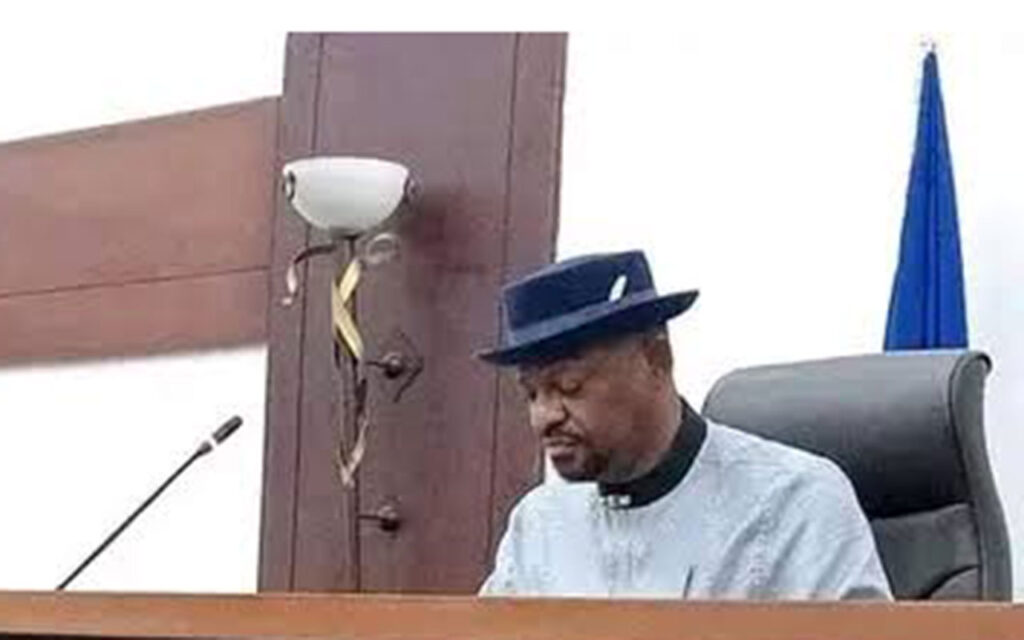
“It’s important I make this clarification, first and foremost the governor lied when he said he hasn’t been able to meet with members of the Rivers State House of Assembly,” Amaewhule said.
He added that shortly after the emergency rule was lifted, the FCT Minister convened a meeting with the governor and key Assembly leaders, confirming his own attendance to counter the governor’s claims.
Fubara Denies Rift With Lawmakers
During the commissioning of the extended and dualised 28.4-kilometre Ahoada–Omoku Road on Wednesday, Governor Fubara dismissed ongoing talk of political division, insisting that stories of a strained relationship between him and lawmakers—whether at the federal or state level—were inaccurate.
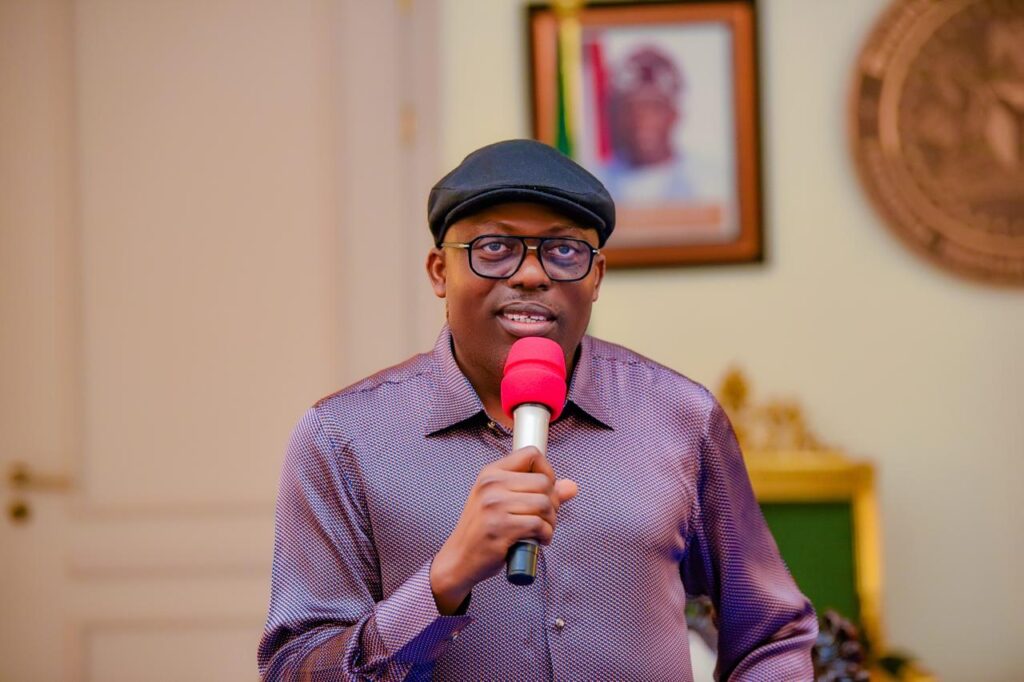
The governor, who defected from the PDP to the APC on Tuesday, said arrangements for a meeting with the lawmakers were already in motion.
He explained that the gathering was expected to be organised by his predecessor and current FCT Minister, Nyesom Wike, alongside elder statesman Ferdinand Alabraba and several other political figures.
According to him, anyone claiming he avoided the lawmakers or rejected suggestions related to them “is not telling the truth.”
Speaking to supporters at the event, Fubara maintained that his move to join the APC was driven not by personal ambition but by a commitment to stabilising the state and ensuring lasting progress.
He urged Rivers residents to stay committed to peaceful politics, support the President, and rally behind the state government.
Lingering Political Dispute
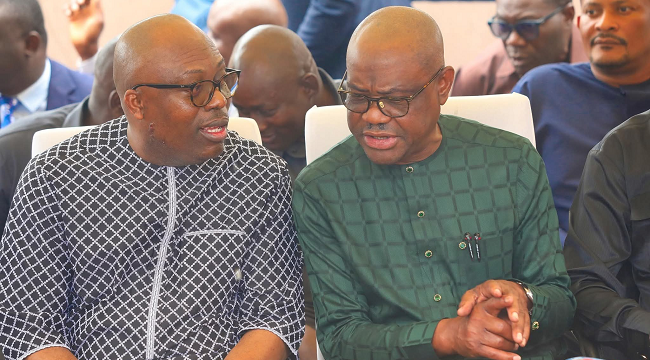
Governor Fubara, who succeeded Nyesom Wike after the 2023 election, has spent much of his tenure at odds with his predecessor in a battle for control over the state’s political machinery.
The crisis escalated in March 2025 when President Bola Tinubu, citing constitutional powers under Section 305, declared a state of emergency in Rivers State, suspending the governor, his deputy, and all members of the House of Assembly for an initial six-month period.
Tinubu argued that he could not stand by while tensions intensified and immediately appointed retired naval chief Vice Admiral Ibok-Ete Ibas (rtd) as the sole administrator of the state.
Path to Reconciliation

By June, Tinubu brought the major power players—Fubara, Wike, Amaewhule, and other lawmakers—to a meeting aimed at mending ties.
Shortly after, Fubara and Wike appeared together publicly at an event in the state, signalling gradual healing.
On September 17, Tinubu formally lifted the emergency rule, explaining that fresh intelligence showed a renewed willingness among stakeholders to restore democratic governance.
He described the development as a positive turn for both the state and the nation.
What You Should Know
The political struggle in Rivers State has revolved around a fierce contest for political dominance between Governor Siminalayi Fubara and his predecessor, Nyesom Wike.
Their rivalry spilled into the state legislature, prompting President Tinubu to impose emergency rule in March 2025. Though the emergency was lifted after renewed peace efforts, tensions have resurfaced, with Speaker Martin Amaewhule accusing Fubara of being dishonest about his engagement with lawmakers.
The renewed exchanges raise concerns about the fragile political stability in Rivers State, even as the governor insists he is committed to peace and progress.