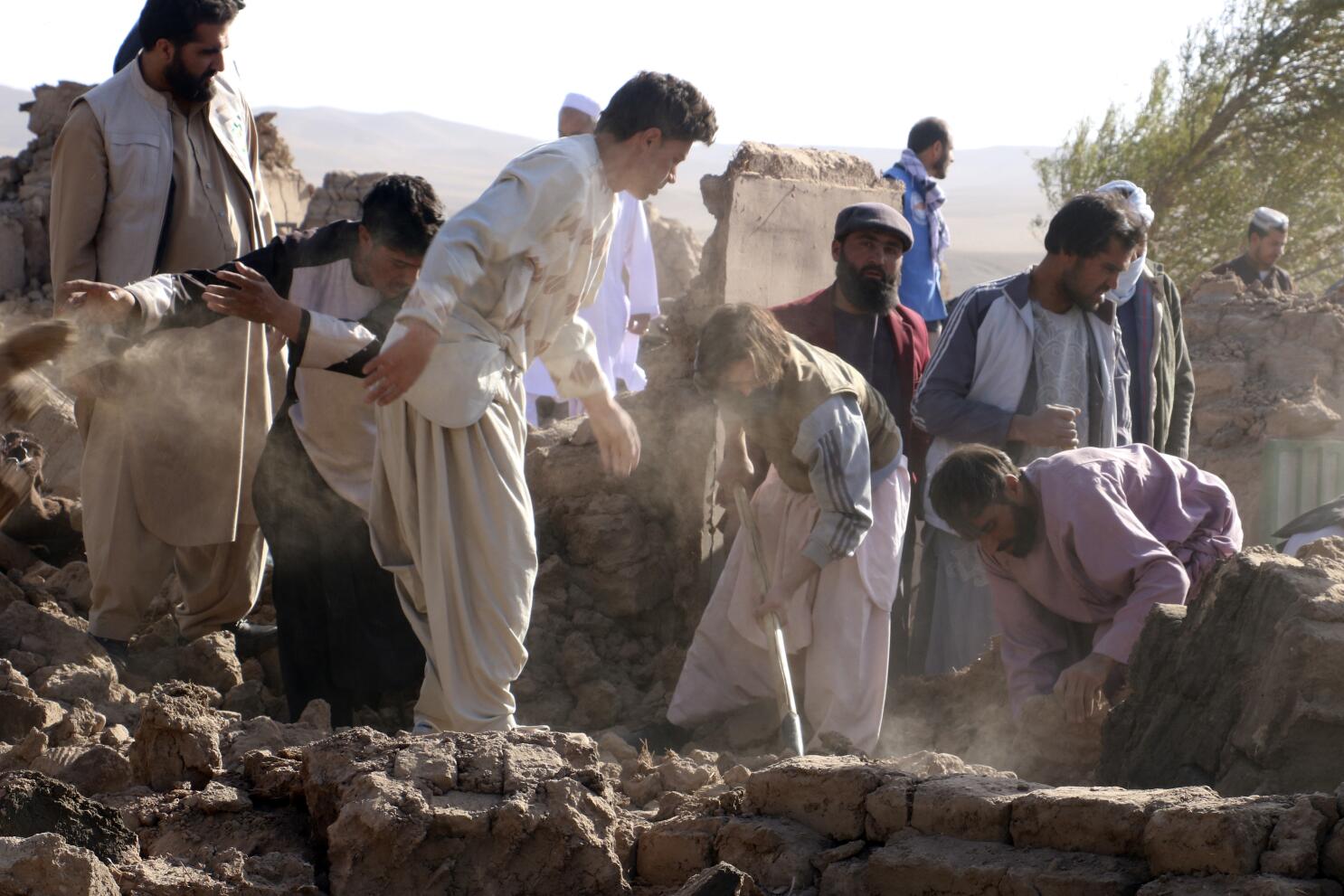
At least 20 people have been killed in northern Afghanistan following a powerful earthquake that struck overnight, authorities confirmed on Monday.
The 6.3-magnitude tremor, which hit near the city of Mazar-i-Sharif, comes only months after another devastating quake left the country struggling to recover.
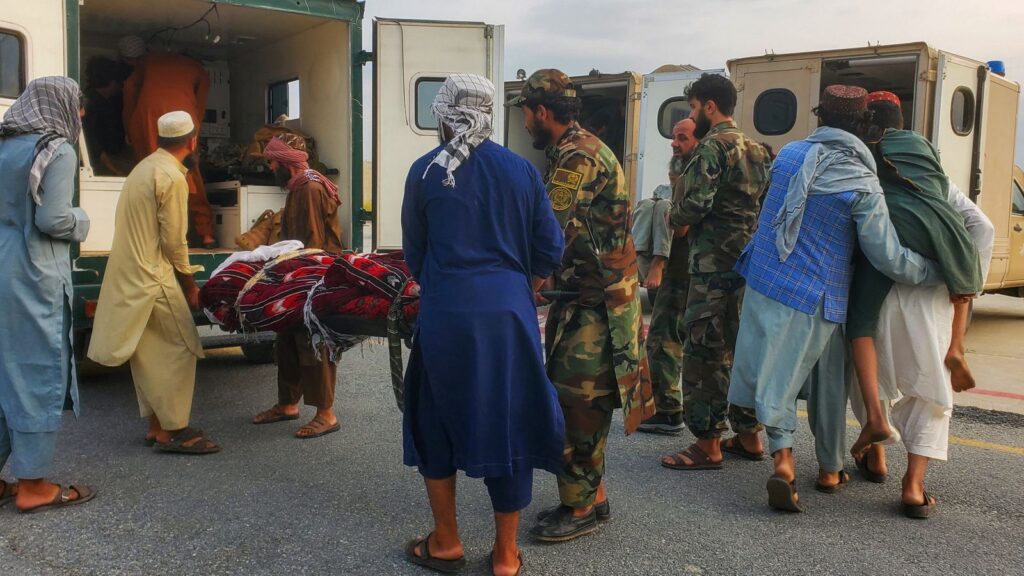
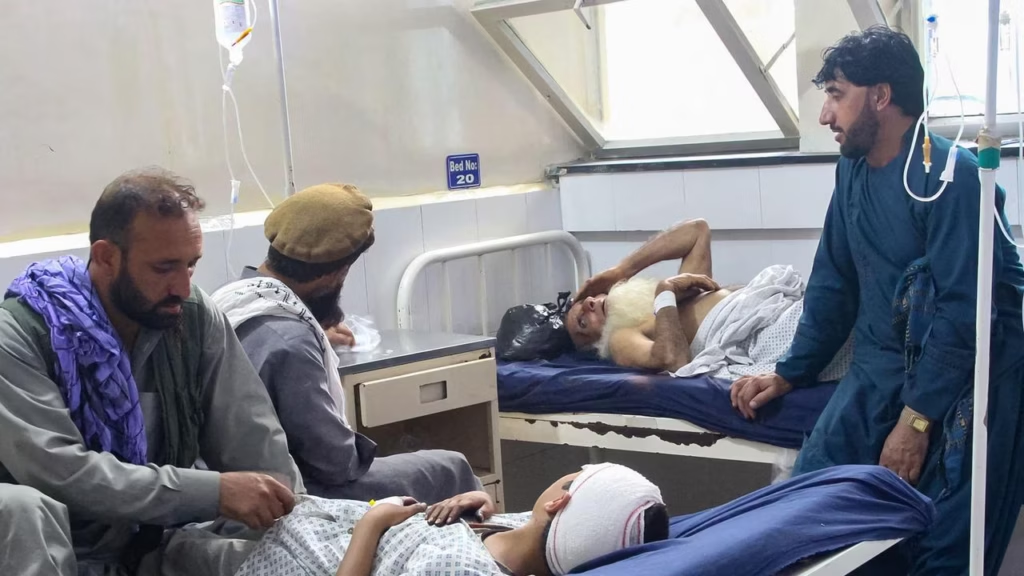
According to the U.S. Geological Survey, the earthquake occurred at a depth of 28 kilometers (17 miles), with its epicenter near Mazar-i-Sharif in Balkh province. Health ministry spokesman Sharafat Zaman said more than 20 people were confirmed dead and around 320 injured in the provinces of Balkh and Samangan. He emphasized that the figures were preliminary, as emergency assessments were still underway.
Residents of Mazar-i-Sharif, one of northern Afghanistan’s largest cities, rushed into the streets in panic as buildings shook. The city’s historic Blue Mosque, a 15th-century architectural gem famed for its striking blue tiles, sustained visible damage, with pieces from one of its minarets scattered across its courtyard.
An AFP correspondent on the scene described widespread fear among residents, while reporters in the capital Kabul, about 420 kilometers to the south, also felt the tremors.
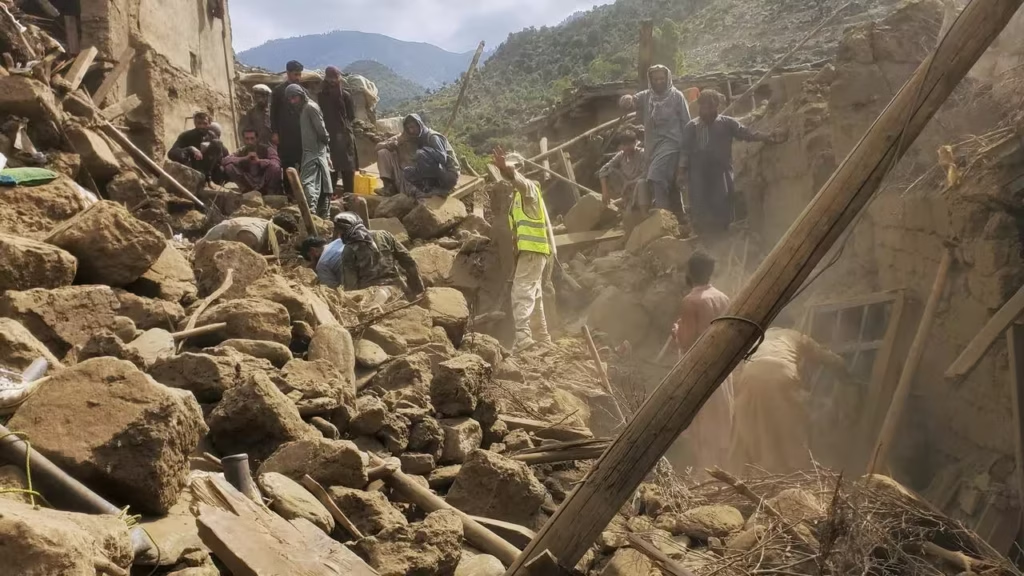
The earthquake is the latest in a series of natural disasters to strike Afghanistan, a country already struggling under severe economic and humanitarian challenges since the Taliban took power in 2021. Communication blackouts and poor infrastructure have often slowed rescue operations, leaving remote mountain villages isolated for hours or even days after such disasters.
In August, a 6.0-magnitude quake in eastern Afghanistan leveled entire mountainside communities, killing more than 2,200 people. Other deadly quakes have struck western Herat province in 2023 and eastern Nangarhar province in 2022, each leaving hundreds dead and thousands of homes destroyed.
The Taliban government faces mounting pressure as the country grapples with overlapping crises, including drought, restrictions on its banking sector, and mass deportations of Afghan refugees from neighboring Iran and Pakistan. International aid, once the backbone of Afghanistan’s economy, has also dwindled sharply since the Taliban’s return to power.
Experts note that Afghanistan’s position along the Hindu Kush mountain range, where the Eurasian and Indian tectonic plates collide, makes it highly prone to earthquakes. Many of the country’s rural homes, built with fragile materials and limited engineering, are ill-equipped to withstand even moderate tremors.
With steep, rugged terrain and poor road access, rescuers often struggle to reach quake-hit communities, leaving survivors vulnerable to exposure and hunger in the aftermath of disasters.
What you should know
Afghanistan’s latest 6.3-magnitude earthquake near Mazar-i-Sharif killed at least 20 people and injured hundreds, damaging the iconic Blue Mosque.
The disaster highlights the country’s vulnerability to frequent quakes, weakened infrastructure, and dwindling aid amid ongoing humanitarian and economic crises.