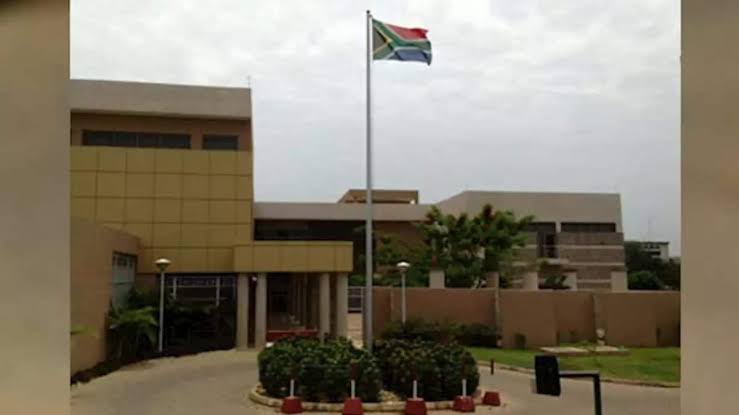
The South African Consulate in Lagos has moved to knock down circulating reports claiming it had suspended visa issuance to Nigerian applicants in the wake of renewed anti-migrant unrest in South Africa.
Speaking on the sidelines of a round-table discussion organised by the Nigerian Institute of International Affairs (NIIA) themed around comparative perspectives on South African xenophobia, the Consul General of South Africa, Prof. Bobby Moroe, addressed the speculation head-on, insisting that consular operations have continued uninterrupted despite the ongoing wave of anti-migrant protests roiling parts of South Africa.
According to Moroe, Nigerians who satisfy the necessary visa requirements have nothing to fear, as no qualified applicant would be turned away. He noted that travel between the two countries remains active, with Nigerians continuing to visit South Africa for tourism and other legitimate purposes even as the protests persist.
The Consul General further sought to reassure the Nigerian public that they would not face discriminatory treatment under the current climate.
The clarification arrives against the backdrop of a long and often strained relationship between Abuja and Pretoria, one repeatedly tested by outbreaks of xenophobic violence targeting foreign nationals, Nigerians prominent among them in South African cities.
Tensions of this kind are not new: in 2019, reprisal attacks on South African-owned businesses in Nigeria prompted Pretoria to temporarily shut its diplomatic missions in Lagos and Abuja, while Nigeria facilitated the voluntary evacuation of citizens willing to return home.
Years earlier, in 2015, a fresh spate of anti-immigrant violence in South Africa linked to inflammatory remarks by a traditional ruler led Nigeria to recall its envoys from Pretoria for consultations, further souring bilateral ties at the time.
Against that history, rumors of a fresh visa clampdown were always likely to strike a nerve, given how quickly such reports can amplify public anxiety and fuel diplomatic friction between the two African economic heavyweights.
Nigeria and South Africa remain two of Africa’s largest economies, with deep commercial, cultural, and people-to-people ties. Misinformation about visa restrictions, particularly when tied to a sensitive issue like xenophobic violence, carries the risk of straining relations further, discouraging legitimate travel and business exchange, and reigniting public anger reminiscent of past flare-ups.
The consulate’s swift rebuttal appears aimed at containing the narrative before it hardens into another point of diplomatic contention.
For now, officials maintain that the visa process for Nigerian applicants remains business as usual, even as the underlying tensions driving anti-migrant sentiment in South Africa continue to draw scrutiny from Abuja and civil society groups alike.
WHAT YOU SHOULD KNOW
Despite ongoing anti-migrant protests in South Africa, the South African Consulate in Lagos has confirmed that visa services for Nigerians remain fully operational—no suspension, no blanket denials.
Qualified applicants will continue to be issued visas, and Nigerians can still travel to South Africa for tourism and other legitimate purposes. For the public: reports of a visa freeze are false, and normal consular operations continue uninterrupted.