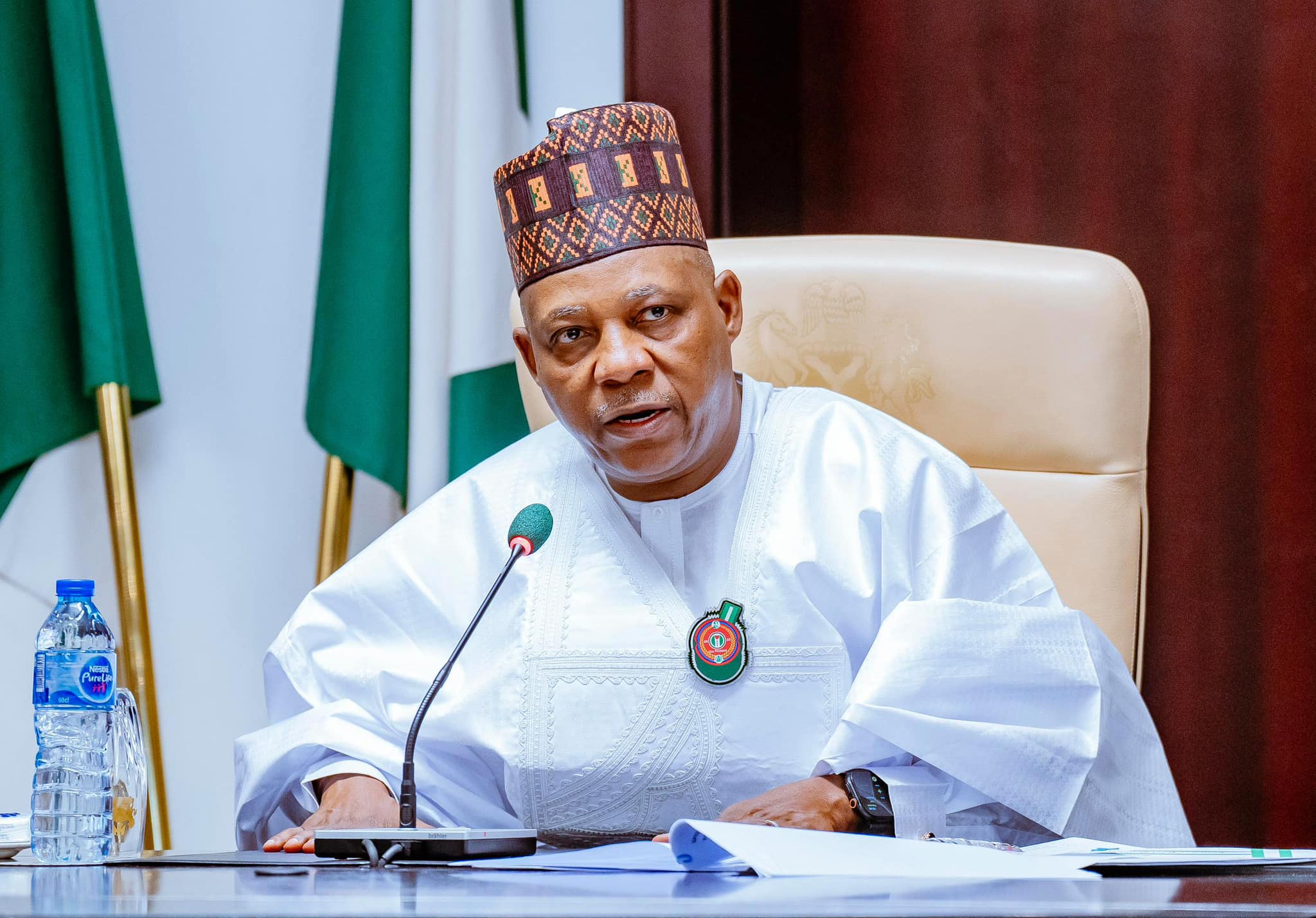
Vice President Kashim Shettima has underscored the pressing need for strengthened collaboration and actionable strategies to tackle the growing humanitarian challenges caused by climate change and migration across crisis-hit regions in Nigeria.
Emphasizing the deep connection between ecological disruption and socio-economic instability, Shettima called for an inclusive and comprehensive response that would alleviate suffering and foster long-term development.
The Vice President made this appeal on Friday during a courtesy visit by a delegation from the International Organisation for Migration (IOM), led by its Chief of Mission in Nigeria, Sharon Dimanche, at the Presidential Villa in Abuja.
In a statement issued by Stanley Nkwocha, the Senior Special Assistant to the President on Media and Communications (Office of the Vice President), Shettima praised the IOM’s longstanding support, particularly during his tenure as governor of Borno State, but noted that the complexity of the current crises demanded even more pragmatic and collaborative approaches.
“I have worked with the IOM for a long time, from my days as Governor of Borno State, and I must commend your remarkable interventions in supporting our people. But much more pragmatic and all-inclusive solutions are needed,” Shettima said.
He stressed the importance of focusing efforts on the North-Central region and advocated for interventions that would not only address displacement but also unite communities and stimulate development.
According to Shettima, the challenges of migration, poverty, and insecurity are closely tied to climate-induced environmental damage, a dynamic he described as an “incestuous relationship” between ecology and economy, particularly in sub-Saharan Africa.
“You cannot divorce the challenges of migration from climate-induced effects. Even the crises in the North-East, North-West, and North-Central have direct links between poverty and violence,” he explained.
The Vice President also highlighted the need to scale up programs targeting gender empowerment and environmental restoration, especially in regions grappling with deforestation and mass displacement.
In her remarks, Sharon Dimanche acknowledged the complexity of Nigeria’s demographic and ecological landscape, noting that the country’s diversity presents both unique challenges and opportunities for effective humanitarian response.
She commended the Nigerian government’s efforts in advancing migration governance and proactive disaster response, referencing recent initiatives such as the State Action Plan on Floods and the Framework for Anticipatory Action.
“Since I came to Nigeria, what I have seen is remarkable. Every state is different. It’s like one Africa wrapped into one country. We are particularly impressed with the launch of the State Action Plan on Floods and the Framework for Anticipatory Action for Nigeria,” Dimanche said.
She reaffirmed IOM’s commitment to supporting Nigeria in building durable solutions for displaced populations and vulnerable communities, adding that the organization is ready to collaborate closely with the Vice President’s office in identifying priority areas and mobilizing resources for impactful interventions.
“As I take over office, we seek the government’s guidance on areas to focus on. One of our key priorities is working to provide sustainable solutions and opportunities for people affected by the crisis,” she said. “I would like to request for a special initiative where we can co-work with your office and mobilise resources for more durable solutions to immigration, youth empowerment, and climate resilience.”
The meeting ended on a note of mutual commitment to fostering long-term solutions for Nigeria’s most pressing humanitarian issues, with a shared vision for inclusive development and resilience-building.
What you should know
Vice President Shettima has urged deeper collaboration with the International Organisation for Migration to address the roots of Nigeria’s climate and migration crises.
He emphasized the need for scalable, practical solutions that empower communities, especially in the North-Central region, while IOM’s new Chief of Mission expressed readiness to partner more closely with the government on sustainability and youth development.