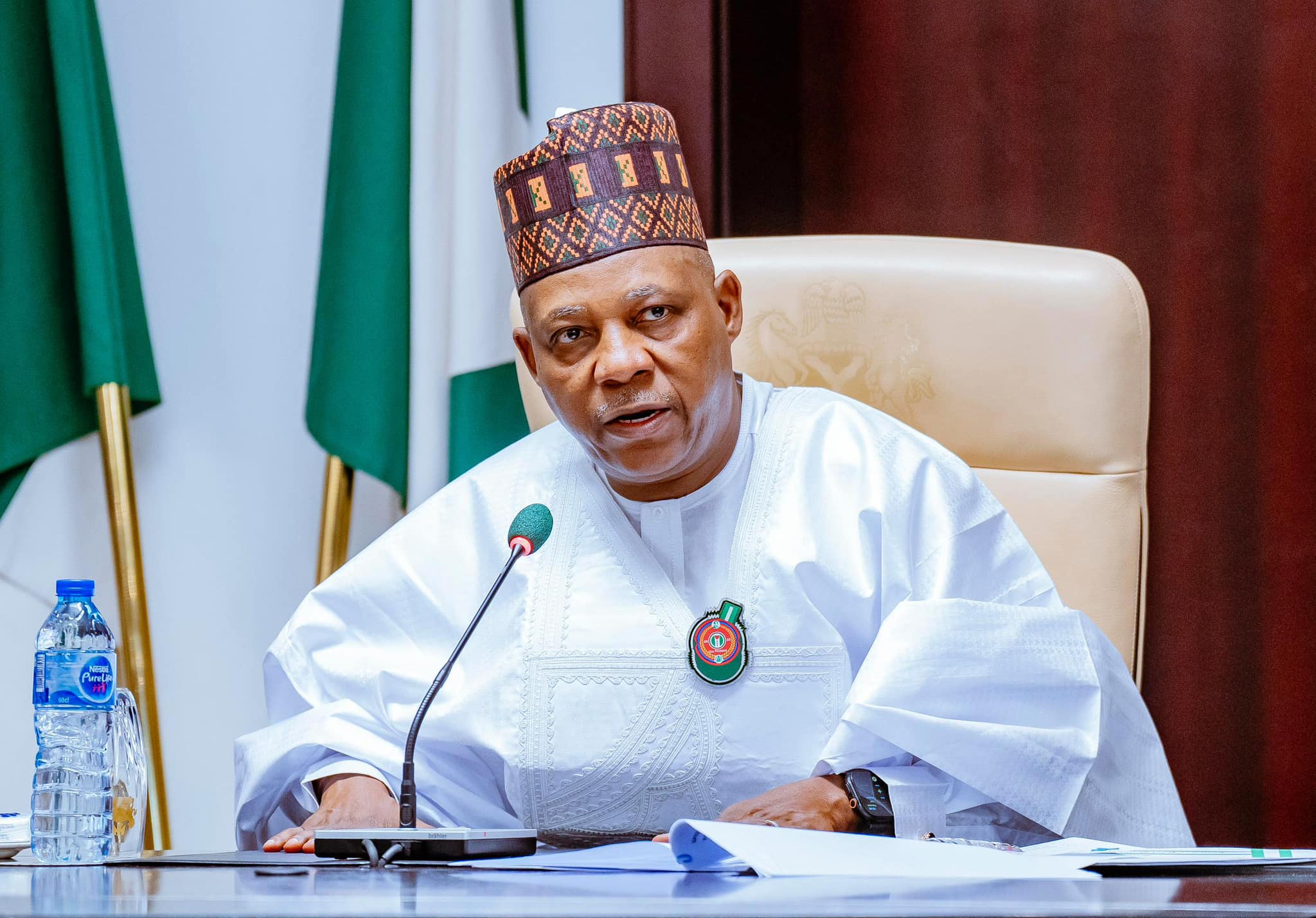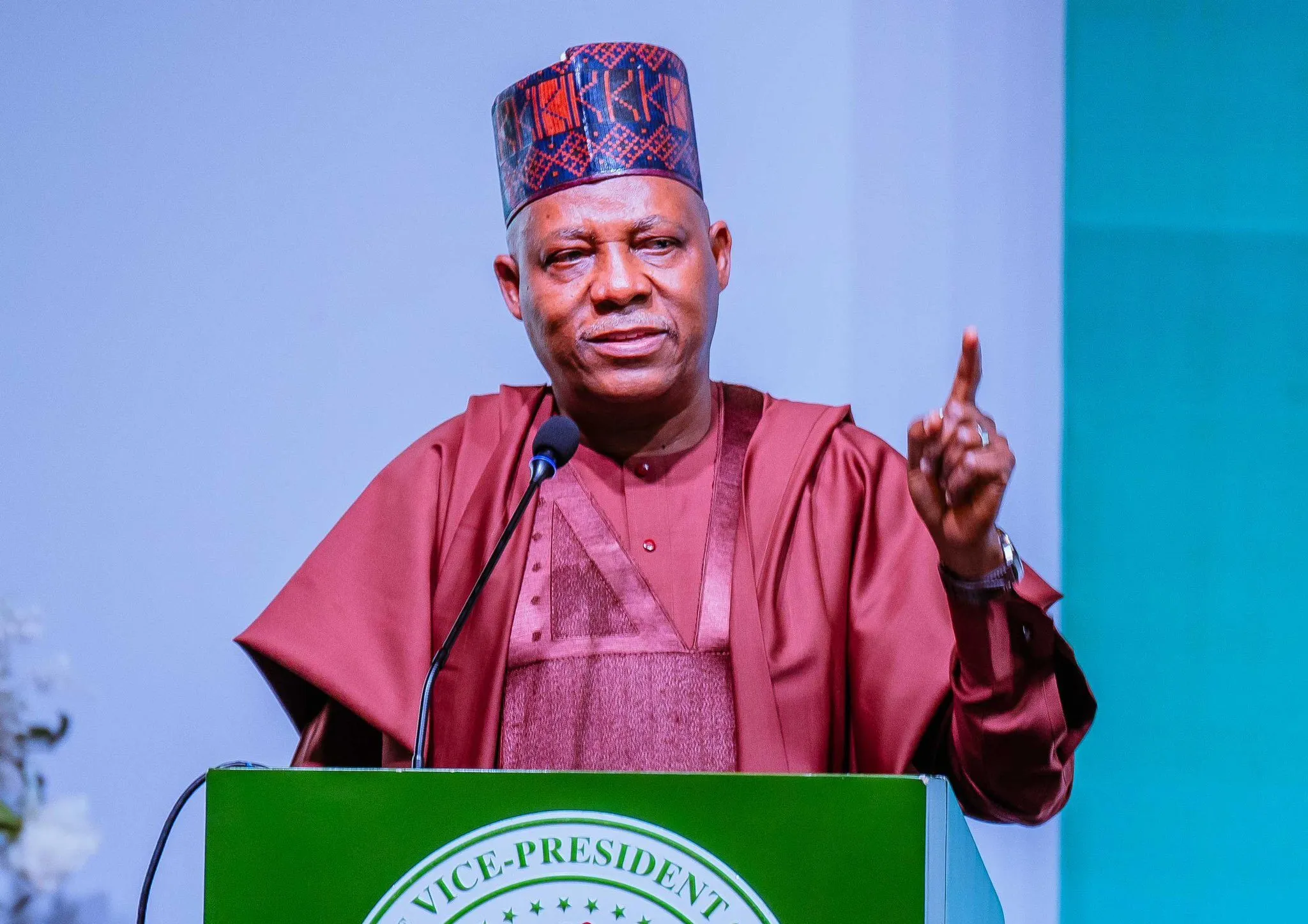
Nigeria’s Vice President, Kashim Shettima, has shared a personal account of intense political persecution during the administration of former President Goodluck Jonathan, describing himself as “Public Enemy Number One” in the closing years of that government.
His remarks were made Thursday in Abuja during the official unveiling of “OPL 245: The Inside Story of the $1.3 Billion Nigerian Oil Bloc”, a new book authored by Mohammed Bello Adoke (SAN), a former Attorney General of the Federation and Minister of Justice under Jonathan.
Speaking before an audience that included political figures, legal practitioners, and civil society leaders, Shettima reflected on the difficulties he endured as Governor of Borno State during a period marked by heightened insecurity and political tension.
He recalled that he was relentlessly targeted and that plans were allegedly in motion to remove him from office. However, those attempts, he said, were thwarted by a combination of constitutional guidance and principled resistance from members of Jonathan’s cabinet.
“In the last four years of the Jonathan administration, I was the most demonized person. I was the public enemy number one,” Shettima stated, recounting how then-President Jonathan made repeated efforts to oust him. “At one point, President Jonathan was determined to remove ‘this Borno governor,’ as he repeatedly said.”
According to Shettima, it was the intervention of key national figures that made the difference. He recounted a closed-door meeting in which the then Speaker of the House of Representatives, Aminu Waziri Tambuwal, stood his ground, telling Jonathan: “Your Excellency, you don’t have the powers to remove an elected councillor.” That moment, Shettima explained, was further reinforced by the legal backing of Adoke and then-Minister Kabiru Turaki, both of whom, he said, refused to compromise the constitution.
“That was how my relationship with Mr. Adoke and Tambuwal became eternally sealed,” the vice president remarked, adding that his appreciation for Adoke grew from the latter’s unflinching loyalty to legal norms, even at political cost.
Shettima lauded Adoke for choosing to chronicle his time in public service through the newly launched book, noting that Nigerian public office holders often fail to document their experiences. “Our public service is a territory governed by silence,” he said. “There is silence to protect relationships, and silence for secrets too delicate to disclose. But as a generation of leaders, we must summon the courage to document our journeys.”
Adoke Speaks: “I Have Forgiven My Persecutors”
In his own address, Mohammed Bello Adoke offered a spirited defense of his role in the controversial OPL 245 oil bloc case. According to Adoke, he was never involved in the original transaction but was merely carrying out a presidential directive intended to resolve protracted legal disputes over the ownership and allocation of the oil bloc.
He noted that his prosecution by the Economic and Financial Crimes Commission (EFCC) was based not on legal wrongdoing but political vendettas. “While the Italian prosecutor who pursued this case unjustly was jailed for eight months, our own EFCC operatives who lied on oath were never held accountable,” he said, expressing concern over the immense public resources that were consumed by what he termed a politically motivated persecution.
Adoke stated unequivocally that he has forgiven all those who pursued his case under false pretenses, including former EFCC chairman Ibrahim Magu, whom he disclosed had since apologized to him. Reflecting on the motivations behind his ordeal, Adoke accused the administration of former President Muhammadu Buhari of using the case as a vehicle for vengeance, particularly against the Abacha family.
“Buhari believed I was unfair to the Abachas. That perception, not facts, drove much of my prosecution,” Adoke stated, referring to long-standing allegations that he had shortchanged the Abacha family during the resolution of the OPL 245 dispute.
The unveiling of Adoke’s book marked a significant occasion in the ongoing discourse around public accountability and governance in Nigeria. Attendees at the event included senior legal professionals, journalists, politicians, and civil society advocates, who underscored the importance of honest, firsthand narratives in shaping national understanding of complex historical events.
As both Shettima and Adoke reflected on the challenges they faced during politically turbulent times, the event offered a rare glimpse into the inner workings of power, the strains of principled resistance, and the enduring value of constitutional order.
What you should know
Vice President Kashim Shettima revealed he was targeted for removal during the Jonathan administration, describing himself as the “most demonized” public figure at the time.
His remarks came during the launch of a book by former AGF Mohammed Bello Adoke, who defended his role in the controversial OPL 245 oil deal and said he has forgiven those who orchestrated his prosecution. Both men emphasized the need for Nigerian leaders to document their public service experiences and uphold legal integrity, even amid political pressure.