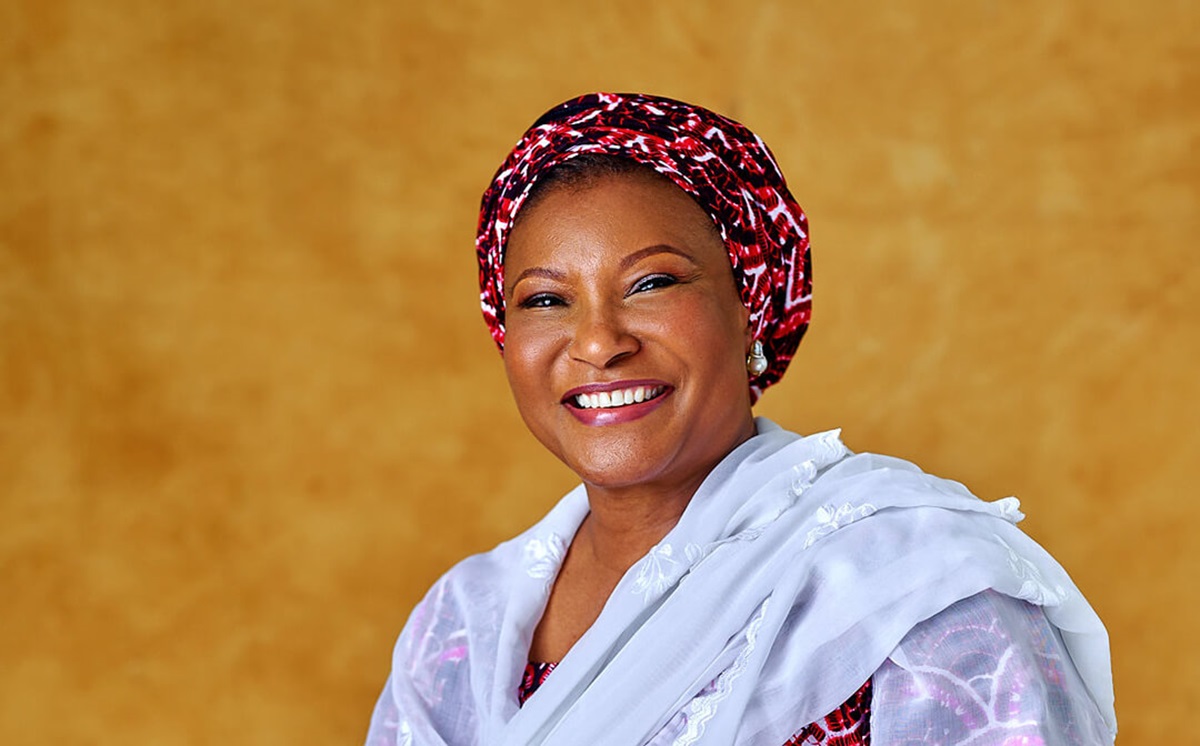
Senator Ireti Kingibe, the lawmaker representing the Federal Capital Territory (FCT) under the African Democratic Congress (ADC), has sounded a sharp and urgent warning that the legal framework meant to guarantee free and fair elections has been gutted.
Speaking in an interview on ARISE NEWS, the FCT senator did not mince words. Years of painstaking legislative work, she alleged, have been undone, and the consequences for Nigerian democracy could be severe.
Senator Kingibe was not speaking as an outside observer. She was, by her own account, an active participant in the committee that labored for two years to develop a comprehensive electoral reform framework, one designed to shore up the credibility of Nigeria’s elections and restore public confidence in the Independent National Electoral Commission (INEC).
“We worked on a document that was acceptable for two years and did a joint sitting and came up with a document we felt would give us free and fair elections,” she told ARISE NEWS, her frustration barely concealed. “But now every aspect of that document has been turned upside down.”
The implications of that statement are profound. If accurate, it means that what currently exists in the Electoral Act is not the product of the extensive reform process that legislators, civil society actors, and electoral experts invested significant time and resources in, but rather a substantially altered version that may serve very different interests.
Kingibe stopped short of naming who she believes is responsible for the alterations, but the charge itself raises uncomfortable questions about legislative transparency and the integrity of Nigeria’s lawmaking process at the highest levels.
Beyond the legislative controversy, Senator Kingibe raised what may be an even more immediately alarming concern, one that strikes at the very mechanics of voting itself.
According to the senator, INEC’s ballot papers currently lack adequate security features, making them dangerously susceptible to replication.
“The INEC ballot paper does not have security measures; any type of paper can be used for voting,” she claimed.
It is a startling allegation. In modern electoral practice, ballot papers are typically embedded with a range of anti-forgery features, watermarks, serial numbers, special inks, barcodes, and other identifiers, precisely to prevent counterfeiting and mass ballot stuffing. If Nigeria’s ballot papers fall short of these standards, the door to large-scale electoral fraud could be wide open.
INEC has not yet publicly responded to Senator Kingibe’s specific claims regarding ballot paper security. However, the assertion is likely to fuel growing demands from civil society groups and opposition figures for an independent audit of the commission’s materials and procurement processes ahead of 2027.
Senator Kingibe’s comments did not exist in isolation. They came amid a broader conversation about the tightening solidarity among Nigeria’s fractured opposition—a development she openly welcomed.
In what reads as a thinly veiled critique of the current administration, the senator argued that the emerging alliances among opposition figures are not merely political calculations but a genuine response to the worsening hardship grinding down ordinary Nigerians.
“Everybody is tired and exhausted,” she said plainly.
She went further, cataloguing a litany of crises that, in her view, have pushed citizens to a breaking point: relentless insecurity, a crippling electricity supply deficit, food shortages of a severity she described as the worst the country has ever seen, and a tax burden that continues to rise even as living standards fall.
“No electricity; insecurity has never been this bad; food insecurity is at its worst ever; taxes are increased, and more are coming,” she said, painting a picture of a country straining under compounding pressures.
For Kingibe, the growing unity among opposition actors signals something significant, a moment, perhaps rare in Nigerian politics, where personal ambition is being subordinated to a broader national purpose.
“I was seriously pleased to see the synergy, alliances, and move of national interest opposed to personal interest,” she said. “At the end of the day, everyone wants a better life.”
With the 2027 elections now firmly on the political horizon, Senator Kingibe’s warnings serve as a critical marker of how fragile the foundations of Nigeria’s electoral process may be.
If her allegations are borne out, that the Electoral Act has been manipulated and that ballot papers lack basic security infrastructure, the stage could be set for a deeply contested and potentially chaotic election cycle.
Nigeria has been here before. The country’s electoral history is riddled with disputes, allegations of rigging, and post-election litigation. The reforms that legislators like Kingibe claim to have worked on were meant to break that cycle.
If those reforms have indeed been compromised, the country may find itself back at square one with higher stakes, a more exhausted citizenry, and a far more volatile political atmosphere.
The senator’s words are a warning shot. Whether the institutions with the power to act, the National Assembly, INEC, and the presidency, will heed it remains to be seen.
WHAT YOU SHOULD KNOW
Senator Ireti Kingibe’s alarm over Nigeria’s 2027 elections boils down to one core message: the system designed to protect your vote may already be compromised.
The electoral reform framework that lawmakers spent two years building has allegedly been manipulated, and the ballot papers meant to record your choice can reportedly be faked by anyone with access to ordinary paper.
Combine that with a population worn down by insecurity, hunger, power failure, and rising taxes, and you have a nation heading into a critical election cycle on deeply unstable ground.