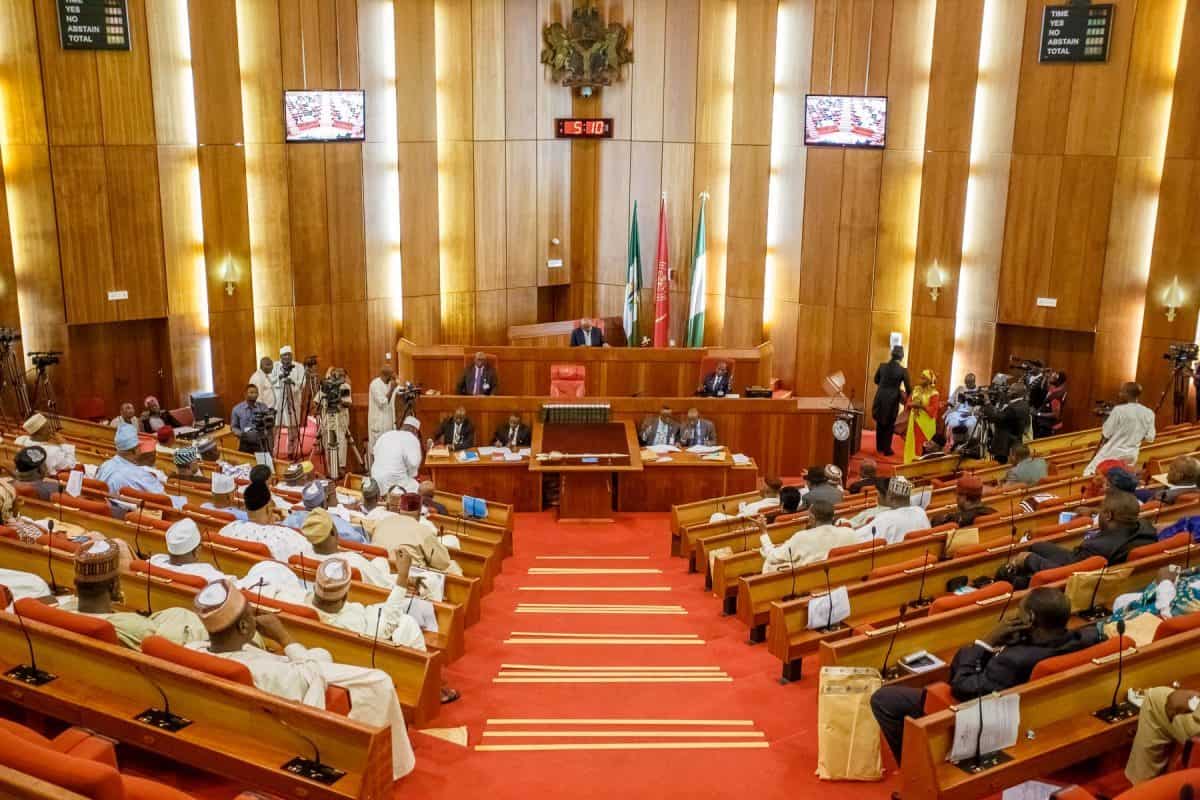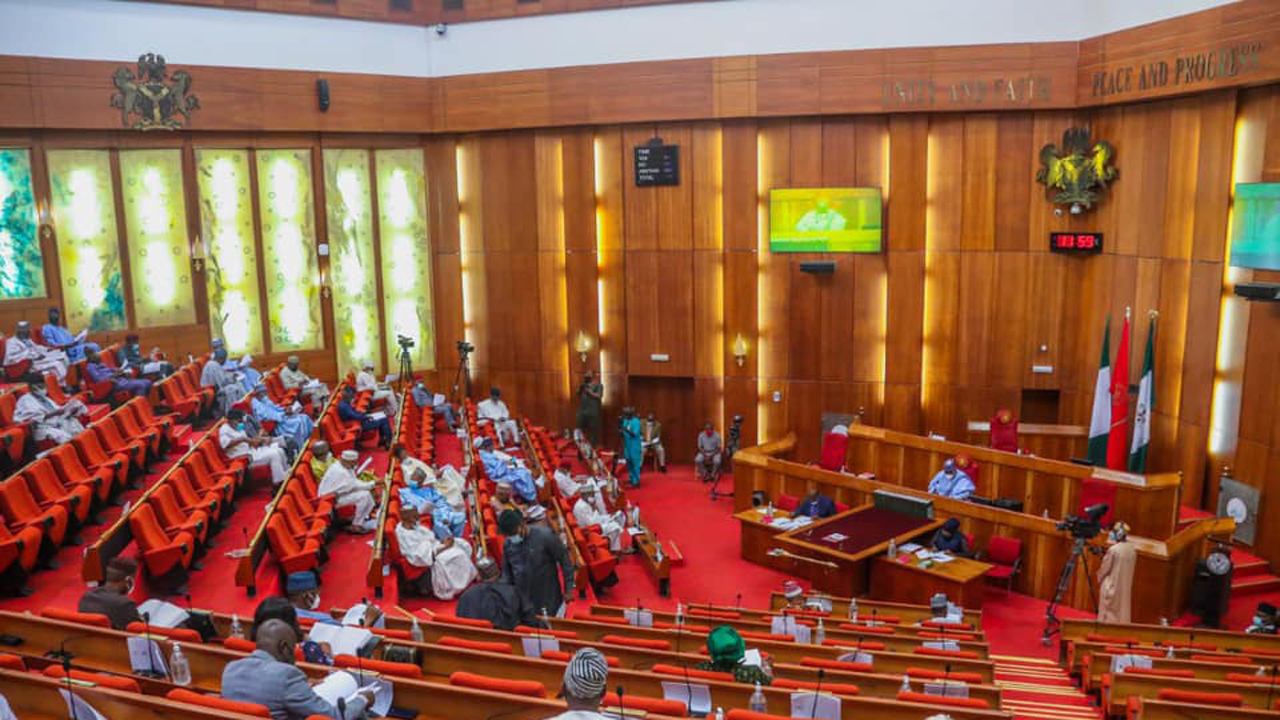
The Senate on Monday declared that it would no longer tolerate any government agency benefiting from service-wide votes without proper accountability mechanisms in place.
This position was stated by the Chairman of the Senate Committee on Appropriations, Senator Adeola Olamilekan, who said the 2026 budget would represent a clear departure from previous spending patterns.
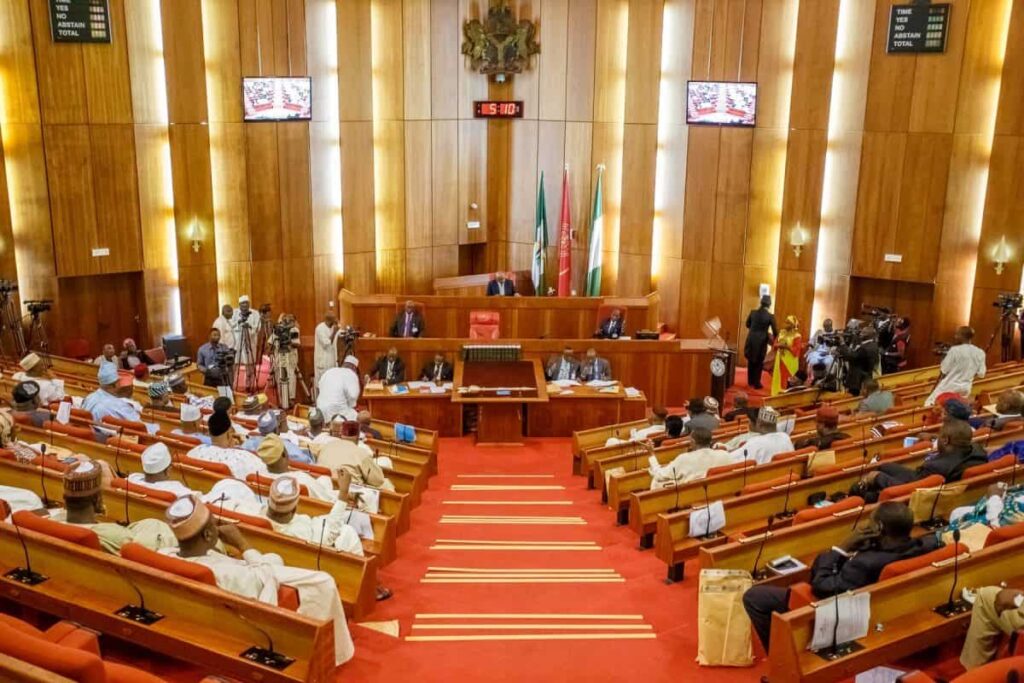
Addressing participants at a one-day public hearing on the 2026 Appropriation Bill, Olamilekan explained that all budgetary items would undergo rigorous examination to ensure transparency in the utilisation of public funds.
He urged ministries, departments and agencies (MDAs) to work closely with oversight bodies, stressing that cooperation is essential to improving transparency, efficiency and fiscal discipline across the public sector.
The lawmaker also announced that the National Assembly would no longer allow federal budgets to run beyond December 31, noting that prolonged budget implementation weakens fiscal planning and erodes accountability.
Olamilekan further identified the electricity sector as one of the biggest pressures on government finances, pointing to the need for far-reaching reforms, including the unbundling of the power sector.
He said electricity subsidies, which consume several trillions of naira every year, must be tackled urgently in order to release funds for broader national development goals.
Heavy Debt-Servicing
The Senate Appropriations Committee chairman also expressed worry that government revenue remains insufficient to adequately support the proposed 2026 budget, which has a projected deficit of ₦25.1 trillion.

According to him, budgeting without corresponding revenue streams raises fundamental concerns about long-term fiscal sustainability.
Reacting to remarks by an economic consultant, Mr. Adetilewa Adebayo, who cautioned that Nigeria’s estimated $3 trillion economic potential is being undermined by weak leadership and excessive borrowing, Olamilekan said sustained borrowing had become inevitable due to the heavy burden of debt servicing inherited from past administrations, including military governments.
He added that Nigeria’s high debt-to-revenue ratio is not unusual, explaining that government income does not come in steady bulk amounts but in uneven inflows.
“If we project ₦5 trillion in a month, we may only realise ₦1 trillion, but the government must go on,” he said.
Olamilekan further warned that Nigeria must continue to meet its debt obligations to avoid a downgrade by international financial institutions such as the World Bank and the International Monetary Fund (IMF), stressing that failure to do so would harm the country’s credibility.
“Our debt service is a problem; we are servicing debt from previous administrations, even from the military era. We have no choice but continue to pay.
“An attempt by us to fail to meet any financial obligations, our rating will drop both in the World Bank and the IMF, and that’s not good for the country. We must try and free up so much of our revenue to address the deficit challenges confronting us,” Olamilekan added.
To address the wide deficit, he revealed that the government plans to explore international financial markets, summon the Group Managing Director of the Nigerian National Petroleum Company Limited (NNPCL) to explain projected revenue contributions, and consider privatising certain federal government assets to generate funds for deficit financing.
What you should know
The Senate’s position on the 2026 budget reflects a renewed push for stricter fiscal discipline and accountability in Nigeria’s public finance system.
By ending tolerance for unaccounted service-wide votes and insisting on strict budget timelines, lawmakers aim to curb waste and improve transparency.
However, the ₦25.1 trillion deficit and heavy debt-servicing obligations highlight the deep structural challenges facing the economy, forcing the government to rely on borrowing, asset privatisation and improved revenue generation to stay afloat.