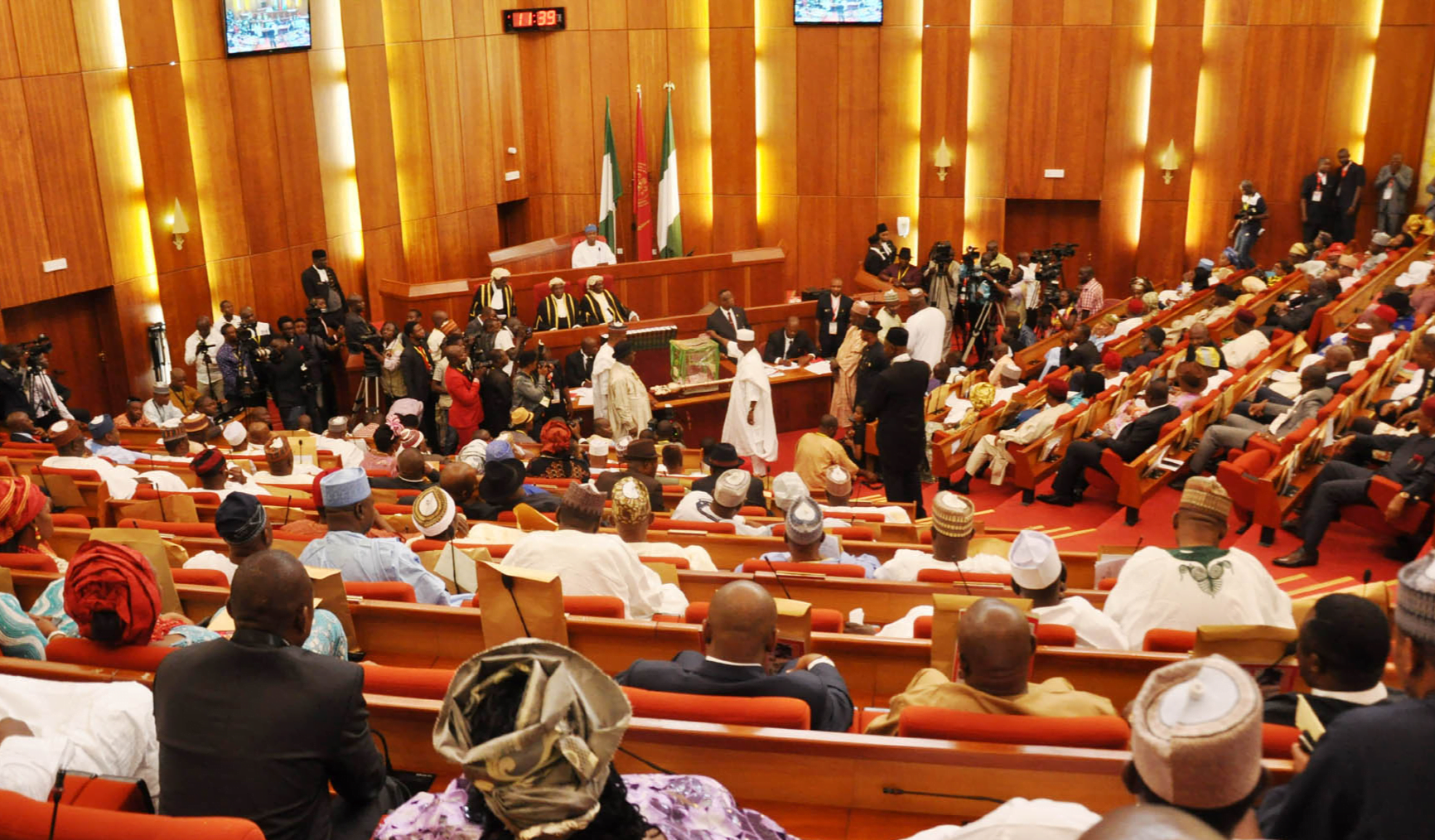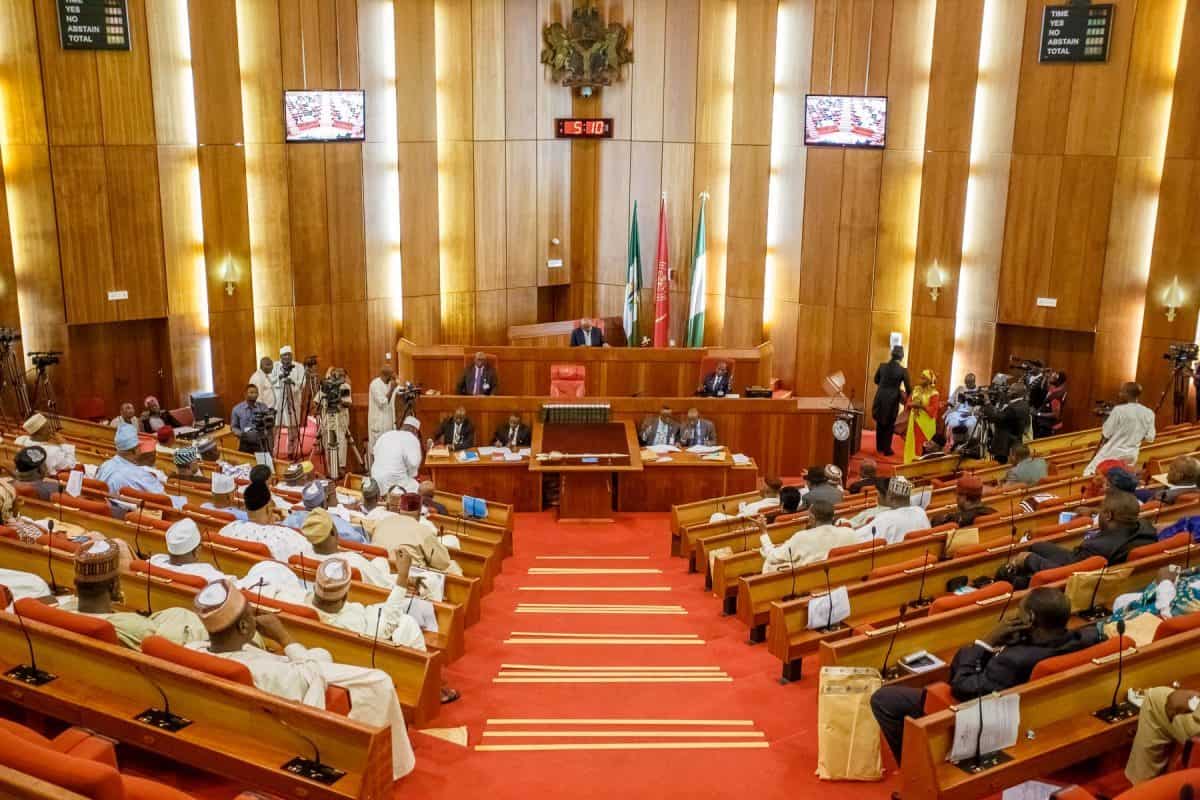
The Senate is set to reconvene for an emergency plenary session on Tuesday amid escalating controversy surrounding amendments to the Electoral Act, with particular focus on provisions governing the electronic transmission of election results.
The development was announced in a notice issued on Sunday by the Clerk of the Senate, Emmanuel Odo, acting on the directive of Senate President Godswill Akpabio.
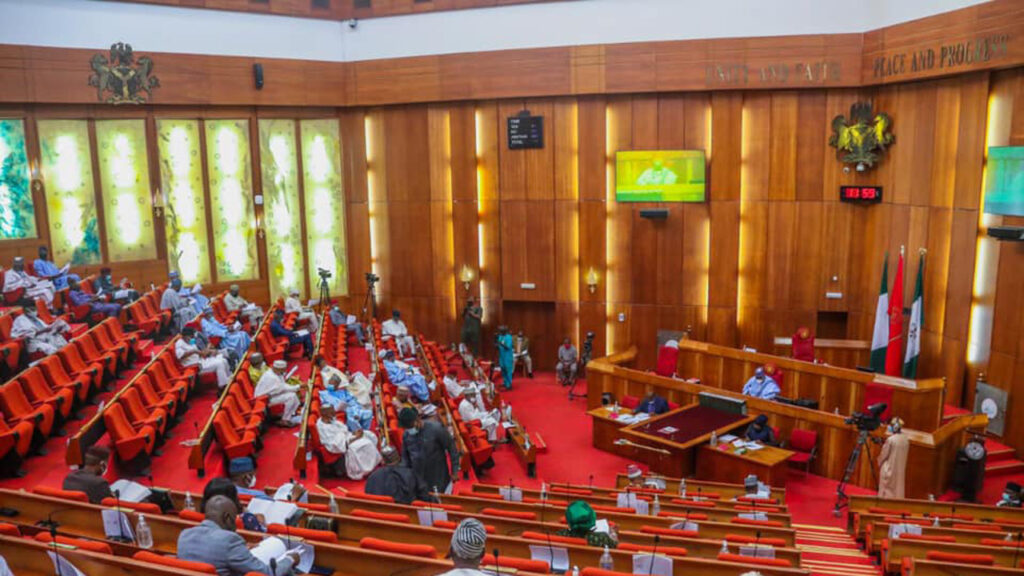
“I am directed by His Excellency, the President of the Senate, Distinguished Senator Godswill Obot Akpabio, GCON, to inform all Distinguished Senators of the Federal Republic of Nigeria that an Emergency Sitting of the Senate has been scheduled to hold as follows: Date: Tuesday, 10th February, 2026. Time: 12:00 noon. Venue: Senate Chamber,” the notice stated.
While no official explanation was provided for the sudden sitting, the decision comes against the backdrop of intense public debate and protests following the Senate’s passage of the Electoral Act 2022 (Repeal and Re-enactment) Amendment Bill 2026 through its third reading last week.
At the heart of the dispute is Clause 60, Subsection 3, of the proposed law, which deals with the transmission of election results. The Senate declined to approve an amendment that would have made real-time electronic transmission compulsory, choosing instead to retain the wording contained in the 2022 Electoral Act.
The retained provision states that “the presiding officer shall transfer the results, including the total number of accredited voters and the results of the ballot, in a manner as prescribed by the Commission.”
The rejected proposal would have compelled presiding officers of the Independent National Electoral Commission to electronically transmit polling unit results to the IREV portal in real time after the relevant result forms had been duly signed and stamped.
Lawmakers also turned down suggestions seeking to impose a 10-year ban on vote-buyers, opting to maintain the existing framework of fines and custodial sentences.

Public opposition to the Senate’s position spilled onto the streets of Abuja on Monday, as civil society organisations and opposition parties staged a demonstration under the banner of the “Occupy National Assembly” protest.
The protest, aimed at challenging the Senate’s stance on electronic transmission of results, drew heavy security deployment, with operatives from the Nigeria Police Force, the Nigerian Army and the Nigeria Security and Civil Defence Corps stationed around the National Assembly.
Although the entrance to the complex was barricaded, some protesters told Channels Television that they had no intention of breaching the premises, stressing that the demonstration was designed to take place only at the gate.
The protesters marched from the Federal Secretariat towards the National Assembly complex.
The 2023 presidential candidate of the Labour Party, Peter Obi, now a member of the ADC, also joined the protest. Obi said the Senate must act decisively to prevent a repeat of the technical failures reported by INEC during the 2023 general elections.
According to him, lawmakers should make real-time electronic transmission of election results mandatory in order to enhance the credibility of the electoral process.
Responding to the growing backlash, Senate President Godswill Akpabio said the Red Chamber did not reject electronic transmission outright but merely preserved the provision as it exists in the 2022 Electoral Act.
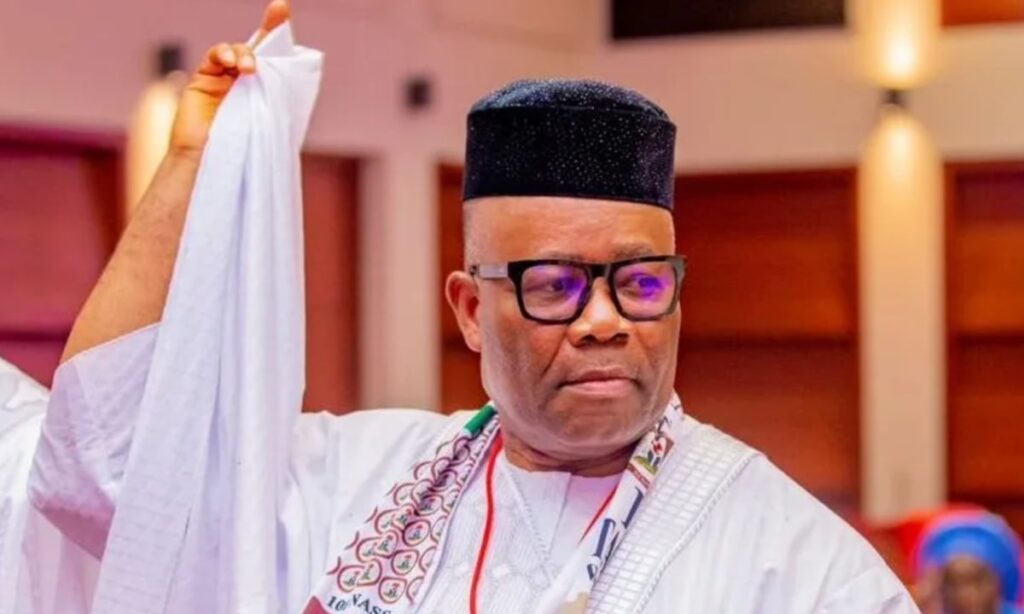
Speaking at a book launch over the weekend, Akpabio explained that the removal of the phrase “real time” was intended to avert legal disputes that could arise from network disruptions.
“All we said during the discussion was that we should remove the word ‘real-time’ because if you say real-time, then there is a network or grid failure, and the network is not working. When you go to court, somebody will say it ought to have been real-time. That was all we said,” he explained.
He added that the approach was designed to give INEC the latitude to determine the most suitable method of result transmission, taking into account technological and security realities.
Former Senate President David Mark also weighed in, stating that the National Assembly should allow INEC to decide whether to transmit election results electronically or not.
Despite the criticism, several senators have defended the bill, maintaining that it enjoyed overwhelming support within the chamber.
“Over 85 per cent of senators agreed to electronic transmission. It was common ground. Even the ad hoc committee of the Senate agreed to it,” the Senator representing Anambra Central, Victor Umeh, said in an interview with Channels Television.
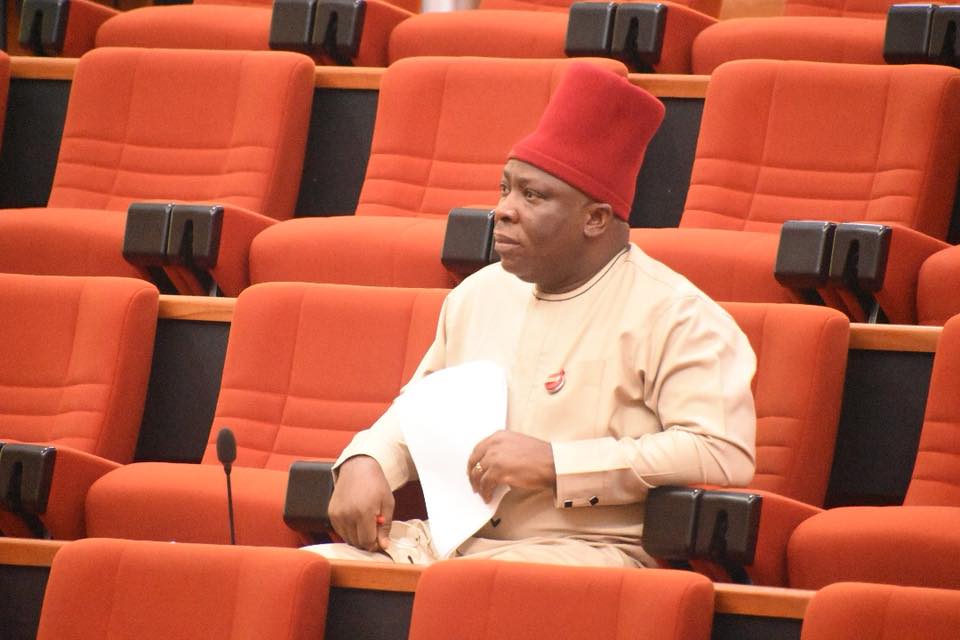
Umeh said the only adjustment approved during the Senate’s executive session was the removal of the phrase “in real time”, a move he linked to concerns about network coverage in certain parts of the country.
“It was only ‘real time’ that was expunged because of network issues. Transmission itself was never in dispute,” he said.
He added that confusion arose during plenary when a motion was allegedly introduced to replace the word “transmission” with “transfer” without any debate.
“There was no debate on it. If debate had been allowed, it would have taken us back to the executive session where the issue had already been exhaustively discussed and resolved,” Umeh said.
What you should know
The emergency Senate sitting reflects rising political tension over Nigeria’s electoral framework ahead of the 2027 elections.
The controversy centres on whether the law should compel INEC to transmit results electronically in real time or leave the method to the commission’s discretion. While the Senate insists it supports electronic transmission, critics fear the absence of a “real-time” requirement could enable manipulation at collation stages.
Protests, opposition pressure and public scrutiny have intensified, making the amendment a key test of the National Assembly’s commitment to electoral credibility and democratic trust.