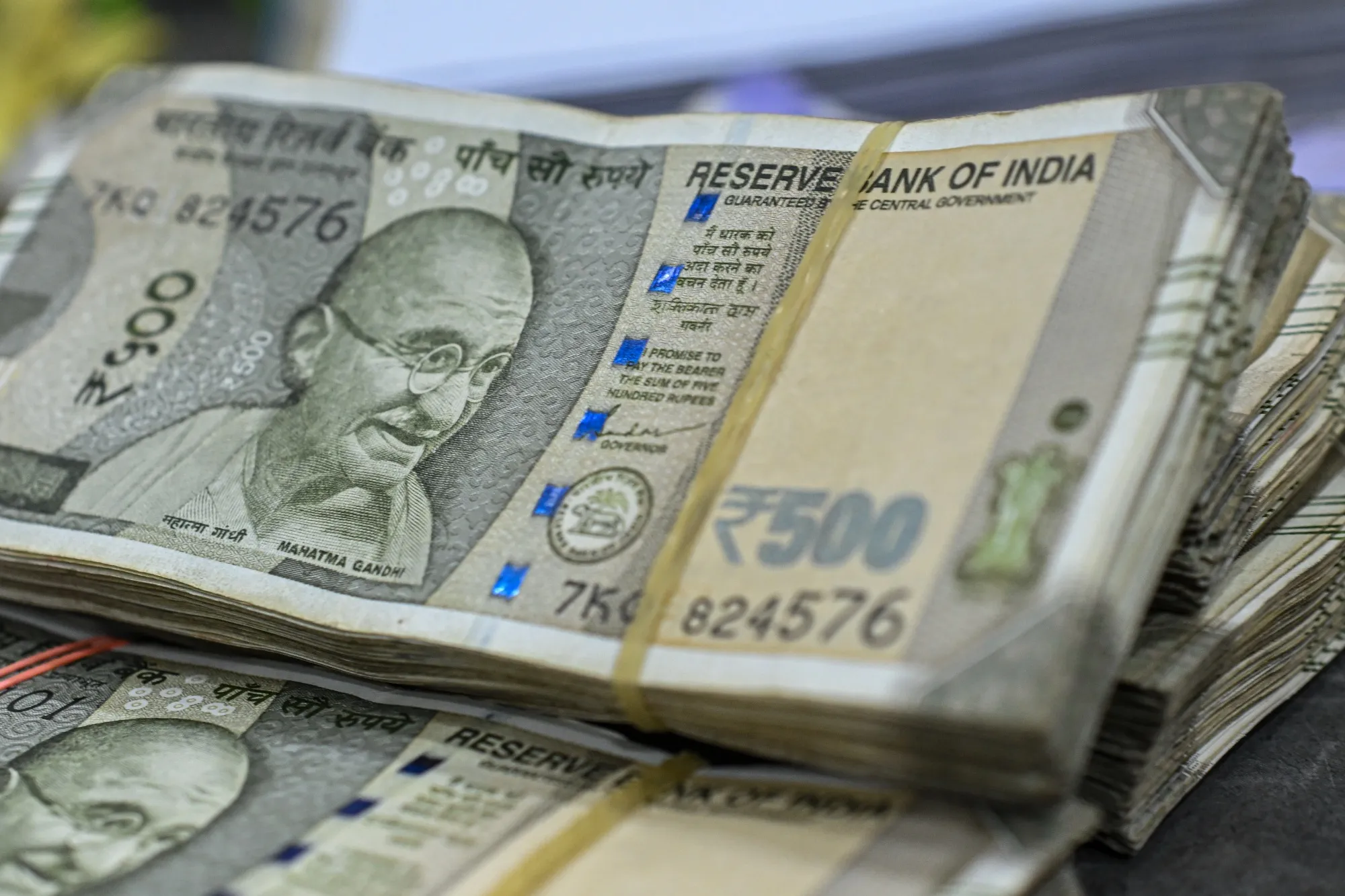
The Indian rupee limped into the new year with a modest decline on Thursday, as corporate dollar demand and skeletal trading volumes set the tone for what currency traders expect will be another year of challenges for the beleaguered currency.
The rupee opened at 89.9525 against the U.S. dollar, weaker than Wednesday’s close of 89.87, before settling at 89.97 by day’s end—a loss of 0.1%. The muted first-day performance underscores the persistent pressures that dogged the currency throughout 2025, when it notched its steepest annual decline since 2022.
Last year proved punishing for the rupee, which shed 4.72% of its value—its worst annual performance in three years. The decline, while painful, paled in comparison to 2022’s nearly 10% drop, but it nonetheless reflected the cumulative weight of global headwinds and domestic capital outflows that buffeted emerging market currencies throughout the year.
The rupee’s struggles were driven largely by relentless dollar demand and a historic exodus of foreign capital from Indian equities. International investors pulled record sums from the local stock market in 2025, creating persistent supply-demand imbalances that the Reserve Bank of India’s interventions could only partially offset.
Thursday’s trading was characterized by exceptionally light volumes, a predictable consequence of New Year holidays keeping major global financial centers shuttered. In the absence of significant institutional flows, routine corporate demand for dollars dominated price action, leaving the currency trapped in a narrow trading band with little directional conviction.
“Until the 90 level is not broken, it is difficult to guess any firm direction for the currency,” said a trader with a Mumbai-based brokerage, speaking on condition of anonymity. The psychological threshold of 90 rupees per dollar has emerged as a critical technical level that market participants are watching closely for signals about the currency’s trajectory.
Despite the challenging backdrop, some currency analysts see reasons for measured optimism as India enters the new year. Amit Pabari, managing director at CR Forex, an advisory firm specializing in foreign exchange, struck a balanced tone when assessing the rupee’s outlook.
“The rupee enters 2026 with both challenges and cushions,” Pabari said. “While global uncertainty persists, India’s strong macro base, ample reserves, and pragmatic policy framework provide stability.”
India’s foreign exchange reserves, which remain substantial despite being deployed regularly to defend the currency, give policymakers meaningful firepower to smooth volatility. The country’s relatively robust macroeconomic fundamentals—including manageable inflation, steady growth, and a stable banking system—also provide a foundation that distinguishes India from more vulnerable emerging markets.
One potential catalyst that could shift sentiment in the rupee’s favor is progress on stalled trade negotiations between India and the United States. Pabari identified a breakthrough in these discussions as a “meaningful confidence boost” that could materially improve the currency’s prospects.
“Progress on a pending India–U.S. trade deal remains a potential upside catalyst and could deliver a meaningful confidence boost if concluded,” he noted, suggesting that diplomatic and commercial developments could prove as important as purely financial flows in determining the rupee’s direction.
Pabari expects the currency to trade in a range of 89.30 to 90.20 in the near term, with a “mild bias toward strengthening”—a cautiously constructive view that suggests stability rather than dramatic appreciation.
Market participants are keeping a particularly close watch on foreign institutional investment in Indian equities, which many view as the critical variable that will determine whether 2026 tells a different story than its predecessor.
“An improvement in equity flows would be key to alleviating dollar demand–supply pressures that hurt the rupee in 2025,” said traders who spoke to this reporter. The return of foreign portfolio investors to Indian stocks would ease the structural dollar shortage that has kept the rupee on the defensive, potentially allowing the currency to stabilize or even appreciate modestly.
The first few weeks of 2026 will likely provide early signals about whether global investor appetite for Indian assets is recovering or whether the outflow dynamic that characterized 2025 will persist into the new year.
As Asia’s third-largest economy navigates an uncertain global landscape marked by geopolitical tensions, fluctuating commodity prices, and divergent monetary policies among major central banks, the rupee’s performance will serve as a real-time barometer of investor confidence in India’s growth story.
WHAT YOU SHOULD KNOW
The Indian rupee begins 2026 under continued pressure after suffering its worst annual decline since 2022, losing 4.72% in 2025. The currency’s fate this year hinges critically on one factor: whether foreign investors return to Indian equity markets.
Record capital outflows in 2025 created persistent dollar demand that weakened the rupee. While India’s strong economic fundamentals and substantial foreign reserves provide a cushion, and a potential U.S.-India trade deal offers hope, the real test will be whether equity flows reverse course. Without that turnaround, the rupee will likely remain under pressure, trapped in its current range near the psychologically significant 90-per-dollar mark.