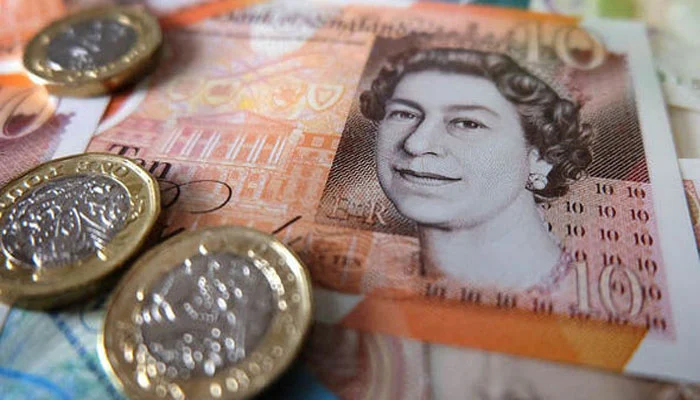
The British pound climbed to its strongest position against the dollar in nearly three months on Tuesday, buoyed by emerging signs of economic resilience in the United Kingdom even as inflationary pressures continue to challenge policymakers.
Sterling advanced 0.42% to $1.3517 during Tuesday’s trading session, marking its highest level since early October and building on momentum from the previous week. The currency is now poised to record its strongest monthly performance in four months, having appreciated more than 2% throughout December alone.
The pound’s robust trajectory has positioned it for an impressive annual gain of approximately 8% for 2025, reflecting a gradual restoration of investor confidence in Britain’s economic prospects despite ongoing headwinds.
Revised Economic Data Provides Unexpected Boost
The sterling’s rally comes on the heels of revised economic figures that painted a more optimistic picture than initially reported. While official data released Monday confirmed the economy grew by a modest 0.1% in the third quarter—matching preliminary estimates from the Office for National Statistics—subsequent revisions revealed significant upward adjustments to several key metrics.
Most notably, the ONS disclosed that income generated from British foreign direct investment held overseas had been substantially higher than previously calculated. Perhaps more significantly for investor sentiment, business investment figures were revised markedly upward, suggesting greater corporate confidence than earlier data had indicated.
“Sterling-wise, there looks to be some improving sentiment towards the outlook for the economy, even if it looks a bit miserable in the trenches right now,” said Neil Wilson, UK investor strategist at Saxo Markets. “Revised GDP figures showed a substantial upward revision to business investment, so traders are taking the positive out of that one.”
Bank of England Holds Firm Despite Rate Cut
Adding to the currency’s strength, the pound has gained 1% since the Bank of England announced a widely anticipated interest rate reduction last Thursday. However, the central bank’s accompanying guidance suggested a cautious approach to future monetary easing, with officials emphasizing that inflation remains elevated compared to other major economies.
This hawkish undertone—indicating policymakers view the threshold for additional cuts as high—has reassured currency traders that the BoE will maintain a relatively restrictive stance, supporting the pound’s value.
Fiscal Policy Developments Add Complexity
In related developments, Finance Minister Rachel Reeves announced Tuesday that she has requested the Office for Budget Responsibility to publish its next round of economic and public finance forecasts on March 3. Notably absent from this request was any assessment of the government’s progress toward meeting its fiscal targets—a detail that has not escaped market observers’ attention.
Reeves delivered her first budget last month, which provided what Wilson characterized as “dubious extra fiscal headroom.” He noted that market positioning had been “kind of negative going into the Budget,” but the subsequent relief rally suggests traders found the fiscal package less concerning than feared.
Broader Currency Markets in Focus
While sterling captured attention with its dollar gains, Tuesday’s broader currency narrative centered on the Japanese yen following what market participants described as Tokyo’s strongest intervention warning to date. The yen has been languishing near recent lows against major currencies, prompting increasingly vocal concern from Japanese authorities about the currency’s weakness.
Against the yen, the pound is trading near its highest level since 2008, reflecting both sterling’s strength and the Japanese currency’s struggles. The pound also edged 0.1% higher against the euro to 87.29 pence per euro.
Outlook Remains Cautious Despite Rally
Despite the recent surge, analysts caution that the UK economy continues to face significant challenges. Growth remains anemic by historical standards, and the inflation picture remains stickier than in comparable economies, potentially limiting the Bank of England’s flexibility in supporting economic expansion through monetary policy.
Nevertheless, for now at least, currency traders appear willing to focus on positive revisions to historical data and the central bank’s reluctance to signal aggressive easing—factors that have combined to make sterling one of December’s standout performers in foreign exchange markets.
As year-end approaches, the pound’s 8% annual gain represents a notable turnaround for a currency that has faced considerable skepticism over Britain’s post-Brexit economic trajectory and fiscal sustainability concerns.
WHAT YOU SHOULD KNOW
The British pound has surged to a three-month high against the dollar, climbing over 2% in December and positioning for an 8% annual gain in 2025. The rally is driven by upward revisions to UK business investment data and the Bank of England’s signal that it won’t aggressively cut interest rates despite ongoing inflation concerns.
While the economy grew only 0.1% in the third quarter, improved sentiment around corporate investment and fiscal policy has shifted trader outlook from negative to cautiously optimistic, making sterling one of December’s top-performing currencies.
Sterling’s strength reflects market confidence that the UK economy may be stabilizing, supported by better-than-expected investment data and a central bank committed to keeping rates relatively high to combat inflation.