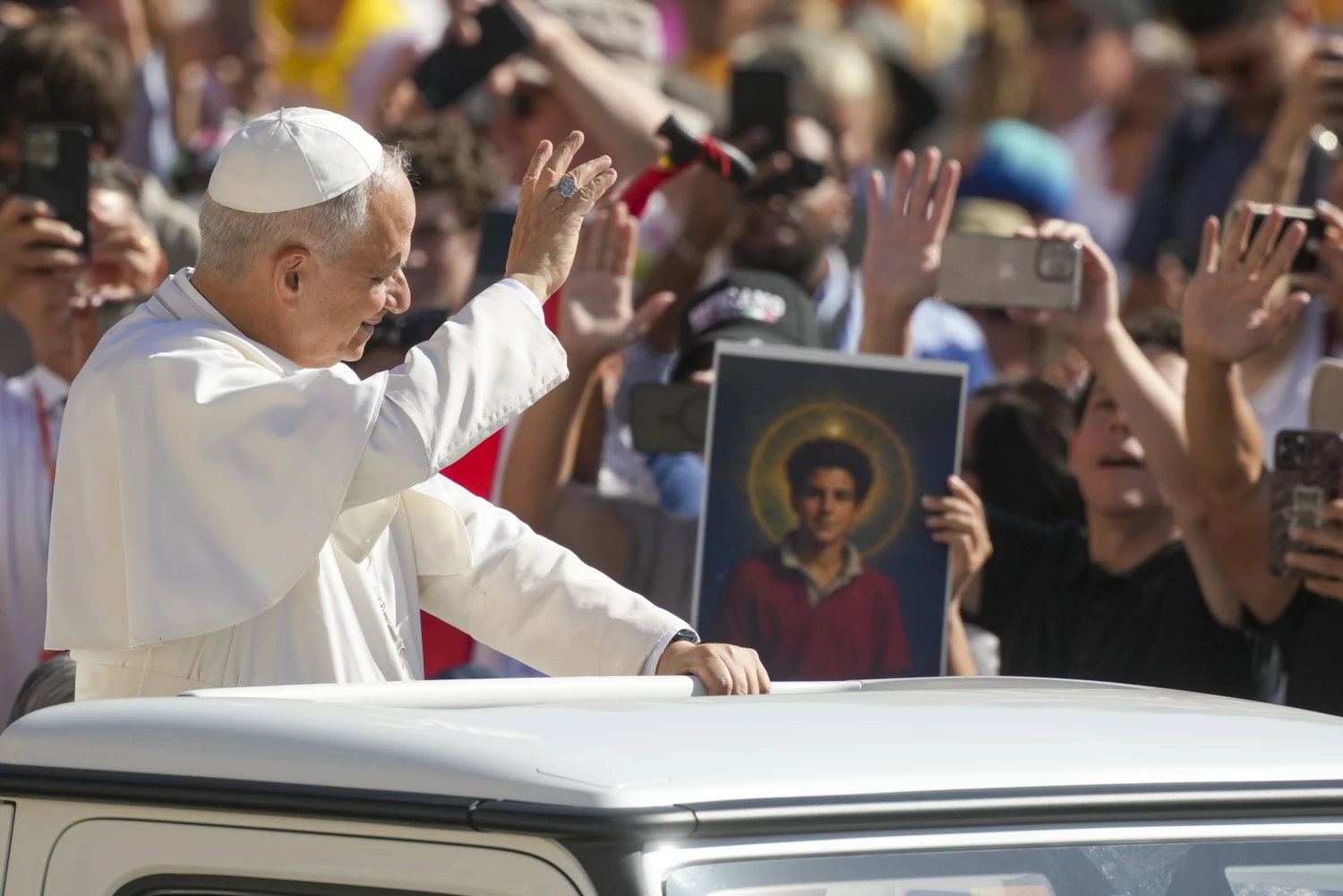
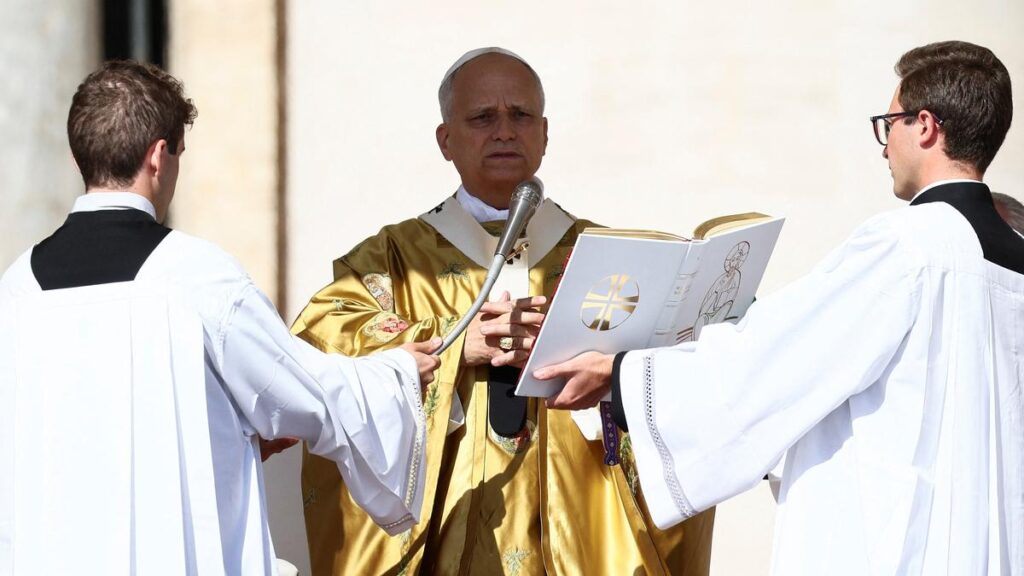
St Peter’s Square at the Vatican was filled with tens of thousands of worshippers on Sunday as Pope Leo XIV declared two new saints, including Carlo Acutis, the Italian teenager widely known as “God’s Influencer” for using the internet to spread the Catholic faith.
Carlo, born in London in 1991 and raised in Milan, died of leukaemia at the age of 15 in 2006. His canonisation drew an estimated 80,000 people, many of them young, to witness the historic ceremony. For the Catholic Church, his sainthood marks a powerful moment the first time a millennial has been officially recognised as a saint.
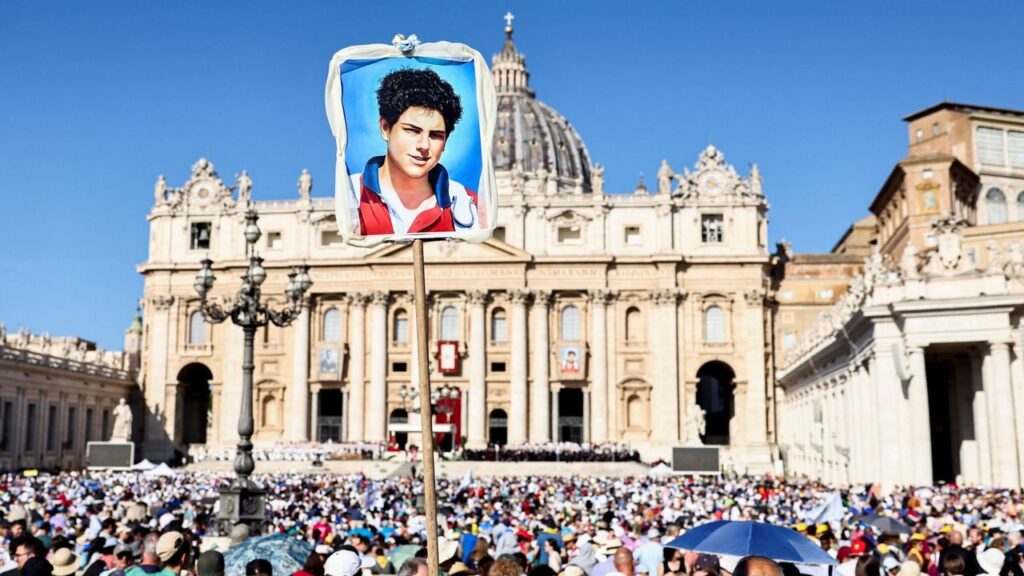
“He was able to combine his everyday life school, football and his passion for IT and computers with an unshakeable faith,” said 17-year-old Filippo Bellaviti, who travelled to the Vatican for the event. “Seeing people from so many parts of the world, you can see the affection for Carlo for what he’s done.”
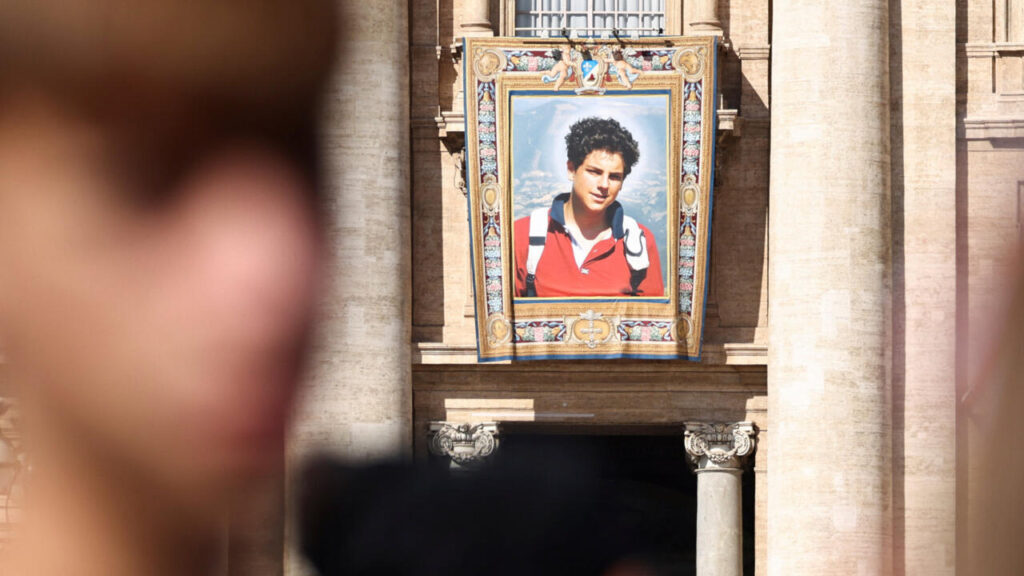
Alongside Acutis, the pope also canonised Pier Giorgio Frassati, an Italian engineering student and mountaineer who died at 24 in 1925. Tapestries of both men were draped over the facade of St Peter’s Basilica during the mass, where Pope Leo described their lives as an example to the younger generation. “Saints Pier Giorgio Frassati and Carlo Acutis are an invitation to all of us, especially young people, not to squander our lives, but to direct them upwards and make them masterpieces,” he said.
Despite his short life, Acutis stood out for his unusual blend of youthful modernity and devout spirituality. Nicknamed the “cyber-apostle,” he wore jeans and Nike trainers, even in the glass tomb in Assisi where his preserved body now rests. A devoted gamer and budding programmer, he built websites documenting Eucharistic miracles and Catholic teachings, blending technology with evangelisation in a way no saint before him had done.
His mother, Antonia Salzano, who attended the ceremony with her family, called her son proof that holiness is not reserved for a select few. “We are all called to be saints… everyone is special,” she said. His younger brother Michele, born after Carlo’s death, read during the mass, which marked Pope Leo XIV’s first canonisation ceremony since succeeding Pope Francis.
Pilgrimage to Acutis’s tomb has already attracted widespread devotion, with nearly a million visitors recorded last year. Initially scheduled for April but delayed following the death of Pope Francis, Sunday’s ceremony was filled with energy, particularly among the younger faithful.
Among them was 15-year-old Eleanor Hauser from North Carolina, who was in Italy on a school trip. “It shows that you can do so much even when you’re young, you can make an impact on the world no matter how old you are,” she said.
Canonisation in the Catholic Church follows a rigorous process, requiring evidence of two miracles. In Acutis’s case, the first was the healing of a Brazilian child with a rare pancreatic condition, and the second involved the recovery of a Costa Rican student after a serious accident. Both families had prayed to the teenager for intercession. He was beatified in 2020 by Pope Francis, setting him on the final step toward sainthood.
Frassati, who was also honoured, dedicated his life to serving the poor and sick in Turin before dying of polio. He was beatified by Pope John Paul II in 1990, and the Vatican recognised his second miracle in 2024: the unexplained recovery of an American man in a coma.
As tapestries of the two new saints hung from St Peter’s Basilica, Pope Leo XIV urged the faithful to see their lives as models of courage, generosity, and faith. For many, especially the younger generation, Acutis represents a saint who speaks directly to their digital, modern, yet deeply spiritual world.
What You Should Know
Carlo Acutis, dubbed “God’s Influencer,” has become the Catholic Church’s first millennial saint after Pope Leo XIV canonised him at the Vatican.
The 15-year-old, who died in 2006, used his passion for computers and gaming to share his faith online.
His canonisation, alongside Pier Giorgio Frassati, highlights the Church’s recognition of modern expressions of holiness that resonate with younger generations.