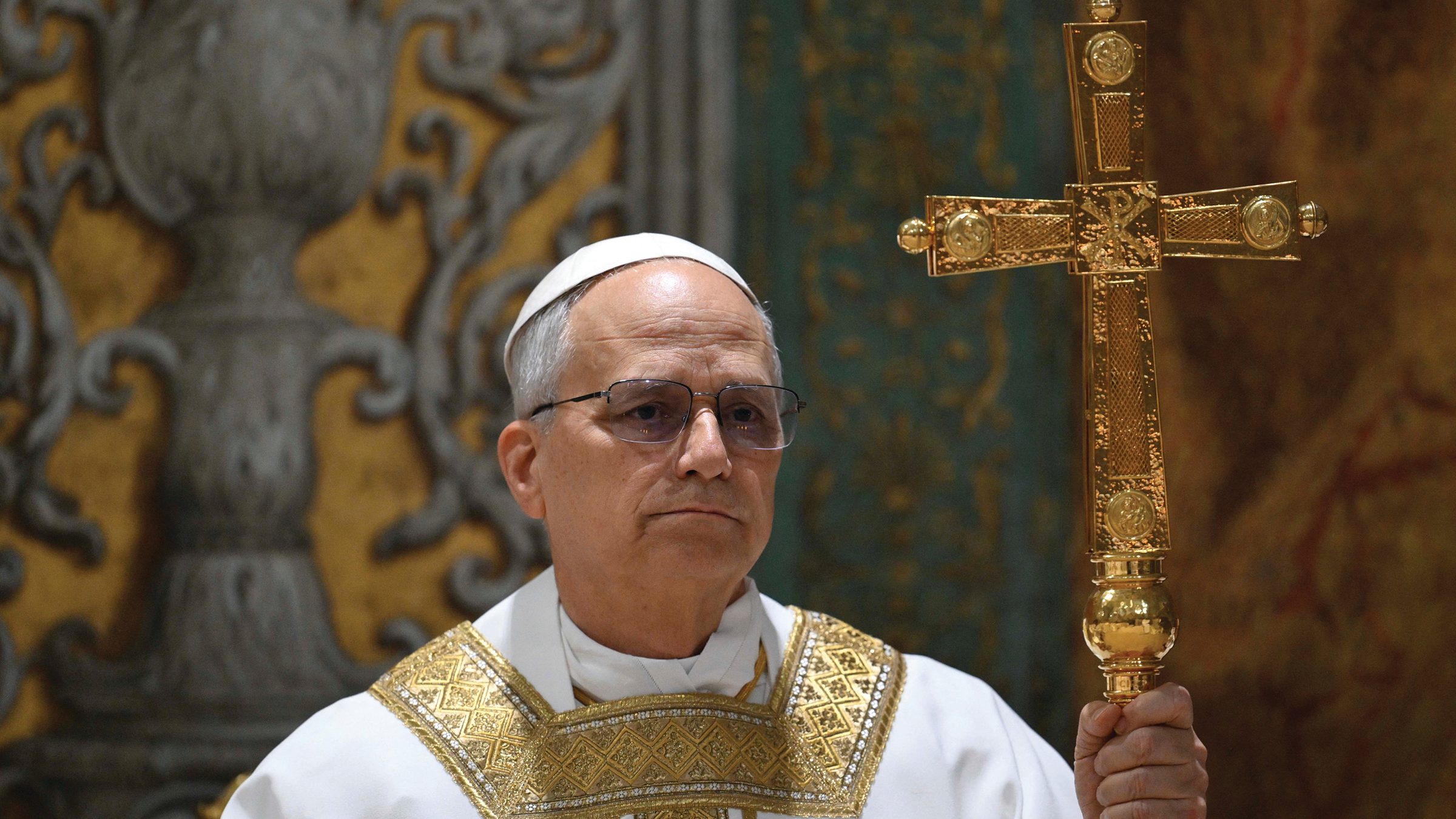
Pope Leo XIV used his Sunday Angelus address in St. Peter’s Square to press the international community for urgent help in containing an Ebola outbreak in the Democratic Republic of Congo that health officials say is now the deadliest in the country’s history.
Speaking to pilgrims and tourists gathered under a bright late-summer sky, the pontiff said he carries the crisis in his prayers.
“In my prayers I often remember the Democratic Republic of the Congo, especially because of the spread of the Ebola epidemic, which unfortunately is causing many victims,” he told the crowd, before calling for a coordinated response that draws in the communities most affected rather than treating them as passive recipients of outside aid.
The appeal comes as the outbreak, the country’s 17th recorded Ebola epidemic and, by confirmed-case count, its worst ever, tears through six of the DRC’s 26 provinces. Declared in mid-May, the epidemic has already killed more than 2,500 people, surpassing the toll of the devastating 2018–2020 outbreak.
The World Health Organization has described the pace of transmission as exceptional, and health workers on the ground report a fatality rate approaching one in two confirmed cases.
The crisis is concentrated in the country’s north and east, precisely the regions where state authority is thinnest, clinics and hospitals are scarce, and decades of conflict among armed groups have made travel and treatment perilous.
Congolese authorities say they have received more than 16,000 doses of the Ervebo vaccine, which has proven effective against other Ebola strains. Still, the variant driving this outbreak, the Bundibugyo strain, has no approved vaccine or treatment of its own.
Aid workers say fighting between government forces and militias controlling several of the hardest-hit cities continues to slow the response, complicating everything from contact tracing to the safe burial of victims.
Pope Leo, who traveled to Africa in April, framed the epidemic as part of a broader pattern of suffering on the continent that has drawn his attention throughout the year, from displacement in eastern Congo to flooding in the south.
The pope also turned his attention to the Central African Republic, where a landslide at a gold mine in Zamboyé, near the border with Cameroon, killed dozens of people on Tuesday.
Rescue teams have continued digging through the rubble in the days since, with many victims still unaccounted for and feared buried.
“May the Lord welcome all those who lost their lives, and support efforts to guarantee the safety and legality of mining sites,” Leo said, a remark that pointed toward the often-unregulated artisanal mining operations blamed for a string of similar disasters across the region in recent years.
Closer to home, the pope looked ahead to Monday’s tenth anniversary of the earthquake that flattened the central Italian town of Amatrice, killing roughly 300 people in August 2016 and leaving a lasting scar on the surrounding Apennine communities.
He offered prayers for the dead, their families, and the towns still rebuilding a decade later.
Together, the three appeals underscored a recurring theme of Leo’s Sunday addresses this year: a pontiff repeatedly directing the world’s attention toward crises from disease and disaster to conflict that might otherwise slip from international headlines once the initial shock fades.
WHAT YOU SHOULD KNOW
Pope Leo XIV’s Sunday appeal underscores one urgent fact: the Ebola outbreak now ravaging the Democratic Republic of Congo is the deadliest in the country’s history, having killed more than 2,500 people across six provinces since May, and it’s spreading fast in regions where conflict and collapsed health infrastructure leave communities with almost no defense against it.
Without a coordinated international response that empowers local communities rather than bypassing them, the death toll will keep climbing.