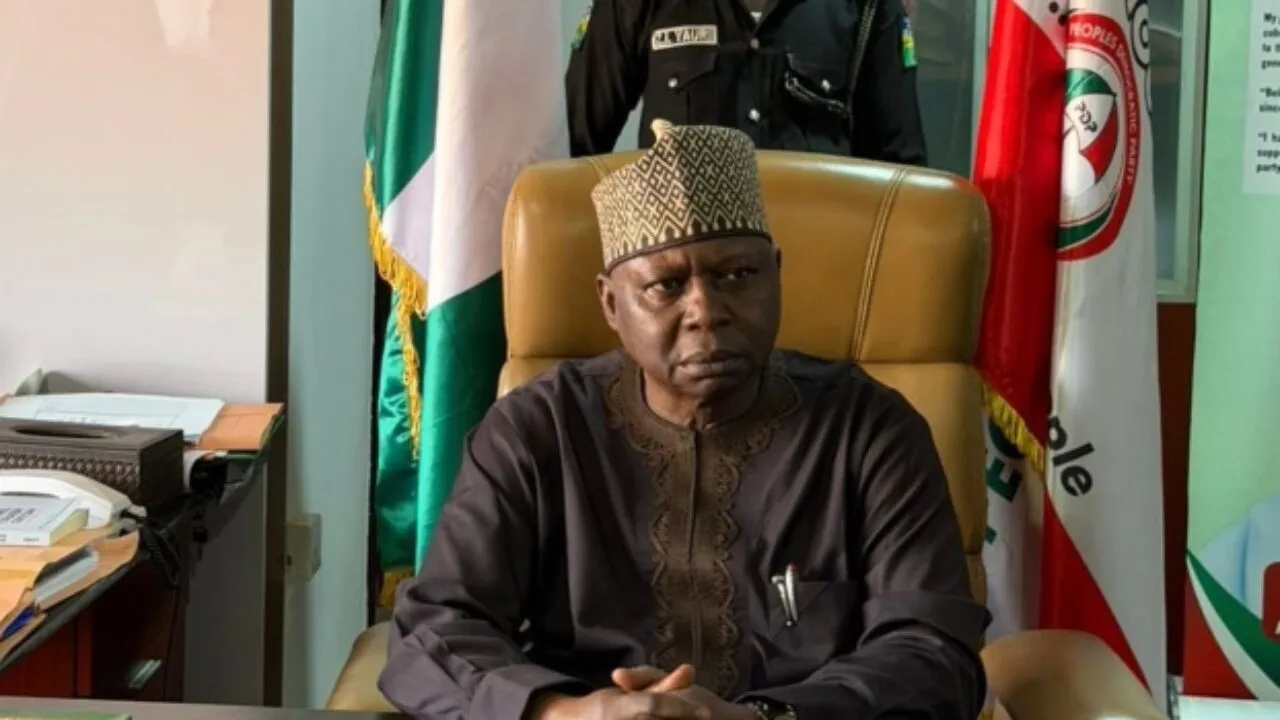
The Kabiru Turaki-led Peoples Democratic Party has formally asked Justice Joyce Abdulmalik to withdraw from presiding over the lawsuit challenging the party’s leadership structure.
The request was made in a motion on notice submitted by Chris Uche (SAN), who represented the Turaki faction. The suit itself originated from the camp loyal to the FCT Minister, Nyesom Wike, and was filed by its acting National Chairman, Alhaji Mohammed Abdulrahman.
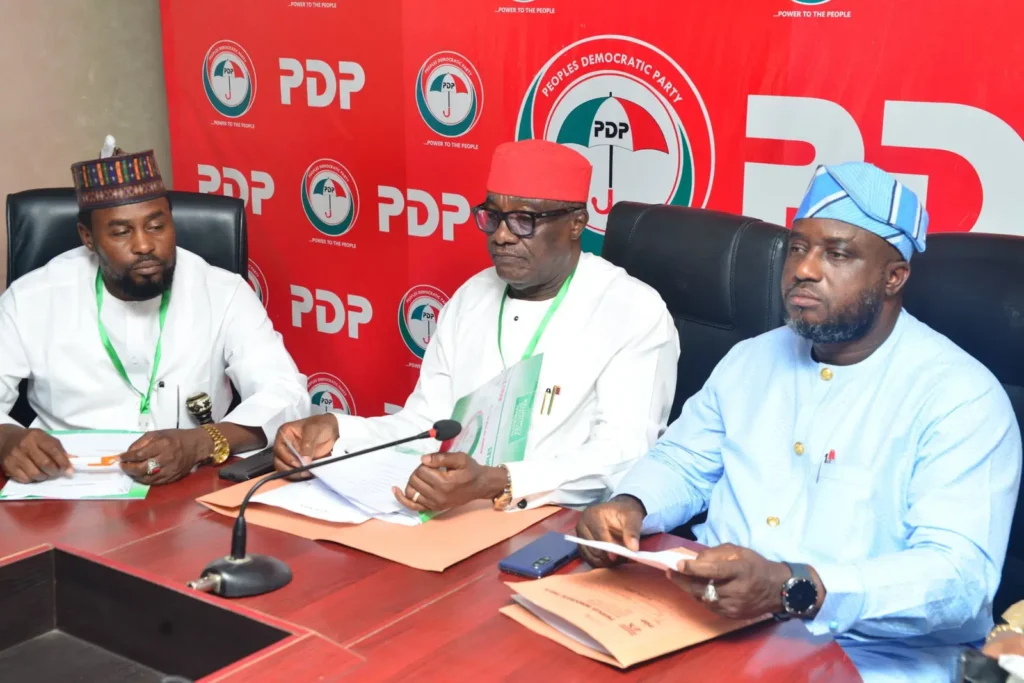
In the motion, Uche urged the court to grant an order compelling Justice Abdulmalik to “recuse herself from further presiding over or taking any further steps in the suit upon circumstances giving rise to reasonable apprehension that they will not receive a fair and impartial hearing before the court.” He also called for the case to be reassigned by the Chief Judge of the Federal High Court to another judge capable of hearing it on its merit.
Arguing on twelve separate grounds, Uche stated that the constitutional guarantee of fair hearing under Section 36(1) of the 1999 Constitution includes the right to appear before a tribunal with no form of bias. According to him, actions taken so far by the presiding judge have raised serious concerns about impartiality. He said his clients had previously petitioned the Chief Judge of the Federal High Court, Justice John Tsoho, requesting that disputes relating to the internal affairs of the PDP not be assigned to Justice Abdulmalik or two other judges due to what they described as past patterns that indicated partisanship.
Uche pointed out that despite the protest letter, the case was still assigned to Justice Abdulmalik. He explained that the party wrote again to the Chief Judge to request a transfer, but the matter still proceeded in her courtroom. He insisted that this sequence of events deepened the perception that his clients might not receive the neutral consideration the law demands.
The senior lawyer further argued that although the suit was filed on November 21, 2025, an ex parte order emerged from Abdulmalik’s court on November 25 in a manner he described as suspiciously similar to the format used by Justice Omotosho in another related PDP matter. He said the order, while appearing to deny the reliefs sought, nevertheless granted extensive directives against the defendants that touched on the heart of the case. Uche added that these orders were issued even though the matter lacked the urgency usually required for ex parte rulings.

He also maintained that both suits assigned to Justice Abdulmalik centered on the PDP’s national convention, which is an internal matter of the party. He said the circumstances displayed a pattern that raised legitimate concerns about fairness. Uche submitted that judicial proceedings “must not only be fair but must manifestly appear to be fair,” stressing that a reasonable observer, aware of all the developments, could conclude that the defendants were unlikely to get justice from the court.
In addition to asking the judge to step aside, the plaintiffs sought orders restraining the Independent National Electoral Commission from recognizing any other address for the PDP beyond what is already in its records, and stopping the Turaki-led faction from presenting themselves as the party’s representatives. They also asked the court to affirm that INEC, the Inspector-General of Police, the FCT Police Command, and the DSS are required to enforce earlier judgments delivered by Justices James Omotosho and Peter Lifu.
The case was originally filed by Onyechi Ikpeazu (SAN), with INEC, the I-G, the FCT Commissioner of Police, and the DSS listed as the first set of defendants. Others joined in the suit included Umar Damagun, Kabiru Turaki, SAN; Arapaja Taofeek; Hamza Kosre, and Dr. Daniel Woyengikuro, among several other party figures.
During Friday’s proceedings, Ikpeazu represented the plaintiffs, Uche appeared for the 5th to 25th defendants, while Mimi Ayua represented the police. The parties informed the court that they still had not been served with all the processes in the matter. Justice Abdulmalik adjourned the hearing to allow all parties to regularize their filings and fixed January 14, 2026, for arguments on pending applications and the main suit.
When the second suit by the Turaki-led faction was called later in the day, Terkaa Aondo (SAN) appeared for the plaintiffs, with Ayua again representing the police. Ken Njemanze (SAN), who appeared for parties seeking to be joined, told the court he had not been served with documents to enable him respond. The parties seeking to be joined include Alhaji Mohammed Abdulrahman, Sen. Samuel Anyanwu, and the PDP Board of Trustees Chairman, Sen. Mao Ohuabunwa.
Justice Abdulmalik instructed all sides to complete their filings before the next date and scheduled January 16 for hearing all applications and the substantive matter. In the second suit, the plaintiffs, including the PDP National Chairman, Kabiru Turaki, and the National Secretary, Taofeek Arapaja, asked the court to compel the police to vacate the party’s national headquarters at Wadata Plaza in Abuja, along with several other related prayers.
What You Should Know
This case highlights the deepening internal crisis within the Peoples Democratic Party, where two major factions are battling for control of the party’s national leadership.
The Turaki-led camp is challenging both the legitimacy of court orders issued against it and the neutrality of the judge handling the matter. The dispute is fueled by political divisions linked to the influence of the FCT Minister, Nyesom Wike.
With multiple suits, petitions to the Chief Judge, and allegations of bias, the conflict underscores how internal party battles have increasingly shifted into the courtroom.