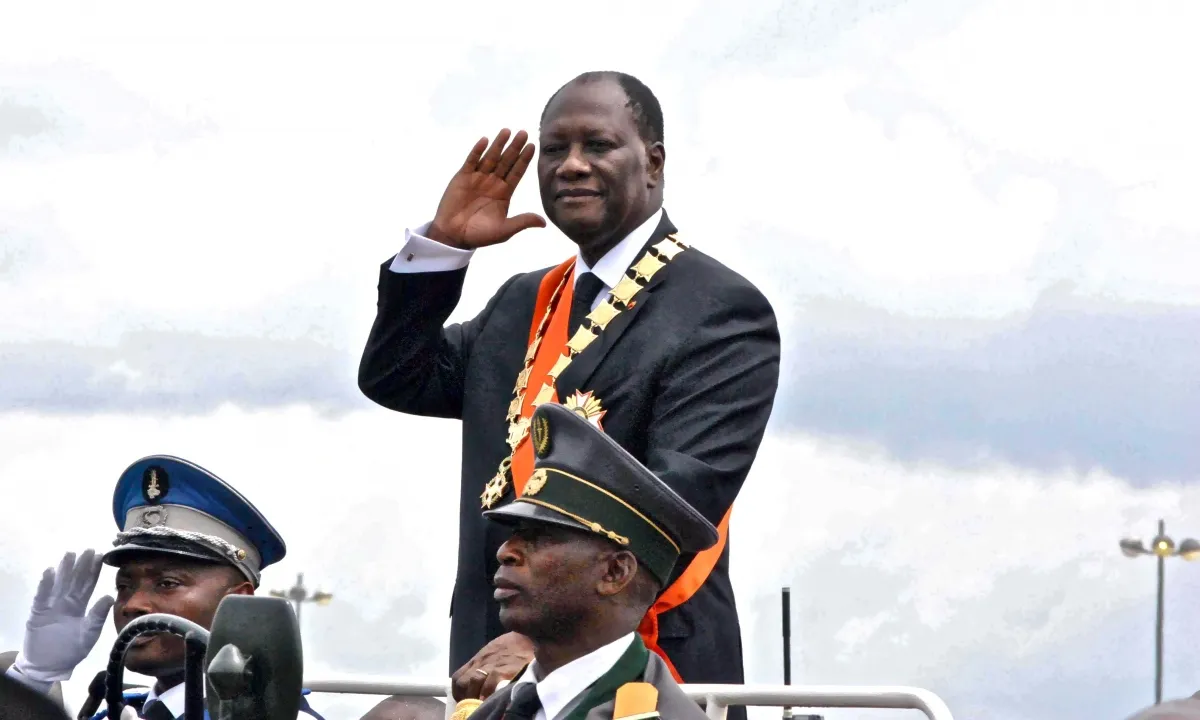
President Alassane Ouattara was sworn in on Monday for a fourth term as president of the Ivory Coast, following an election in which his two most prominent challengers were barred from contesting.
The 83-year-old leader secured his renewed mandate with almost 90 percent of the vote during the October 25 poll, although turnout across the country stood at just over half of registered voters, reaching 50.1 percent.
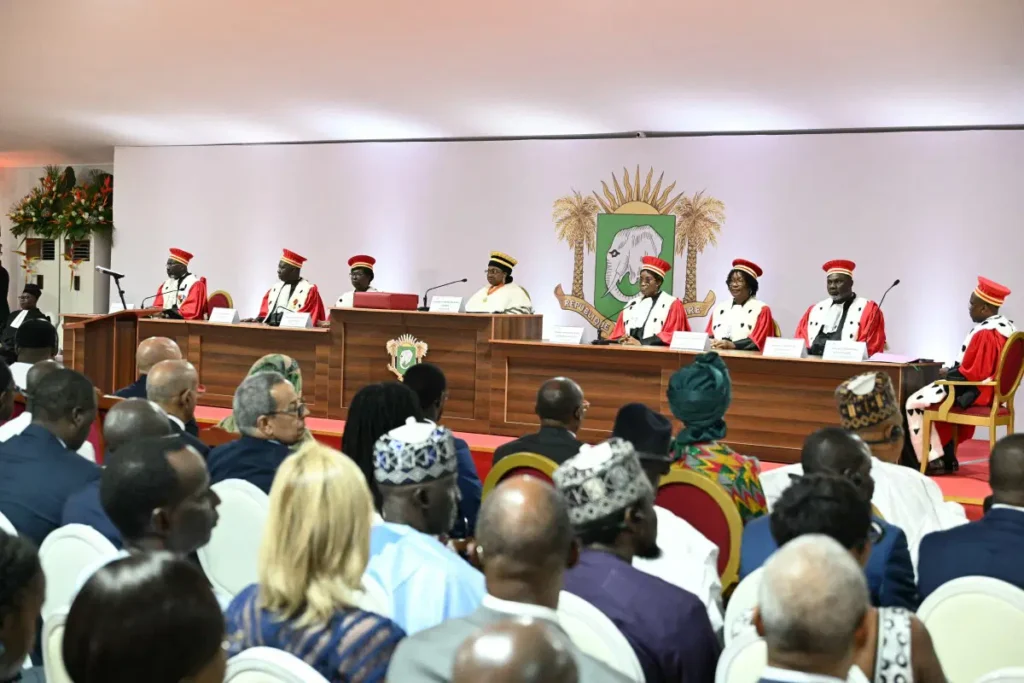
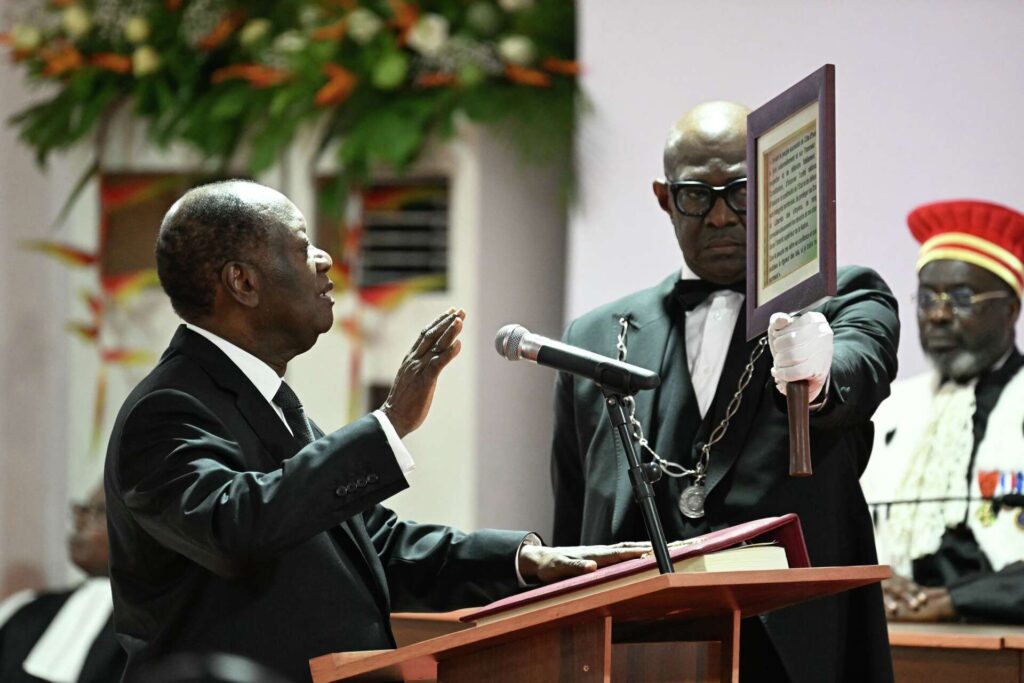
Having governed the West African country since emerging victorious from the deadly political standoff that engulfed the 2010 election, Ouattara pledged during his swearing-in ceremony to “loyally defend the constitution”. The longtime statesman, who will celebrate his 84th birthday in January, also promised that this term would usher in what he described as a period of “generational transition”.
The inauguration held at the presidential palace in Abidjan drew leaders from 11 African nations, alongside former heads of state, including Niger’s ex-president Mahamadou Issoufou. France, the nation’s former colonial ruler with which the Ivory Coast has maintained strong ties, was represented by National Assembly Speaker Yael Braun-Pivet. The United States delegated Jacob Helberg, Under Secretary of State for Economic Affairs, who was scheduled to meet Ouattara later in the day.
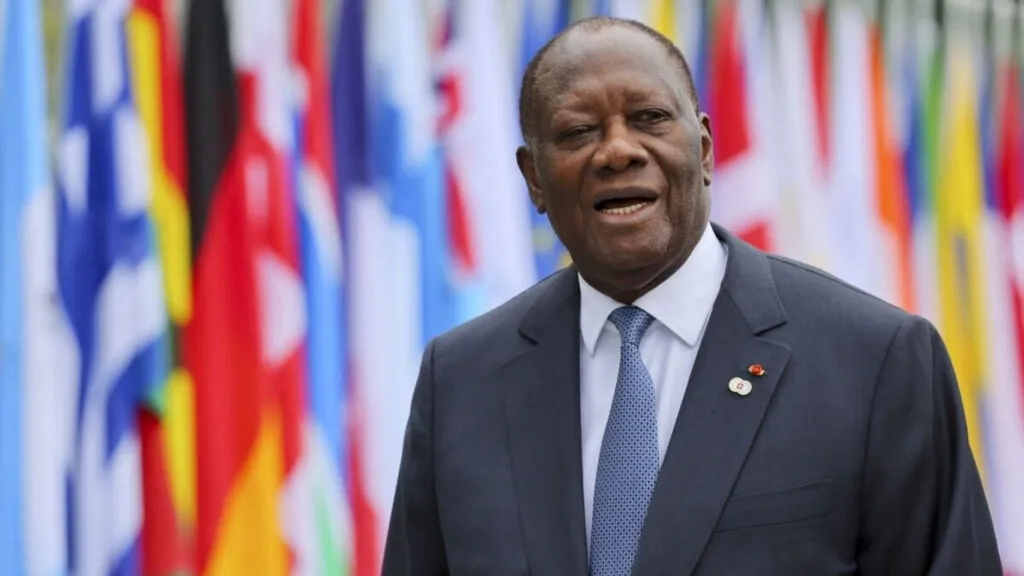
Neither Laurent Gbagbo nor Tidjane Thiam, the two key opposition figures prevented from running, attended the inauguration. Gbagbo was disqualified because of a criminal conviction, while Thiam was excluded based on nationality-related concerns.
During his address after taking the oath, Ouattara declared that the Ivory Coast had “profoundly changed” since he first assumed office. He noted that his administration had “restored the authority of the state, consolidated peace, strengthened national cohesion, and our institutions”, adding that his government had also ensured stability throughout the entire nation.
Throughout his years in power, Ouattara has remained one of the firmest critics of military takeovers in the region, including the recent event in Guinea-Bissau and the attempted putsch in Benin over the weekend. His firm stance has placed him at odds with several West African leaders, particularly the ruling juntas in the neighbouring states of Burkina Faso, Mali, and Niger. Still, the Ivorian president emphasised that his diplomatic outlook continued to be shaped by the same guiding belief: “Ivory Coast, friend to all and enemy to no one.”
On the matter of succession, a topic that has continued to fuel political debate since the passing of Amadou Gon Coulibaly, his previously chosen successor, Ouattara insisted that a handover to a younger generation remained a priority. He referred to his new mandate as one that would signal a significant transfer of leadership responsibilities. “This term will be one of generational transmission; it will be, for our nation and me, an act of responsibility and political maturity,” he said.
What You Should Know
Alassane Ouattara’s fourth inauguration comes at a moment when the Ivory Coast is balancing political stability with growing concerns over democratic openness.
The exclusion of his two strongest opponents significantly shaped the electoral landscape, yet Ouattara continues to position himself as a guardian of constitutional rule and a regional voice against coups.
His renewed pledge for a “generational transition” hints at a potential shift in the country’s political future, especially as discussions around his eventual successor intensify. His leadership remains influential across West Africa, shaping alliances and tensions alike.