Global oil markets experienced significant volatility on Monday as crude prices jumped to their highest levels since January following the United States’ unprecedented decision to join Israel in striking Iran’s nuclear facilities over the weekend.
After initially favoring diplomacy, US President Donald Trump resorted to an extraordinary use of force against Iran on Saturday night, striking three of the regime’s key nuclear sites. The coordinated attack has dramatically escalated tensions in the Middle East and sent shockwaves through energy markets worldwide.
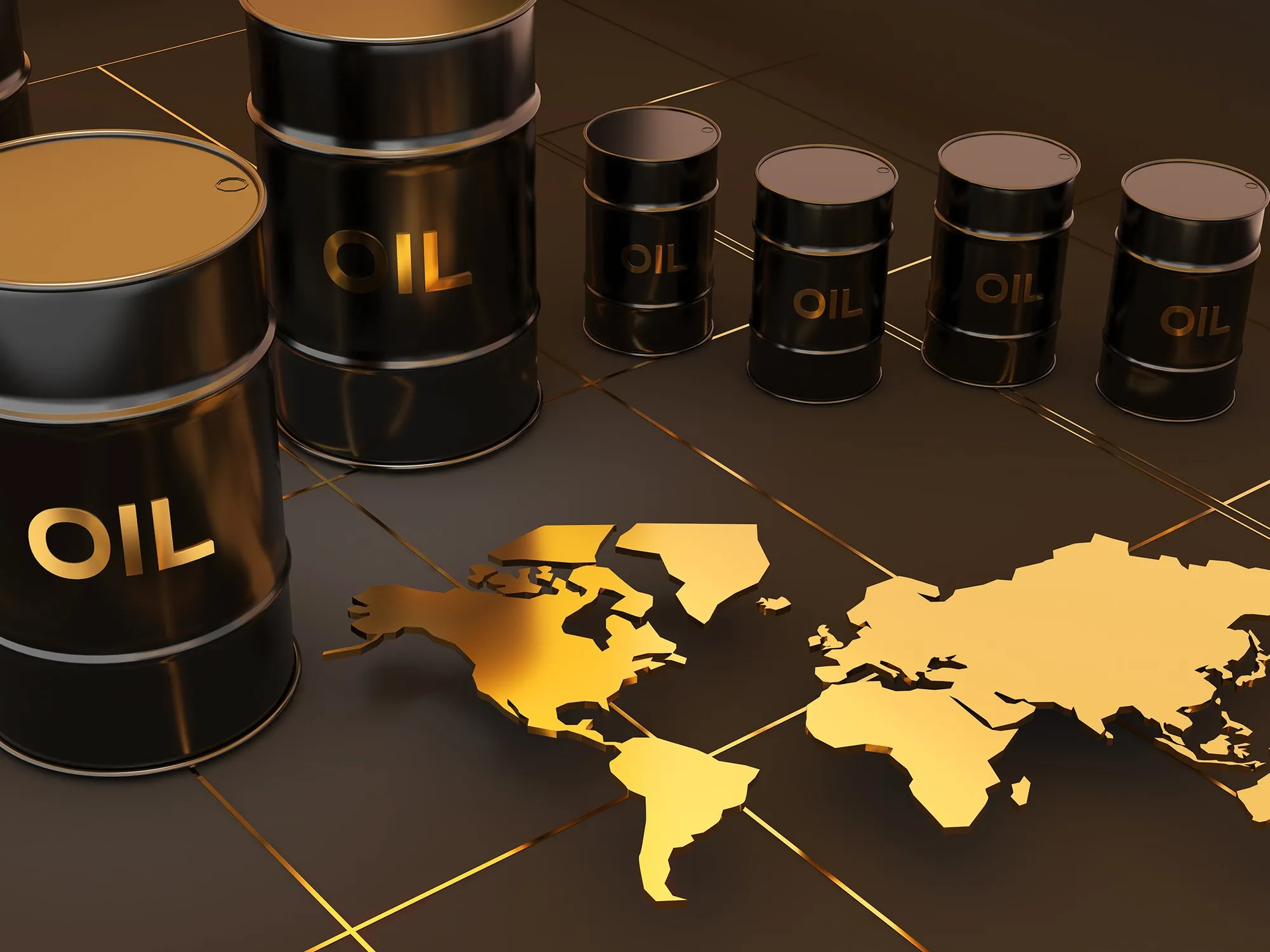
Brent crude futures climbed 72 cents, or 0.93%, to $77.73 per barrel as of 0806 GMT, while U.S. West Texas Intermediate crude advanced 71 cents, or 0.96%, to $74.55. Both benchmarks had surged more than 3% earlier in the session, with Brent touching $81.40 and WTI reaching $78.40, levels not seen in five months, before moderating later in the day.
The price rally comes as “We have completed our very successful attack on the three nuclear sites in Iran, including Fordow, Natanz, and Esfahan. All planes are now outside of Iran’s space,” Trump wrote on his Truth Social platform, confirming the scope of the weekend operation that has fundamentally altered the regional security landscape.
Iran, OPEC’s third-largest crude producer, has vowed to defend itself against what it characterizes as an unprovoked escalation. A prominent official from the Iran-supported Houthi rebels in Yemen said in a social media post early Sunday that it would hold US President Donald Trump responsible for the US airstrikes on Iranian nuclear facilities.
The Iranian government has denounced Trump as a “gambler” for joining Israel’s military campaign and warned that the attacks have “expanded the range of legitimate targets” for its armed forces.
Market participants are growing increasingly concerned about the potential for Iranian retaliation, which could disrupt global energy supplies. The Strait of Hormuz, through which approximately one-fifth of the world’s crude oil flows, has become a particular focal point of worry. Energy analysts warn that any Iranian move to block this critical waterway could trigger massive supply disruptions and send prices soaring.
“The current geopolitical escalation provides the fundamental catalyst for (Brent) prices to traverse higher and potentially spiral towards $100, with $120 per barrel appearing increasingly plausible,” said Sugandha Sachdeva, founder of New Delhi-based research firm SS WealthStreet.
Goldman Sachs has issued particularly stark warnings about potential price scenarios, suggesting in a Sunday report that Brent could briefly peak at $110 per barrel if oil flows through the Strait of Hormuz were halved for a month, with impacts lasting nearly a year.
The strikes represent a significant shift in U.S. policy under President Trump’s second term. The US attacked three key Iranian nuclear facilities early Sunday local time. Trump claimed the operation “obliterated” the sites, but officials are still assessing how significant a blow it dealt to Tehran’s program.
Industry experts are warning of multiplying risks to regional oil infrastructure. “The risks of damage to oil infrastructure … have multiplied,” noted Sparta Commodities senior analyst June Goh, adding that alternative pipeline routes may not fully compensate if the Strait of Hormuz becomes inaccessible, as shipping companies increasingly avoid the volatile region.
Oil prices have already climbed about 10% since Israel launched its attack on Iran a week ago, but both U.S. crude oil and the global benchmark Brent have remained below $80 per barrel. However, analysts warn that oil is likely to rise by $3-5 per barrel when trading resumes on Sunday evening after the U.S. attacked Iran at the weekend, with potential for further acceleration if Iran launches significant retaliatory measures.
The weekend’s events have transformed what began as a bilateral conflict between Israel and Iran into a broader confrontation involving the world’s largest oil consumer and military power. As markets brace for Iran’s response, the global economy faces the prospect of sustained energy price volatility that could ripple through inflation expectations and economic growth projections worldwide.
The situation remains fluid, with diplomatic channels reportedly still active despite the military escalation. However, the involvement of U.S. forces in direct attacks on Iranian territory marks a new and potentially dangerous phase in Middle Eastern tensions, with energy markets serving as a barometer of global anxiety about what comes next.
WHAT YOU SHOULD KNOW
This unprecedented Middle East escalation has created a perfect storm scenario where Iran—OPEC’s third-largest oil producer—now has both the motive and capability to retaliate against critical energy infrastructure. The Strait of Hormuz, which carries one-fifth of the world’s oil supply, has become the focal point of concern as Iran considers its response options.
For ordinary consumers, this translates to a real possibility of oil prices spiking toward $100-120 per barrel in the coming weeks or months, potentially triggering higher gasoline prices, increased transportation costs, and broader inflationary pressures across the global economy.