Veteran Nollywood actor Jide Kosoko has delivered a stark warning about the crippling effects of piracy on Nigeria’s film industry, calling for radical changes to copyright enforcement that would see offenders face decades behind bars rather than manageable financial penalties.
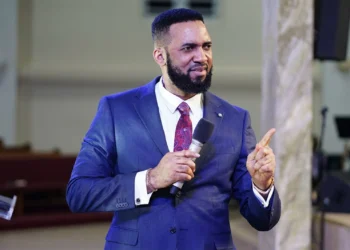
Speaking candidly on The Honest Bunch podcast, the 75-year-old actor, whose career has spanned more than five decades of Nigerian cinema, painted a sobering picture of an industry where creative professionals struggle to reap the financial rewards of their work despite Nollywood’s global acclaim and rapid expansion.
Kosoko’s testimony carries particular weight given his status as one of the industry’s most recognizable faces. Despite his extensive filmography and decades-long contribution to what has become Africa’s largest film industry, he revealed that piracy has significantly impacted his wealth accumulation, leaving him far from what many would consider financially secure by Nigerian standards.
“The punishment in the copyright law for piracy is still not strong enough as far as I am concerned,” Kosoko stated, cutting to the heart of what many industry insiders view as a systemic failure in protecting intellectual property rights. His critique centers on the fundamental mismatch between current penalty structures and the reality of modern piracy operations.
The actor’s analysis reveals a troubling economic paradox: those profiting most from piracy have often accumulated sufficient wealth to treat existing fines as merely a cost of doing business. “Somebody who has been pirating people’s works for years is a billionaire, so how much do you want to fine him? Fine him N500 million, and he will just bring it out of what he has sold,” he explained, highlighting how monetary penalties fail to serve as meaningful deterrents.
Kosoko’s proposed solution represents a significant departure from current enforcement approaches. Rather than relying on financial penalties that wealthy pirates can easily absorb, he advocates for custodial sentences of up to 20 years with no option for monetary bail. “But if you attach a 20-year jail sentence to it with no option of a fine, people will refrain from piracy,” he argued, emphasizing that only the prospect of losing personal freedom would effectively deter widespread copyright infringement.
The timing of Kosoko’s intervention is particularly significant as Nollywood continues to gain international recognition and investment. The industry, which produces thousands of films annually and has attracted streaming partnerships with global platforms like Netflix and Amazon Prime, faces a persistent contradiction: growing international prestige alongside domestic revenue leakage that undermines its economic foundation.
Industry analysts have long identified piracy as one of the primary obstacles preventing Nollywood from translating its massive audience reach into proportional financial returns for creators. While the industry’s cultural influence extends across Africa and the diaspora, many filmmakers struggle with business models that account for significant revenue loss to unauthorized distribution.
Kosoko’s call for legislative reform comes as Nigeria’s entertainment sector grapples with broader questions about intellectual property protection in the digital age. The proliferation of online platforms and mobile technology, while expanding audience access, has also created new avenues for unauthorized content distribution that existing laws struggle to address effectively.
The veteran actor’s recommendations align with growing calls from industry stakeholders for comprehensive copyright reform that recognizes the economic realities of modern creative industries. His emphasis on custodial rather than financial penalties reflects a broader understanding that effective deterrence must target what offenders value most: their freedom rather than their accumulated wealth.
As Nollywood continues its evolution from regional phenomenon to global cultural force, Kosoko’s intervention may catalyze policy discussions that have long been overdue. The industry’s ability to sustain its growth trajectory and provide adequate compensation for its creative workforce may ultimately depend on whether lawmakers heed calls for more robust copyright protection.
The actor’s frank assessment of his financial situation, despite decades of success, serves as a powerful illustration of piracy’s human cost, extending beyond abstract economic arguments to the lived experiences of the industry’s most accomplished practitioners. His willingness to speak publicly about these challenges may encourage other industry figures to add their voices to calls for meaningful reform.
For an industry that has already proven its creative and cultural value on the global stage, the question now is whether Nigeria’s legal framework will evolve to match Nollywood’s ambitions, ensuring that future generations of filmmakers can build sustainable careers in an environment where their intellectual property rights are genuinely protected.
WHAT YOU SHOULD KNOW
Veteran Nollywood actor Jide Kosoko has exposed a critical flaw in Nigeria’s fight against film piracy: current monetary fines are useless against wealthy pirates who can easily afford them. Despite his 50-year career, Kosoko admits he’s not financially secure due to piracy losses—a stark reality for even Nollywood’s biggest stars.
His solution is radical but logical: replace fines with 20-year prison sentences without bail options. As he puts it, billionaire pirates will simply pay N500 million fines from their stolen profits, but they won’t risk two decades in jail.