Motorists across Nigeria’s commercial and political capitals woke on Wednesday to steeper prices at filling stations as the Nigerian National Petroleum Company (NNPC) pushed petrol pump prices to N835 per liter in Lagos and N839 in Abuja, intensifying the financial pressure on households already grappling with rising living costs.
The latest adjustment represents an N50 increase from the previous N785 per liter in Lagos and an N20 jump from N815 in Abuja, signaling a new phase in the country’s evolving petroleum pricing regime following the removal of decades-old fuel subsidies.
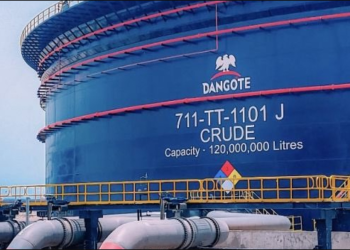
The price hike comes on the heels of a similar move by Dangote Refinery, which recently elevated its ex-gantry price—the rate at which refineries sell to marketers—to N799 per liter. Partner outlets operating under the MRS brand now retail the product at N839 per liter, up from N739, reflecting the cascading effect of upstream pricing adjustments on downstream distribution networks.
Speaking to journalists, David Bird, Chief Executive Officer of Dangote Petroleum Refinery, sought to reassure consumers that supply disruptions would not compound pricing pressures. He disclosed that the 650,000-barrel-per-day facility continues to pump approximately 50 million liters of petrol into the domestic market daily, with nationwide distribution proceeding without bottlenecks.
“The refinery’s operational flexibility allows it to process a wide range of crude and intermediate feedstocks, ensuring uninterrupted PMS supply even during planned maintenance activities,” Bird stated, using the industry term for Premium Motor Spirit, the technical designation for petrol.
The developments underscore a fundamental shift in Nigeria’s petroleum sector, where market dynamics—rather than government intervention—now increasingly determine pricing. The Nigerian Midstream and Downstream Petroleum Regulatory Authority has positioned itself as a champion of this new order, with its leadership arguing that competition, not subsidies, represents the path to sustainable supply and affordability.
In remarks on Tuesday, NMDPRA Chief Executive Saidu Mohammed defended the deregulated framework, asserting that the removal of petrol subsidies has unleashed market forces that improve efficiency and support price stability across the downstream sector. “Sustained competition, rather than subsidies, will guarantee an adequate supply of petrol and gas at affordable prices for Nigerians,” Mohammed said, extending his argument to include diesel and liquefied petroleum gas.
Yet the regulatory authority’s optimistic assessment may ring hollow for millions of Nigerians confronting the immediate impact of higher fuel costs on transportation, food prices, and overall household budgets. The latest increases come as inflation continues to erode purchasing power, with many economists warning that elevated petroleum prices could trigger broader inflationary pressures across the economy.
Industry watchers note that while Dangote Refinery’s entry into the market was expected to increase competition and potentially lower prices through local production, the reality has been more complex. The facility’s pricing decisions appear closely aligned with import parity pricing models—a mechanism that benchmarks local prices against international market rates plus logistics costs—suggesting limited immediate relief for consumers.
As Nigeria navigates this transition toward full deregulation, the country’s petroleum landscape is being reshaped by competing forces: the promise of market efficiency championed by regulators, the operational realities faced by refiners, and the economic anxieties of a population watching fuel prices climb with each passing week.
For now, motorists queuing at NNPC and independent stations across Lagos and Abuja must adjust to the new reality—one where the pump price increasingly reflects global market dynamics rather than government policy shields.
WHAT YOU SHOULD KNOW
Nigeria’s petrol prices have jumped to N835-N839 per liter in major cities as the government’s subsidy removal allows market forces to dictate costs. While regulators and Dangote Refinery insist that competition will eventually bring affordability and a stable supply, Nigerians are facing immediate financial pain with no guarantee that deregulation will deliver the promised relief.
The critical question remains: will market-driven pricing truly benefit consumers, or simply transfer the burden from government coffers to household budgets already stretched thin by inflation?