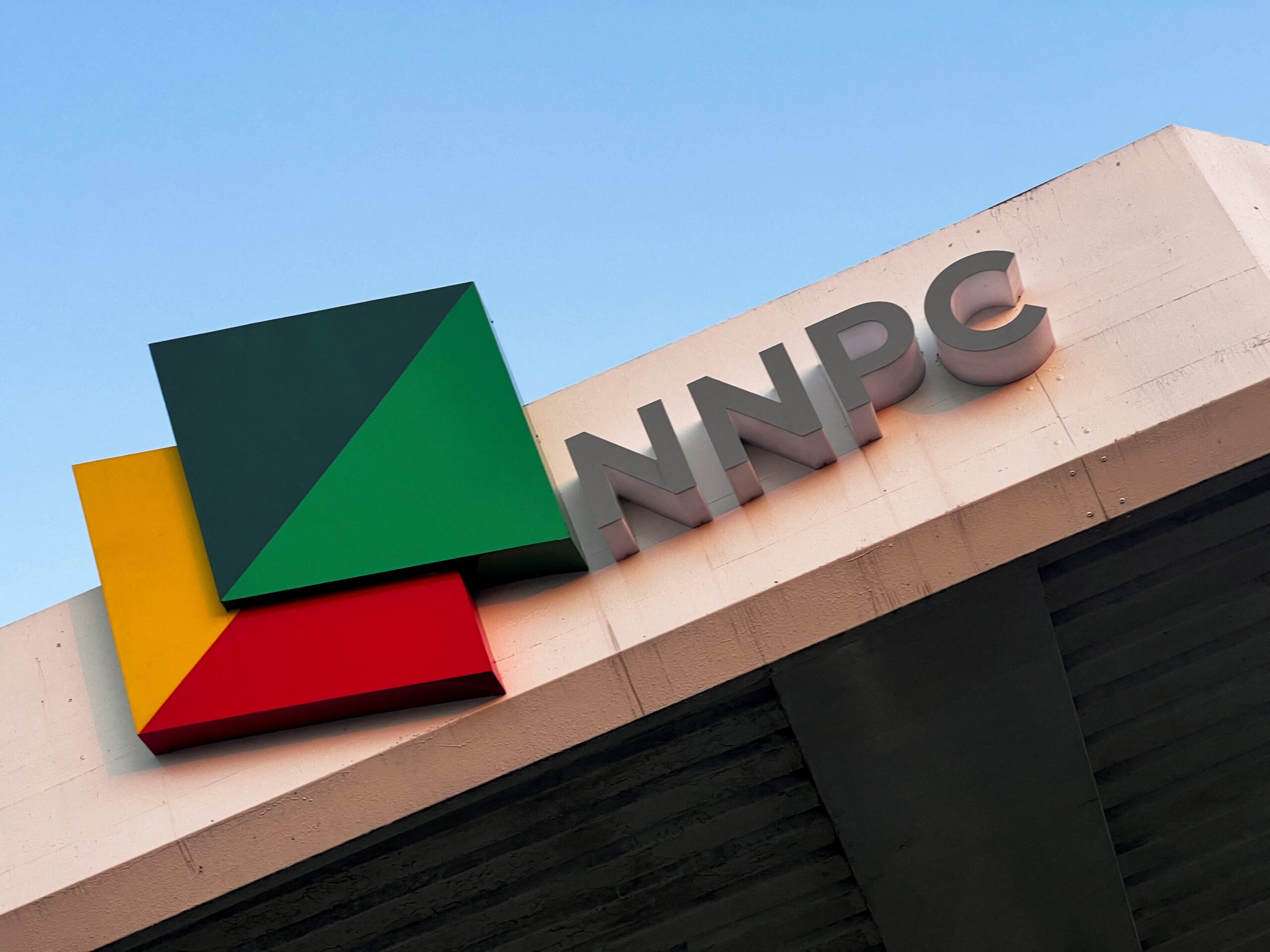
The Nigerian National Petroleum Company Limited (NNPCL) has achieved a significant breakthrough in the country’s energy infrastructure development with the completion of the main pipeline for the long-awaited Ajaokuta–Kaduna–Kano gas project, a move that could reshape industrial development across northern Nigeria.
NNPC’s Group Chief Executive Officer, Bayo Ojulari, announced the milestone following high-level consultations with President Bola Tinubu in Lagos on Sunday, describing the achievement as a turning point after years of technical setbacks that had stalled one of West Africa’s most ambitious pipeline projects.
“You remember sometime in summer, we were able to cross the River Niger, which has been a struggle for many years,” Ojulari told reporters, referring to one of the project’s most formidable engineering challenges. The crossing of Nigeria’s major waterway had long represented a critical bottleneck in efforts to transport natural gas from the energy-rich southern regions to the underserved industrial centers of the north.
With the main pipeline infrastructure now in place, NNPC is pivoting to the next critical phase: connecting distribution facilities and establishing the network of infrastructure needed to deliver gas to end users across major northern cities.
“By completing this main line, what that means is that we can begin to make all the connections to the main line, which we will do in the earlier parts of next year,” Ojulari explained. The executive outlined an ambitious timeline that would see gas flowing to key industrial hubs in Kaduna, Kano, Ajaokuta, and the capital city of Abuja in the coming months.
Industrial Rebirth on the Horizon
The implications extend far beyond energy supply. Ojulari emphasized that reliable gas access could catalyze a manufacturing renaissance in northern Nigeria, a region that has historically lagged behind the oil-rich southern states in industrial development.
“That brings gas in its full form into the northern part of Nigeria,” he said, describing plans for industrial parks, fertilizer production facilities, and power generation plants that would rely on the new gas supply. The infrastructure is expected to support both heavy industries and electricity generation, addressing two of the region’s most persistent economic challenges.
The AKK pipeline represents more than just energy infrastructure—it’s a potential game-changer for Nigeria’s economic geography, promising to distribute energy resources more equitably across a nation where regional disparities have long fueled social and economic tensions.
Production Gains Signal Operational Turnaround
Ojulari’s briefing also highlighted broader operational improvements at NNPC, which he attributed to internal restructuring and strategic investment decisions. The state oil company has recorded notable production increases across both oil and gas sectors over the past year.
Oil production has climbed from approximately 1.5 million barrels per day in 2024 to over 1.7 million barrels per day in 2025—a gain of more than 13 percent that reflects improved operational efficiency and security conditions in oil-producing regions. Meanwhile, gas production has increased from approximately 6.5 billion standard cubic feet per day to over 7 billion standard cubic feet per day.
These production increases come at a crucial time for Nigeria’s economy, which remains heavily dependent on oil revenues despite repeated government pledges to diversify. The gains also suggest that recent reforms within NNPC—including efforts to combat oil theft and improve aging infrastructure—may be yielding tangible results.
Ambitious Targets Ahead
Looking forward, Ojulari outlined aggressive production targets that underscore the government’s determination to maximize petroleum revenues. NNPC aims to reach at least 1.8 million barrels per day in oil output by next year, with President Tinubu setting an even more ambitious goal of two million barrels daily by 2027.
Perhaps most striking is the investment mandate: President Tinubu has tasked NNPC with attracting $30 billion in new investments by 2030, a target that reflects both the capital-intensive nature of energy infrastructure development and the government’s recognition that state resources alone cannot meet the country’s energy needs.
“Our key focus in 2026 will be increasing oil and gas production by attracting new investments,” Ojulari said, acknowledging that meeting these targets will require substantial participation from international oil companies and domestic investors.
Strategic Implications
The AKK pipeline’s completion arrives at a moment when Nigeria is grappling with multiple energy challenges, from chronic power shortages to questions about the country’s role in global energy markets. As Africa’s largest economy and most populous nation, Nigeria has long struggled to translate its substantial hydrocarbon reserves into broad-based economic development and reliable electricity for its citizens.
The northern expansion of gas infrastructure could help address these challenges by supporting manufacturing, reducing the region’s dependence on expensive diesel generators, and potentially lowering electricity costs for both industrial and residential consumers.
However, significant hurdles remain. The connections and distribution infrastructure that Ojulari described as the “next phase” will require substantial additional investment and coordination. Questions about pricing, maintenance, security of the pipeline, and the pace of industrial uptake will likely determine whether the AKK project fulfills its transformative promise or becomes another example of infrastructure that fails to deliver anticipated economic benefits.
For now, NNPC and the Tinubu administration are celebrating a hard-won milestone in a project that has faced numerous delays since its inception. Whether the pipeline becomes a catalyst for northern industrial development or simply another piece of energy infrastructure will depend on execution in the critical months ahead.
WHAT YOU SHOULD KNOW
Nigeria has completed the main pipeline of the Ajaokuta–Kaduna–Kano gas project after overcoming major technical challenges, including crossing the River Niger. This breakthrough will finally bring natural gas supply to northern Nigeria’s industrial cities starting in early 2026, potentially transforming the region’s manufacturing sector and power generation capacity.
The project is central to President Tinubu’s ambitious plan to boost oil production to 2 million barrels per day by 2027 and attract $30 billion in energy investments by 2030. Success hinges on whether NNPC can efficiently complete the distribution connections and whether industries actually materialize to use the gas, turning this infrastructure achievement into a genuine economic transformation for Nigeria’s historically underserved northern region.