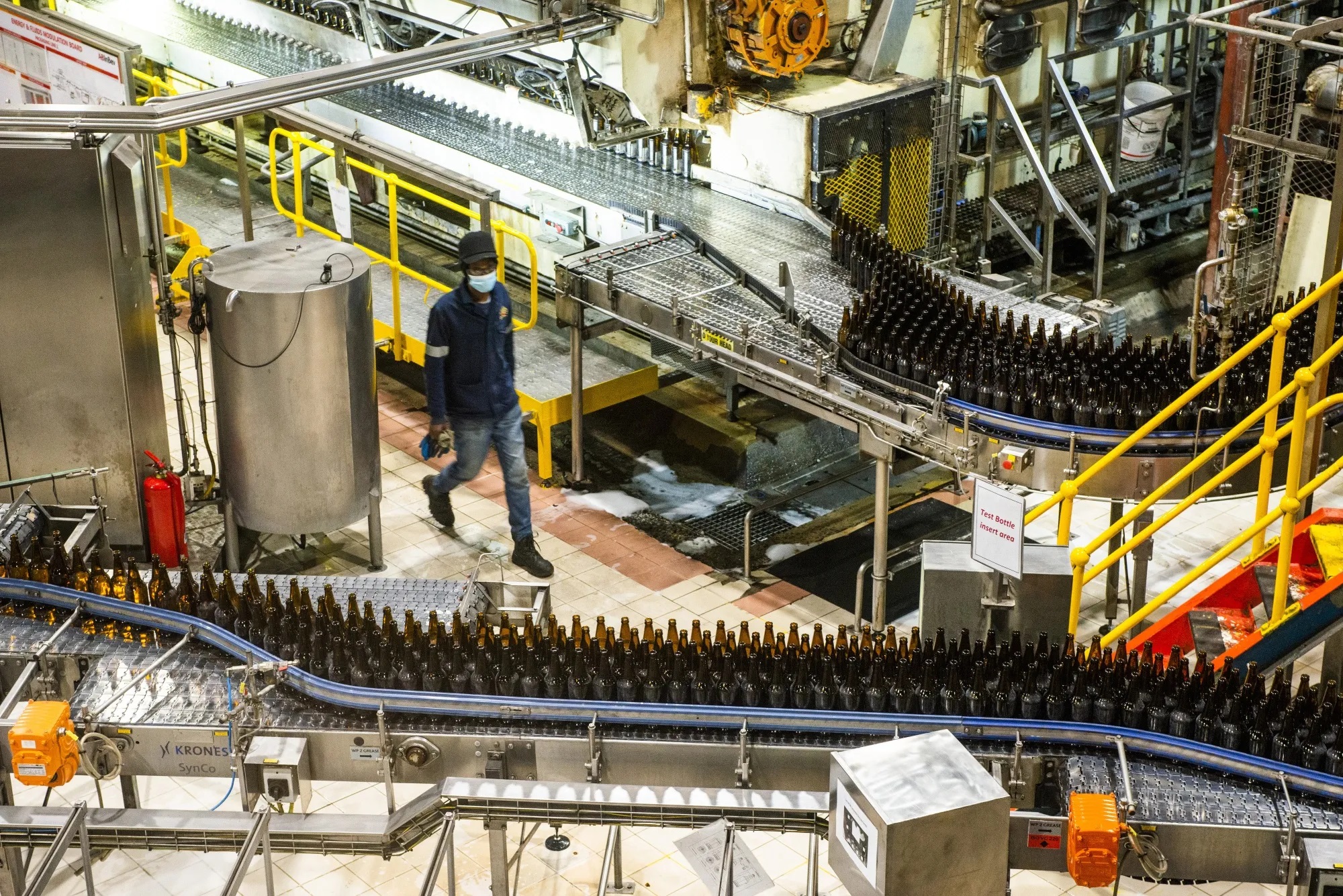
Nigeria’s manufacturing sector delivered its strongest tax performance on record in 2025, contributing a combined N2.05 trillion in value-added tax and company income tax to government coffers.
Data released by the National Bureau of Statistics (NBS) show that VAT contributions from the manufacturing sector climbed to N1.17 trillion in 2025, representing a 45.61 percent jump from the N803.53 billion posted in the prior year.
Simultaneously, the sector’s company income tax receipts rose to N881.29 billion, a 32.83 percent increase over the N663.46 billion recorded in 2024. Together, the figures paint a picture of a sector that, despite facing some of the toughest operating conditions in a generation, is shouldering an ever-larger share of the country’s fiscal burden.
For yet another consecutive year, manufacturing retained its position as Nigeria’s single largest contributor to VAT revenue—a distinction that underscores the sector’s centrality to the non-oil economy that policymakers have long promised to nurture.
Quarterly VAT receipts from the sector remained remarkably steady throughout the year. The first quarter of 2025 yielded N286.95 billion, followed by N297.68 billion in the second quarter — the highest three-month haul of the year.
The third quarter produced N290.79 billion, and the fourth closed out at N292.12 billion. The consistency of those figures, with less than a four percent variance between the strongest and weakest quarters, is particularly striking given the macroeconomic turbulence that buffeted businesses across the country throughout the year.
“What the VAT numbers tell you is that manufacturing throughput held up,” one senior tax economist, who asked not to be named, told this reporter. “Companies were producing, selling, and remitting. That is the sign of a sector that is functioning, not merely surviving.”
The trajectory for company income tax was considerably more volatile, telling a subtler story about how macroeconomic pressures translated unevenly into profitability across the calendar year.
Manufacturing firms paid just N107.90 billion in CIT in the first quarter of 2025 — a modest opening that belied what was to come. The second quarter produced a dramatic surge, with contributions soaring to N360.20 billion, the highest single-quarter CIT figure for the sector in the entire year and one that analysts attributed to the crystallization of prior-year tax assessments, improved corporate earnings in certain sub-sectors, and the effects of naira stabilization in early 2025.
The momentum, however, did not hold. CIT receipts eased to N271.34 billion in the third quarter before falling more sharply to N141.84 billion in the final three months of the year — a pattern consistent with broader national CIT trends.
Total CIT collections across all sectors dropped precipitously, from N2.96 trillion in the third quarter to N1.49 trillion in the fourth, a quarter-on-quarter contraction of 49.81 percent. Despite that seasonal drag, aggregate CIT across all sectors for the full year stood at N9.218 trillion, representing a 13.38 percent improvement year-on-year when compared with the fourth quarter of 2024.
For a federal government that has spent the better part of two decades announcing, with varying degrees of conviction, its intention to wean the economy off crude oil revenues, the NBS figures offer a rare piece of encouraging news.
Key manufacturing subsectors—consumer goods, cement, and industrial materials—were identified as the primary engines behind the revenue gains. These are precisely the industries that benefit from domestic demand, population growth, and, increasingly, import substitution policies that have forced companies to expand local production in the face of a weaker naira and tightening foreign exchange access.
“The numbers reinforce what we have been arguing,” said a Lagos-based economic analyst. “When you deliberately invest in local production capacity and create the conditions for manufacturers to operate — even imperfect conditions — you get a fiscal return. The sector is becoming a genuine pillar of government revenue, not just a talking point.”
Yet the picture is not without shadow. Industry operators continue to flag a constellation of structural impediments that, they argue, are suppressing output and profitability well below potential.
Energy costs remain the most cited grievance. With the national grid chronically unreliable, manufacturers are forced to self-generate power at rates that can render them uncompetitive against imported goods. Exchange rate volatility — even as the naira found a measure of relative stability in parts of 2025 — continues to inflate the cost of imported raw materials and machinery, squeezing margins for firms that cannot fully pass costs onto consumers already stretched thin by inflation.
Infrastructure deficits, from dilapidated road networks that raise logistics costs to inadequate port facilities that slow import and export cycles, round out a familiar list of complaints.
The quarterly dip in CIT in the second half of the year is, in part, a reflection of those pressures biting into corporate profitability even as top-line revenues held steady.
Taken in their totality, the 2025 figures represent a significant, if qualified, vote of confidence in the manufacturing sector’s role in Nigeria’s economic future. The near N1.2 trillion VAT contribution and the nearly N900 billion in CIT receipts are not just accounting entries—they are evidence that factories are running, workers are employed, goods are moving, and the tax base is widening in exactly the manner that diversification advocates have called for.
Whether the trend can be sustained, let alone accelerated, will depend in large measure on whether the government moves decisively to address the structural barriers that operators say continue to constrain the sector’s full potential.
The resilience demonstrated in 2025 suggests that Nigeria’s manufacturers are willing to invest and produce. The question for 2026, and beyond, is whether policy will finally match that ambition.
WHAT YOU SHOULD KNOW
Nigeria’s manufacturing sector delivered a record-breaking tax performance in 2025, contributing N1.17 trillion in VAT and N881.29 billion in CIT—a clear sign that the sector is becoming a dependable pillar of government revenue beyond oil.
The consistency of VAT receipts across all four quarters, despite a volatile CIT trajectory in the second half of the year, speaks to the sector’s underlying resilience.
Nigeria’s diversification push is showing real, measurable results—and manufacturing is leading the charge. However, sustained growth is not guaranteed. Until the government decisively tackles high energy costs, exchange rate instability, and crumbling infrastructure, the sector will continue punching below its full potential. The 2025 numbers are promising, but they are a floor, not a ceiling — and bridging that gap depends entirely on bold, consistent policy action.