The 79th BAFTA Film Awards spotlighted the growing international impact of Nigerian storytelling and creativity, celebrating two groundbreaking successes from the African diaspora.
Held at London’s iconic Royal Festival Hall on Sunday, the ceremony saw British-Nigerian actress Wunmi Mosaku claim the Best Supporting Actress honor for her riveting performance in Ryan Coogler’s musical horror film “Sinners,” while the Lagos-set drama “My Father’s Shadow” scooped the Outstanding Debut by a British Writer, Director, or Producer award.
These victories not only celebrated individual brilliance but also highlighted the increasing international resonance of narratives rooted in Nigerian experiences, amid a star-studded event hosted by Scottish actor Alan Cumming.
Mosaku, 39, who was visibly pregnant during the ceremony, delivered an emotional acceptance speech that brought the audience to its feet. Overcome with tears as she accepted the golden mask trophy, she became the first Black British actress to win in the Best Supporting Actress category at the BAFTA Film Awards.
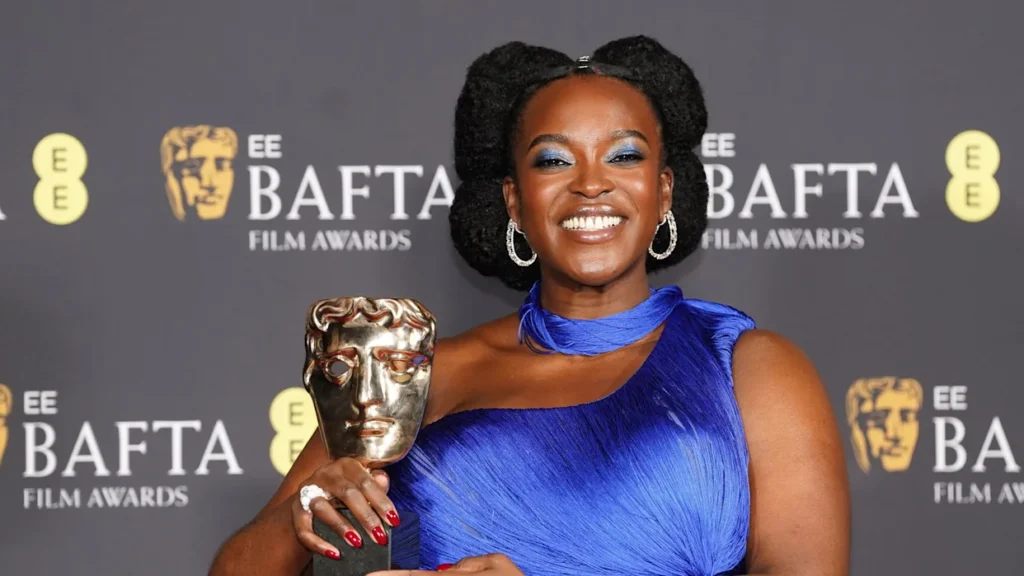
Her role as Annie, a deeply spiritual woman navigating the Jim Crow-era South in “Sinners,” showcased her versatility and depth, earning praise for its authenticity and emotional intensity.
This marks Mosaku’s second BAFTA win in the supporting actress realm, following her 2017 triumph for the TV drama Damilola, Our Loved Boy.” In her speech, she expressed pride in her immigrant roots and credited director Coogler, implying his creative genius draws from African heritage—a nod that sparked mixed reactions online. “This win shows the ancestral power we carry,” Mosaku said, fighting back emotion as she thanked her family and collaborators.
Her blue fringed gown and bold teal eyeshadow added a touch of glamour to the poignant moment, making her a standout on the red carpet.
Equally groundbreaking was the recognition for “My Father’s Shadow,” a debut feature directed by Nigerian brothers Akinola Davies Jr. and Wale Davies. The film, which explores a father’s fraught relationship with his two sons against the backdrop of the 1993 Nigerian election crisis in Lagos, won for its innovative storytelling and cultural authenticity.
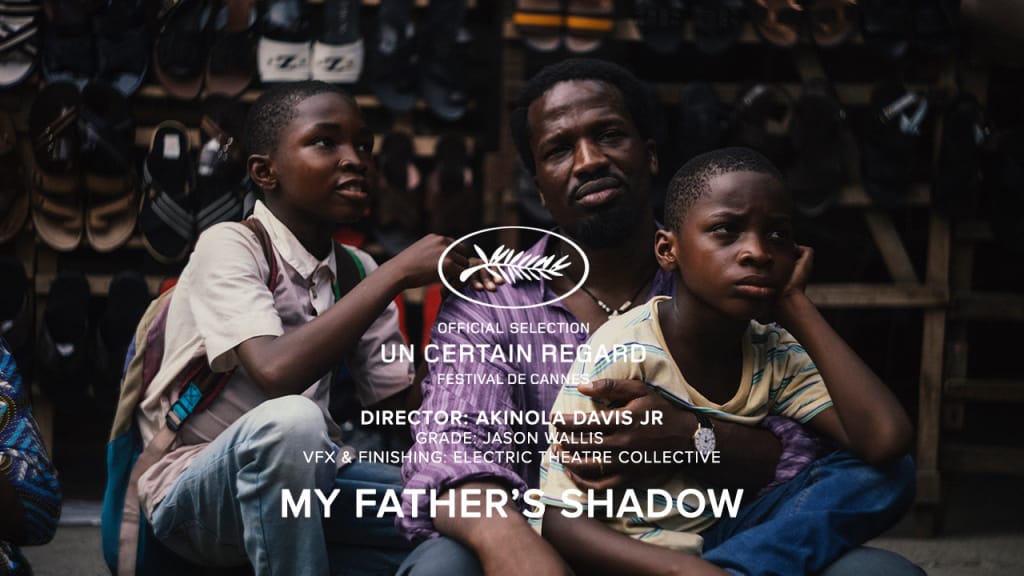
Premiering in the Un Certain Regard section at the Cannes Film Festival last year—the first Nigerian production to achieve such a milestone—it has since captivated international audiences with its blend of political tension, family drama, and vibrant Lagos visuals.
Akinola Davies Jr., known for his work in fashion and short films, co-wrote the script with his brother Wale, drawing from personal and historical inspirations to craft a narrative that resonates beyond borders. “This is for every storyteller from the continent pushing boundaries,” Akinola said in a post-ceremony interview. The win positions the Davies brothers as trailblazers, signaling a new era for Nigerian cinema on the world stage.
Social media erupted in celebration following the announcements, with Nigerians at home and abroad expressing national pride. On X (formerly Twitter), users hailed the wins as a “giant leap for Nollywood’s global footprint.” One post from Culture Custodian declared, “A Nigerian story just won at the BAFTAs… Akinola Davies Jr. and Wale Davies have announced their arrival in the film industry, making history.” OkayAfrica echoed the sentiment: “Big wins at the 2026 BAFTAs… Huge congratulations to Wale Davies and Akinola Davies Jr.”
However, not all reactions were unanimous; some users critiqued Mosaku’s speech for its implications on cultural representation, with one noting her portrayal of a Black American character while emphasizing African roots. Overall, the buzz reflected a wave of optimism about Nigerian talent’s rising visibility.
While Nigerian highlights stole much of the local attention, the night belonged to Paul Thomas Anderson’s “One Battle After Another,” which dominated with six awards, including Best Film, Best Director, Best Adapted Screenplay, Best Cinematography, Best Production Design, and Best Supporting Actor for Sean Penn.
Other notable winners included Jessie Buckley for Best Actress in “Hamnet,” Robert Aramayo doubling up with Best Actor and the EE Rising Star Award for “I Swear,” and “Sinners” also taking Original Screenplay and Original Score. “Frankenstein” swept technical categories like Production Design, Costume Design, Makeup and Hair, Sound, and Special Visual Effects, while “Zootopia 2” won Best Animated Film.
These BAFTA triumphs come at a pivotal time for Nigerian cinema, which has seen exponential growth through platforms like Netflix and international festivals. With Mosaku’s star power and the Davies brothers’ innovative debut, the wins reinforce Lagos as a creative hub, inspiring a new generation of filmmakers and actors to dream big.
As the awards season marches toward the Oscars, all eyes are on whether this momentum will carry across the Atlantic. For now, Nigeria celebrates its shadows turning into spotlights.
WHAT YOU SHOULD KNOW
At the 2026 BAFTA Film Awards, Nigerian creatives made history with two major wins: Wunmi Mosaku became the first Black British actress to win Best Supporting Actress for her powerful role in Sinners, and the Lagos-set drama My Father’s Shadow—directed by Nigerian brothers Akinola Davies Jr. and Wale Davies—took Outstanding Debut by a British Writer, Director, or Producer.
Nigerian stories and talent are no longer on the margins—they are winning at one of the world’s most prestigious film awards, proving the growing global power and visibility of Nigerian cinema and diaspora artists.