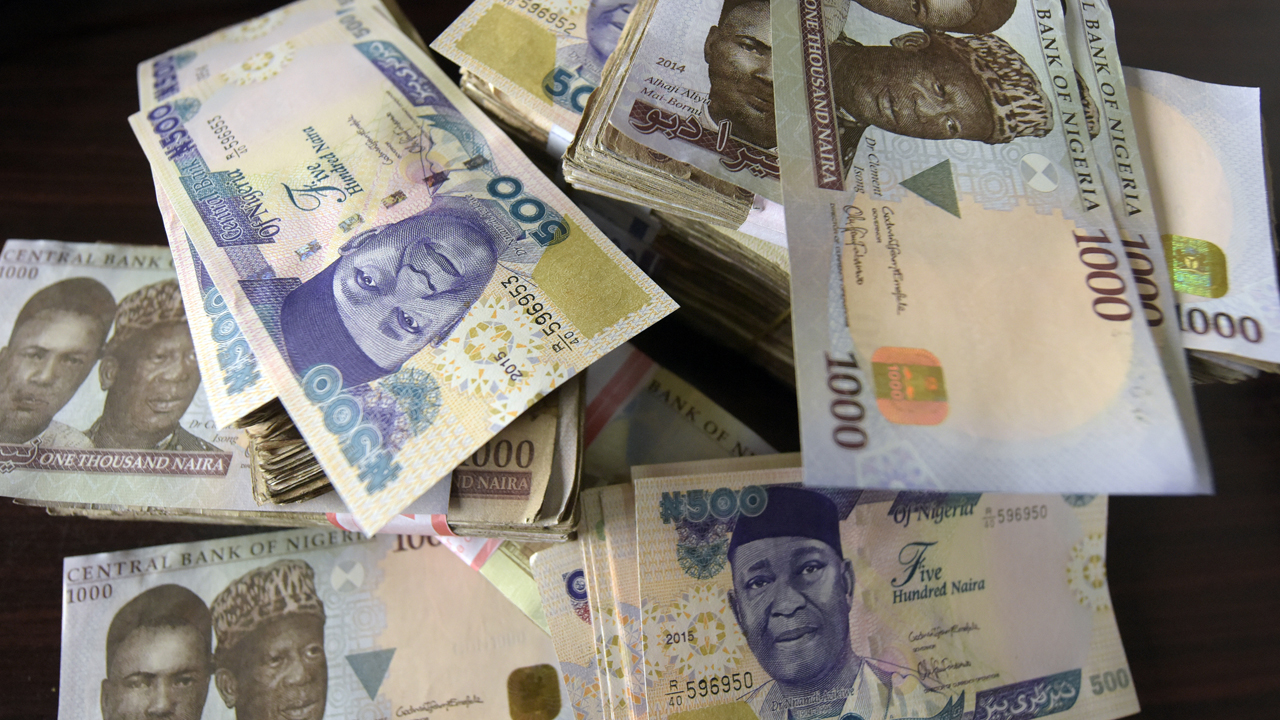
The Nigerian naira demonstrated notable strength in Monday’s trading session, climbing to N1,527 against the US dollar in the parallel market—marking its strongest performance in over a month and signaling what analysts describe as a potential turning point for Africa’s most populous economy.
The currency’s appreciation from Friday’s N1,530.96 rate represents more than just daily market fluctuations; it reflects the culmination of a week-long strengthening trend that has seen the naira gain ground consistently since early September. This latest rally brings the currency to levels not witnessed since July 25, when it last traded at N1,520 per dollar.
Sustained Momentum Across Multiple Fronts
The currency’s performance tells a story of gradual but persistent improvement. Throughout the first week of September, the naira demonstrated remarkable consistency, moving from N1,539 on Monday, September 1, to Friday’s N1,530.96—a trajectory that financial analysts describe as unusually stable for a currency that has historically exhibited high volatility.
Perhaps more significantly, the official market has shown even stronger performance indicators. Data from the Central Bank of Nigeria reveals that the naira traded at an impressive N1,511.5 per dollar on Thursday, September 4—one of the most favorable rates in recent weeks. This development is particularly noteworthy because it represents a narrowing of the traditionally wide gap between official and parallel market rates, a long-standing concern for economic policymakers.
Foreign Reserves: The Foundation of Strength
Underpinning this currency stability are Nigeria’s foreign exchange reserves, which rose to $41.5 billion as of September 3—a 0.09% increase that, while modest in percentage terms, signals crucial stability in the country’s external financial position. For an economy grappling with substantial debt service obligations and revenue challenges, any positive movement in reserves carries outsized significance.
Central Bank Governor Olayemi Cardoso has attributed this stability to what he describes as improved capital flows, increased earnings from crude oil production, rising non-oil exports, and a notable reduction in aggregate imports. These factors, combined with the central bank’s monetary policy actions, appear to be creating a more favorable environment for currency stability.
Structural Reforms Begin to Bear Fruit
The current improvement comes against the backdrop of significant structural reforms implemented by the Nigerian government. The unification of exchange rates—a move that eliminated the multiple exchange rate system that had created arbitrage opportunities and distorted the economy—appears to be yielding positive results. Additionally, the resolution of a $7 billion foreign exchange backlog has removed a significant overhang that had previously weighed on investor confidence.
These reforms have not gone unnoticed by the international financial community. Investment analysts report an improved outlook for Nigeria, citing greater transparency and predictability in the foreign exchange market as key factors driving renewed interest in the country’s economic prospects.
Political Headwinds on the Horizon
However, seasoned observers warn that the current stability faces potential challenges from an unexpected quarter: politics. Standard Bank’s latest assessment highlights a concerning trend—the approaching 2027 general elections could pose significant risks to the naira’s newfound stability.
The bank’s analysts project that electioneering activities, expected to intensify from the first quarter of 2026, could trigger increased dollar demand as political spending traditionally ramps up during campaign periods. Primary elections are anticipated to begin in early 2026, with full campaign activities expected by the third quarter of that year.
Dr. Paul Alaje, CEO of SPM Professionals, has issued stark warnings about the potential for political activities to undermine Nigeria’s fragile economic progress. His concerns center on what he describes as the “reckless handling of foreign exchange during campaigns” – a reference to historical patterns where political spending has created additional pressure on the currency.
Cautious Optimism Amid Uncertainty
Despite these concerns, Standard Bank has revised its medium-term projections for the naira in a more favorable direction. The institution now expects the currency to close 2025 at N1,585.5 per dollar—significantly stronger than its previous forecast of N1,697.5. This adjustment reflects growing confidence in the Central Bank’s ability to manage exchange rate pressures, supported by stronger foreign exchange reserves.
The bank’s analysis suggests that the CBN’s improved reserve position provides crucial ammunition to counter potential upward pressure on the USD/NGN exchange rate. This represents a marked improvement from previous years when reserve constraints limited the central bank’s ability to intervene effectively in currency markets.
Broader Economic Implications
The naira’s performance extends beyond mere exchange rate considerations. A stable and strengthening currency supports Nigeria’s capacity to service foreign debt, enhances import capabilities for essential goods, and bolsters overall investor confidence in the economy. Combined with decelerating inflation rates, these developments offer what economists describe as “renewed hope” for improved economic conditions.
For ordinary Nigerians, currency stability translates into more predictable prices for imported goods, reduced inflationary pressures, and greater economic certainty. For businesses, it means improved planning capabilities and potentially lower costs for foreign inputs and equipment.
As Nigeria navigates the complex interplay between monetary policy success and political pressures, the naira’s recent performance provides a foundation of cautious optimism. However, the ultimate test of this stability will come as the country approaches its next electoral cycle, where the discipline demonstrated in monetary policy must extend to fiscal and political spheres to preserve the economic gains achieved thus far.
The coming months will prove crucial in determining whether Nigeria can maintain its current trajectory of currency stability while managing the inherent pressures of democratic processes in one of Africa’s largest economies.
WHAT YOU SHOULD KNOW
The Nigerian naira has strengthened to its best level in over a month (N1,527/$1), driven by improved foreign reserves, successful monetary policies, and structural reforms like exchange rate unification. While this signals potential economic recovery for Nigeria, the gains face significant threats from political spending ahead of the 2027 elections, which could destabilize the currency if not carefully managed.
The central bank’s stronger reserve position provides some protection, but maintaining fiscal discipline during the election cycle will be crucial to preserving these hard-won economic improvements.