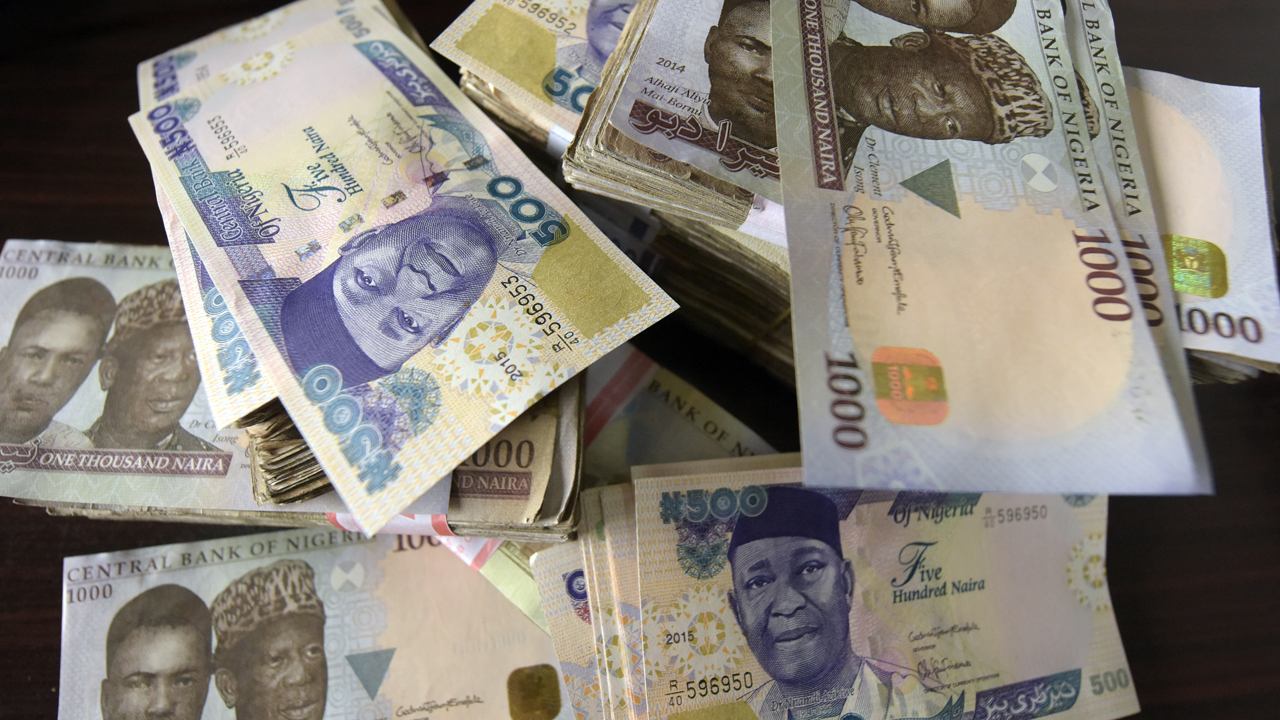
The Nigerian Naira maintained relative stability this week despite mounting global currency market turbulence, as seasonal travel demand and shifting U.S. monetary policy expectations created a complex backdrop for emerging market currencies.
The Naira opened the week at N1,560 to the dollar in the parallel market, according to currency traders who attributed recent fluctuations to increased dollar demand from end-users preparing for summer vacation travel. The currency exhibited resilience throughout the trading week, closing Friday at N1,533.7 per dollar on the official market, representing a modest 19 kobo depreciation from Thursday’s close.
Central Bank of Nigeria (CBN) data showed the official exchange rate at N1,533.5 per dollar, underscoring the convergence between official and parallel market rates that has characterized recent months. The relative stability comes despite what traders described as increased market volatility, with Wednesday’s rate reaching N1,534.5 per dollar before recovering to current levels.
Foreign Investment Returns Boost Market Confidence
A key driver of the Naira’s resilience has been the return of foreign direct investment to Nigeria’s fixed-income securities market. International investors have shown renewed interest in Nigerian treasury notes and bonds, providing crucial liquidity and market stability that had been absent during previous periods of currency pressure.
Financial services firm Coronation maintained its exchange rate outlook, projecting the Naira will trade within a N1,500-N1,600 per dollar range. This forecast reflects growing confidence in the CBN’s policy framework and the impact of ongoing economic reforms on investor sentiment.
Dollar Weakness Creates Tailwinds
The naira’s stability gained additional support from broad-based U.S. dollar weakness in global markets. The Dollar Index (DXY) traded at 98.70 during Asian hours Monday, following a 1.5% decline in the previous session driven by disappointing U.S. employment data.
July’s nonfarm payrolls report showed job creation of just 7,300 positions, significantly below the 11,000 market consensus and marking a sharp deceleration from June’s revised 14,000 gain. The unemployment rate ticked up to 4.2% from 4.1%, meeting expectations but adding to concerns about labor market softening.
Political Turbulence Amplifies Market Uncertainty
The currency market backdrop has been complicated by unprecedented political interference in U.S. economic institutions, with President Trump demanding Federal Reserve Chairman Jerome Powell‘s resignation following Fed Governor Adriana Kugler’s surprise departure. The president’s criticism of Bureau of Labor Statistics Commissioner Erika McEntarfer, whom he dismissed after the weak jobs report, has raised questions about the independence of key economic data agencies.
In a Truth Social post over the weekend, Trump characterized the BLS commissioner as responsible for “the biggest miscalculations in over 50 years,” citing the jobs report as evidence of institutional failure. The president indicated he would announce new Federal Reserve governor and BLS statistician appointments “in the next few days.”
Rate Cut Expectations Reshape Fed Policy Outlook
The combination of weak economic data and political pressure has dramatically shifted Federal Reserve policy expectations. Traders now anticipate approximately 63 basis points of rate cuts by year-end, up from 34 basis points on Thursday, with the first reduction expected as early as September.
Among potential Federal Reserve leadership candidates, Treasury Secretary Scott Bessent, former Fed Governor Kevin Warsh, current Fed Governor Christopher Waller, and National Economic Council Director Kevin Hassett have emerged as front-runners. Trump’s eventual choice for the vacant governorship could position them to assume the chairmanship when Powell’s term expires in May 2026.
Implications for Emerging Markets
For emerging market currencies like the Naira, the shifting U.S. monetary policy landscape presents both opportunities and risks. Lower U.S. interest rates typically support capital flows to higher-yielding emerging market assets, potentially benefiting Nigerian fixed-income securities that have already attracted renewed foreign interest.
However, the politicization of U.S. economic policy institutions introduces an unprecedented source of global market volatility. The independence of Federal Reserve decision-making, long considered a cornerstone of global financial stability, faces its most significant challenge in decades.
As Nigerian policymakers navigate this complex environment, the CBN’s ability to maintain exchange rate stability while fostering foreign investment inflows will prove crucial for sustaining the current market equilibrium. The confluence of seasonal dollar demand, returning foreign investment, and global monetary policy uncertainty ensures that currency markets will remain a key focus for both policymakers and investors in the weeks ahead.
WHAT YOU SHOULD KNOW
The Nigerian Naira demonstrated remarkable resilience this week, trading stably around N1,533-1,560 per dollar despite seasonal travel demand and global market turbulence. Three critical factors are driving this stability:
- Foreign Investment Revival: International investors are returning to Nigerian treasury bonds and notes, providing essential market liquidity that had been missing during previous currency crises.
- U.S. Dollar Weakness: America’s disappointing jobs data (only 7,300 jobs added in July vs. 11,000 expected) and rising unemployment to 4.2% have weakened the dollar globally, creating favorable conditions for emerging market currencies like the Naira.
- Political Risk Premium: President Trump’s unprecedented interference with Federal Reserve independence—firing the Bureau of Labor Statistics Commissioner and demanding Fed Chair Jerome Powell’s resignation—has created market uncertainty that paradoxically benefits non-dollar currencies.
Nigeria’s currency stability amid global chaos signals that sound central bank policies and returning foreign confidence can insulate emerging markets from external shocks. However, the politicization of U.S. economic institutions introduces new volatility risks that could quickly reverse current favorable conditions.