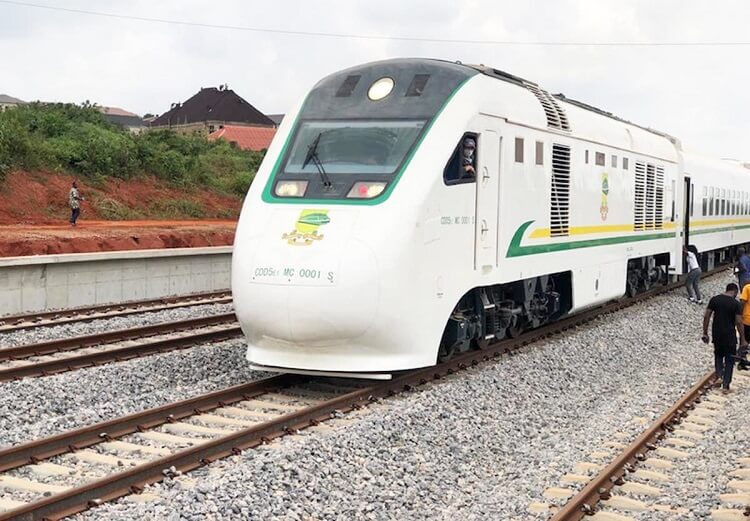
In what represents one of the most ambitious infrastructure transformation plans in Nigeria’s history, the Nigerian Railway Corporation has committed to converting the entire national rail network to electric-powered trains within the next five years, a move that could revolutionize transportation across Africa’s most populous nation.
The announcement, delivered by NRC Managing Director and Chief Executive Officer Dr. Kayode Opeifa at the Seventh National Transport Conference of the Chartered Institute of Transport Administration on Wednesday at Abuja’s NICON Luxury Hotel, signals a decisive shift away from diesel-dependent rail operations toward sustainable, modern transportation infrastructure.
A Phased Vision for Rail Transformation
At the heart of this initiative lies the Corporation’s Vision 2-5-10-20 development framework—an aggressive timeline that maps out Nigeria’s railway evolution over the next two decades. Dr. Opeifa outlined a four-stage roadmap that begins with immediate optimization of existing rail assets within two years, followed by the electric transition at the five-year mark.
The plan grows increasingly ambitious from there: the NRC projects doubling national rail capacity within a decade, ultimately expanding to a staggering 60,000 kilometers of track nationwide within 20 years. To put this in perspective, Nigeria’s current operational rail network measures only a fraction of that proposed figure, making this one of the largest infrastructure expansion projects ever contemplated in the country.
Building on Lagos’s Electric Rail Success
Nigeria isn’t starting from scratch. The Lagos Blue Line, a 27-kilometer route within the Lagos Rail Mass Transit system, currently stands as the nation’s only operational electric-powered rail service. The first 13-kilometer phase connecting Marina to Mile 2 launched commercial operations in September 2023, demonstrating the viability of electric rail technology in the Nigerian context. With a 14-kilometer extension to Okokomaiko under construction and scheduled for completion by 2026, Lagos provides a working template for nationwide expansion.
Federal Government Backing and Constitutional Changes
The timing of the NRC’s announcement coincides with significant policy shifts at the federal level. Dr. Opeifa revealed that the Federal Government will soon unveil a comprehensive National Railway Development Roadmap designed to ensure rail connectivity reaches all 36 states and the Federal Capital Territory—a key component of the current administration’s Renewed Hope agenda.
Critically, recent legislative amendments have placed railway development on the concurrent legislative list, fundamentally altering the governance structure of rail infrastructure in Nigeria. This constitutional change allows states to access and utilize national rail corridors without additional costs, potentially accelerating development across multiple regions simultaneously.
States Already Positioning for Integration
Several states are already capitalizing on these new provisions. Lagos and Plateau States have taken the lead in leveraging national rail corridors, while Ogun, Oyo, Edo, Delta, Kogi, Kaduna, Kano, and Niger States are strategically positioned to connect seamlessly to existing networks. This coordinated approach suggests the possibility of rapid network expansion once the electric infrastructure rollout begins.
Freight Services Drive Economic Integration
Beyond passenger transport, the NRC is significantly expanding its freight-by-rail capabilities—a development with potentially transformative economic implications. The Corporation is currently transporting containerized cargo, cement, gypsum, soda ash, metal coils, and materials for the Ajaokuta-Kaduna-Kano (AKK) Pipeline Project, diversifying revenue streams while simultaneously reducing the crushing burden on Nigeria’s notoriously congested road network.
This freight expansion addresses a critical bottleneck in Nigeria’s logistics infrastructure, where road transport dominates despite its inefficiency and the accelerated deterioration it causes to highway systems. Rail freight offers a more sustainable, cost-effective alternative for bulk goods movement across the country’s vast distances.
Technology, Sustainability, and Economic Development
The forthcoming National Railway Development Roadmap promises to integrate modern technology and sustainable operations throughout the system. The emphasis on electric-powered trains aligns Nigeria with global trends toward cleaner transportation systems, potentially reducing the country’s carbon footprint while creating a more efficient, reliable rail network.
The economic implications extend beyond transportation efficiency. A modernized, electrified rail system could catalyze industrial development, improve market access for agricultural producers, reduce logistics costs for manufacturers, and create thousands of jobs in construction, operations, and maintenance over the two-decade implementation period.
Challenges Ahead
While the vision is compelling, significant challenges remain. Electrifying 60,000 kilometers of track will require massive capital investment, consistent electricity supply—itself a chronic challenge in Nigeria—and technical expertise in electric rail systems. The five-year timeline for the electric transition appears particularly ambitious given the current state of infrastructure and the complexity of such conversions.
Questions about funding sources, implementation strategies, and coordination among federal and state governments will need clear answers as the National Railway Development Roadmap is unveiled in the coming weeks.
Nonetheless, if successfully executed, Vision 2-5-10-20 could represent a watershed moment in Nigeria’s infrastructure development, positioning the country as a continental leader in modern rail transportation and fundamentally reshaping how millions of Nigerians move and conduct business across this sprawling nation.
WHAT YOU SHOULD KNOW
Nigeria is embarking on a transformative railway overhaul with plans to convert its entire national rail network to electric trains within five years and expand to 60,000 kilometers of track over two decades.
This Vision 2-5-10-20 framework, backed by constitutional reforms allowing states free access to rail corridors, aims to modernize transportation, reduce road congestion, and boost economic development through improved passenger and freight services.