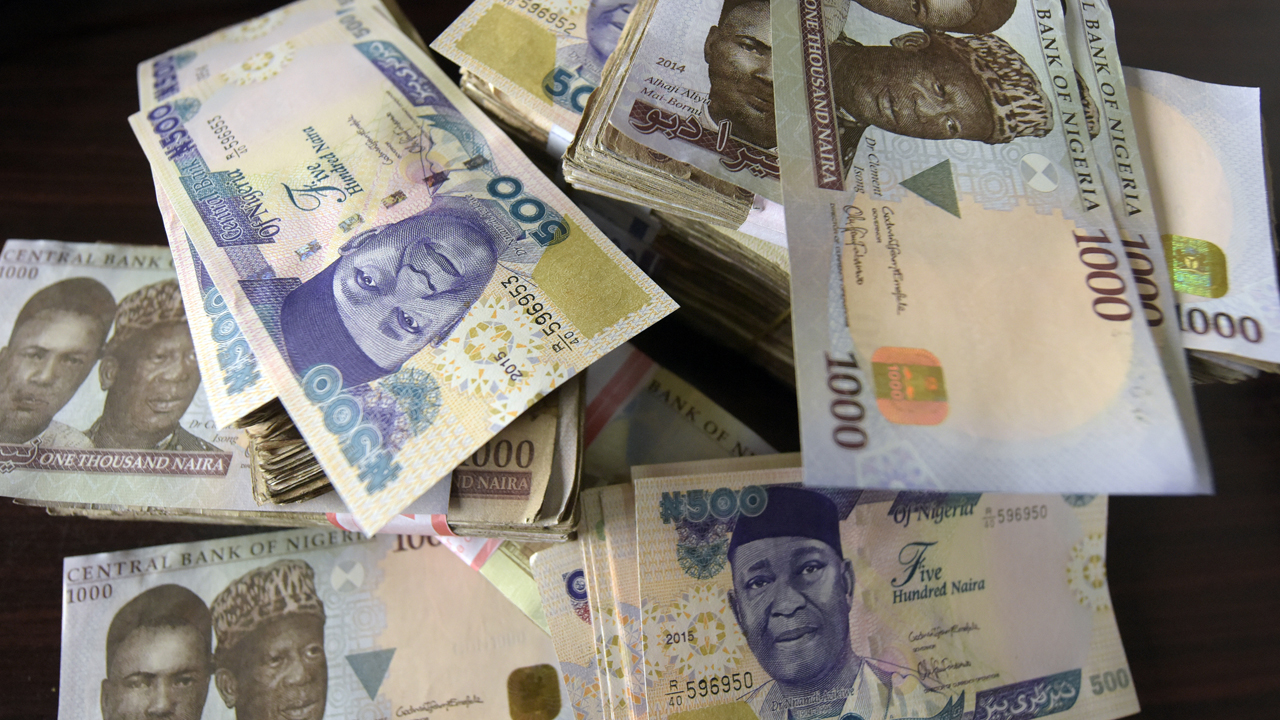
The Nigerian Naira closed the week on a weaker note, settling at N1,438.5 per dollar in the official foreign exchange market on Friday, November 7, 2025, marking a reversal of recent gains and signaling renewed pressure on the local currency.
According to data published on the Central Bank of Nigeria’s website, the Naira experienced fluctuations throughout the trading week, opening Monday at N1,438 per dollar before reaching a peak of N1,441.75 on Tuesday. The currency then moderated to N1,440 on Wednesday and N1,437.5 on Thursday, before settling at Friday’s closing rate of N1,438.5.
The week’s performance represents a notable retreat from the previous Friday’s close of N1,427.5 per dollar on October 31, translating to a week-on-week depreciation of approximately N11 or 0.77 percent. This downturn comes after two consecutive weeks of appreciation for the Naira, during which it had strengthened from N1,452.5 to N1,427.5, buoyed by improved market sentiment and enhanced foreign exchange liquidity following recent monetary policy interventions.
Parallel Market Shows Divergent Trend
In a curious divergence from the official market, the parallel or unofficial foreign exchange market witnessed marginal strengthening of the Naira during the same period. Currency traders operating in Lagos and Abuja reported that the local unit appreciated to N1,445 per dollar by week’s end, compared to N1,455 recorded at midweek. Throughout the week, the parallel market rate oscillated between N1,445 and N1,460 per dollar.
Market operators attribute the relative stability in the parallel market to increased dollar inflows from diaspora remittances and end-of-month corporate foreign exchange conversions. However, they caution that this trend may be short-lived as seasonal demand for foreign currency typically intensifies during the festive period.
Foreign Reserves Hit Multi-Month High
Despite the currency’s depreciation in the official market, Nigeria’s foreign exchange reserves continue their upward trajectory, climbing to $43.32 billion this week from $43.17 billion the previous week. This represents one of the country’s strongest reserve positions in recent months and reflects multiple positive developments in the economy.
Financial analysts point to several factors driving the reserve accumulation, including improved oil revenue as global crude prices remain relatively stable, increased portfolio investment inflows as investor confidence in Nigeria’s economic management improves, and steady diaspora remittances. The Central Bank’s policy measures, which have included targeted interventions in the foreign exchange market and efforts to harmonize multiple exchange rate windows, have also contributed to the improved reserve position.
The CBN data indicates that autonomous sources of foreign exchange supply—including oil exports, portfolio investments, and remittances—have been performing robustly, providing the monetary authority with greater firepower to defend the currency when necessary.
Storm Clouds Gathering
However, market watchers and financial analysts are sounding notes of caution as Nigeria enters what could be a turbulent period for currency stability. The convergence of seasonal and political factors threatens to intensify pressure on the Naira in the coming weeks and months.
Abas Adelakun, a Lagos-based market analyst, captured the prevailing sentiment: “What we’re seeing now is cautious optimism. The fundamentals are improving, but the next two months will test the resilience of both the market and the CBN’s policies.”
The concerns center on several key pressure points. First, the approaching festive season typically triggers a surge in import demand as businesses stock up on goods and Nigerians increase consumption. This seasonal pattern has historically placed significant strain on foreign exchange availability.
Second, the looming 2027 general elections are already beginning to cast a shadow over currency markets. Standard Bank, in its recent projection for the Naira, emphasized that political developments and election-related fiscal spending could exert considerable pressure on the currency. The bank noted that primary election activities are expected to commence in the first quarter of 2026, with full campaign activities anticipated by the third quarter of the same year.
“Electioneering activities are key factors stakeholders should consider as a likely driver of the USD/NGN pair in 2026 and 2027,” Standard Bank stated in its analysis. “These activities are likely to lead to an increase in dollar demand, which, in addition to increased fiscal spending, should support an increase in money supply.”
Speculative trading, which often accompanies political uncertainty and election cycles in emerging markets, adds another layer of complexity to the currency outlook.
Structural Reforms Remain Critical
While acknowledging that Nigeria’s growing foreign reserves provide a crucial buffer against short-term volatility, economists emphasize that sustainable currency stability requires deeper structural reforms. The current reserve position, while impressive, cannot indefinitely shield the Naira from fundamental economic pressures without complementary policy actions.
Key areas requiring attention include boosting non-oil exports to diversify foreign exchange earnings, strengthening fiscal revenue generation to reduce dependence on oil revenues, managing persistent inflationary pressures that erode purchasing power and currency value, and improving the overall investment climate to attract long-term capital inflows.
Standard Bank expressed confidence that the CBN’s strengthened reserve position should enable the apex bank to mitigate upward pressure on the USD/NGN exchange rate, though the effectiveness of such interventions will depend on the magnitude and persistence of demand pressures.
Budget Projections Under Scrutiny
The current currency developments also raise fresh questions about the federal government’s exchange rate projections for 2025. During his budget presentation in December 2024, President Bola Tinubu outlined ambitious targets, projecting that the exchange rate would improve from approximately N1,700 per dollar to N1,500, while inflation would decline from 34.6 percent to 15 percent.
With the Naira currently trading at N1,438.5 per dollar in the official market—closer to the projected level than many analysts anticipated—the government’s forecast appears less far-fetched than initially believed. However, numerous experts continue to express skepticism about the sustainability of such levels, particularly given the mounting seasonal and political pressures on the horizon.
As Nigeria navigates the delicate balance between maintaining currency stability and managing competing economic priorities, all eyes will be on the Central Bank’s policy responses in the weeks ahead. The true test of the country’s foreign exchange management framework is fast approaching, and the outcome will have significant implications for inflation, purchasing power, and overall economic stability.
For now, market participants are adopting a wait-and-see posture, mindful that the period of relative calm may give way to heightened volatility as year-end approaches and election-related activities gradually intensify.
WHAT YOU SHOULD KNOW
The Nigerian Naira weakened to N1,438.5 per dollar this week despite foreign reserves reaching a robust $43.32 billion, signaling that currency stability remains fragile. While the strong reserves provide a critical buffer, Nigeria faces mounting pressure from two key sources: the approaching festive season, which typically drives up import demand, and looming 2027 election activities expected to increase dollar demand and fiscal spending from 2026 onwards.
The paradox is clear—Nigeria’s foreign exchange fundamentals are improving, but seasonal and political factors threaten to reverse recent gains. The real test lies ahead: whether the Central Bank can leverage its strengthened reserve position to weather the storm, or whether structural weaknesses will overwhelm short-term improvements.
Nigeria’s currency outlook hinges not just on reserve accumulation, but on implementing deeper structural reforms—boosting non-oil exports, managing inflation, and maintaining policy discipline through politically sensitive periods. Without these reforms, today’s gains may prove temporary.