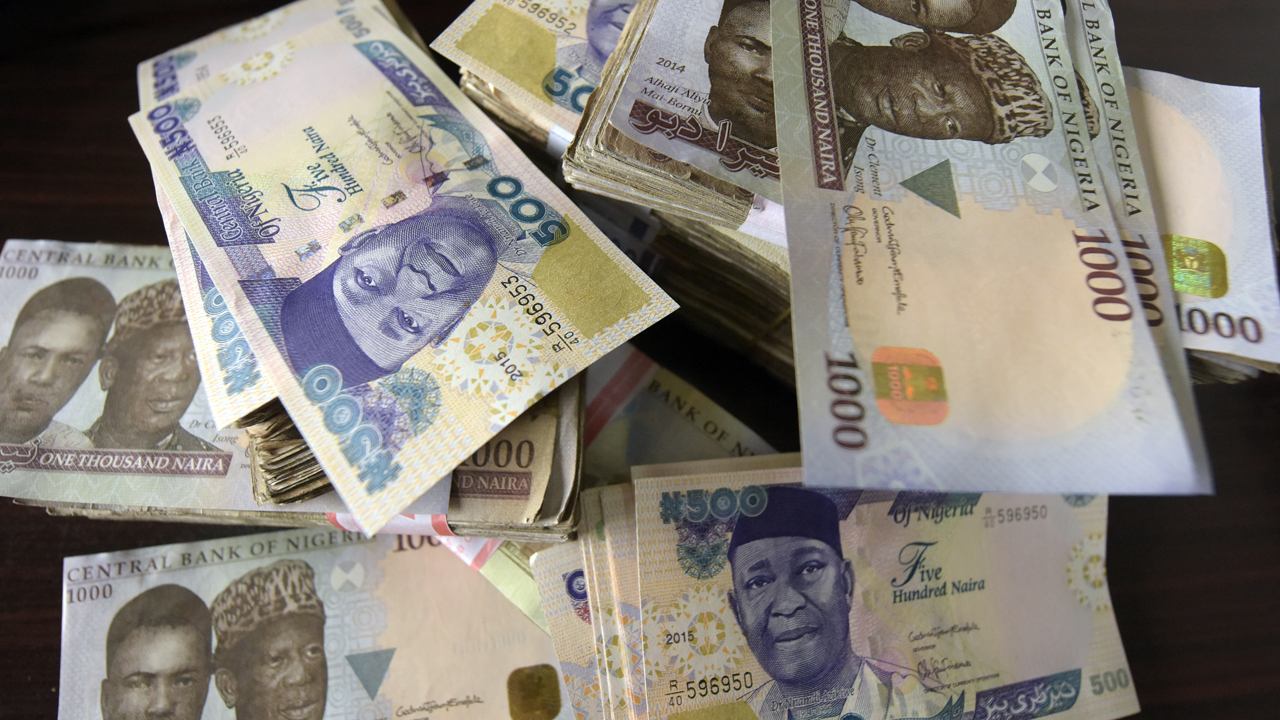
Nigeria’s naira demonstrated modest but meaningful strength last week, appreciating 0.13 percent against the US dollar at the official Nigerian Foreign Exchange Market (NFEM) to close at N1,547 per dollar, down from N1,549 the previous week.
This marginal gain reflects the Central Bank of Nigeria’s continued commitment to currency stability through targeted market interventions.
The currency’s performance can be attributed to two key factors: strategic dollar injections by the CBN to address corporate demand pressures, and increased foreign portfolio investment inflows attracted by lucrative investment opportunities.
According to Cordros Capital Limited’s latest investor note, foreign portfolio investors brought substantial dollar liquidity into the market specifically to participate in the CBN’s Open Market Operation auction, demonstrating renewed confidence in Nigeria’s monetary instruments.
The CBN’s OMO auction itself tells a compelling story of market confidence. The central bank offered N600 billion across 155-day and 204-day tenors, but investor appetite proved voracious, with total subscriptions reaching N1.14 trillion—nearly double the offered amount.
The CBN ultimately allocated N1.07 trillion, with stop rates clearing at 24.20 percent and 24.59 percent, respectively, reflecting the premium investors are willing to pay for naira-denominated instruments.
This official market strength, however, contrasts sharply with parallel market dynamics. The naira weakened slightly in the black market to N1,585 per dollar, highlighting the persistent dual-market structure that continues to characterize Nigeria’s foreign exchange landscape.
Market analysts remain cautiously optimistic about the currency’s near-term prospects. Cowry Asset Management Limited projects continued relative stability, citing ongoing CBN interventions and improving foreign exchange inflows as economic reforms gain momentum. Cordros Capital echoes this sentiment, expecting the central bank to maintain its intervention strategy to manage volatility when necessary.
Yet storm clouds loom on the horizon. Analysts warn that global pressures threaten the naira’s stability, particularly renewed Middle East tensions that have driven oil prices higher over the past three weeks. While rising crude prices typically benefit Nigeria’s oil-dependent economy, the broader geopolitical uncertainty creates additional volatility in global currency markets.
The currency’s gains come at a cost to Nigeria’s foreign reserves, which declined further to $37.71 billion as of Thursday, according to CBN data. This decline underscores the delicate balancing act facing monetary authorities as they support the naira while preserving critical foreign currency buffers.
Against this backdrop, a significant development emerged last week as Finance Minister Wale Edun met with CBN Governor Olayemi Cardoso to discuss fiscal-monetary policy coordination. The meeting comes as Nigeria’s inflation rate eased to 22.97 percent in May, providing some breathing room for policymakers.
According to a ministry statement, the discussions focused on “sustaining and accelerating this momentum, essential to stabilizing prices, boosting investor confidence, and empowering private sector-led growth.” This coordination between fiscal and monetary authorities signals a more integrated approach to economic management, potentially laying the groundwork for more sustainable currency stability.
The naira’s recent performance reflects broader themes in Nigeria’s economic reform journey. While the currency has gained ground since the beginning of June, its path remains fraught with challenges. The success of ongoing reforms, global commodity price movements, and the effectiveness of CBN interventions will likely determine whether this modest strengthening can be sustained in the weeks ahead.
For investors and businesses operating in Nigeria, the currency’s trajectory remains a critical watch point, with both opportunities and risks emerging from the complex interplay of domestic policy measures and global economic forces.
WHAT YOU SHOULD KNOW
Nigeria’s naira strengthened 0.13% to N1,547/$ last week, driven by CBN dollar injections and massive foreign investor interest in government securities, N1.14 trillion in subscriptions vs N600 billion offered.
The currency’s stability now appears backed by coordinated policy efforts between the Finance Ministry and Central Bank, coinciding with inflation dropping to 22.97%. This suggests a shift from crisis management to strategic economic planning.
While official rates improved, the black market weakened to N1,585/$, and foreign reserves fell to $37.71 billion, indicating the CBN is spending reserves to defend the currency.