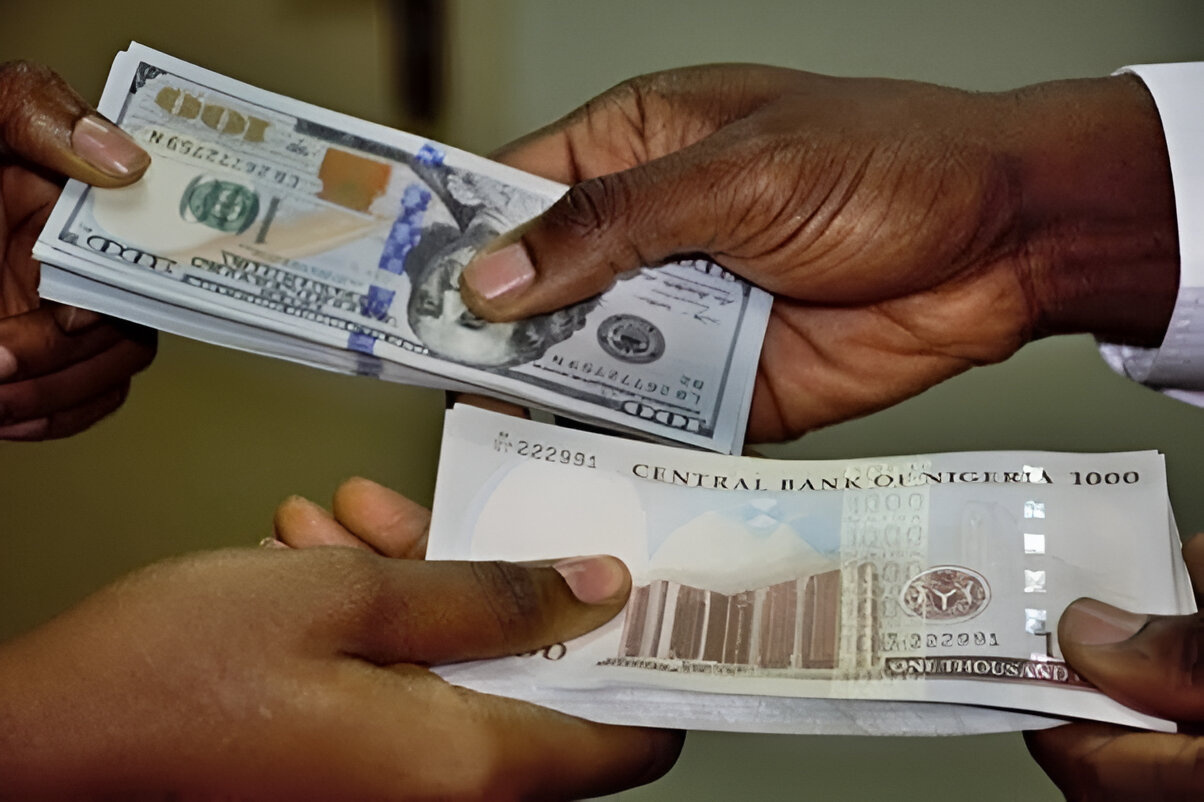
The Nigerian naira opened the week on a cautiously optimistic note, with early trading data signalling marginal but meaningful gains against the United State dollar.
The Naira edged higher at the open of Monday’s session on the Nigerian Foreign Exchange Market (NFEM), exchanging at ₦1,377.80 to the Dollar, a modest but noteworthy appreciation from the ₦1,380.79 logged at the close of last week’s final trading session.
While the movement is slim in absolute terms, currency analysts say it reflects a market finding its footing amid a complex web of domestic policy signals and global headwinds.
Trading volumes in the official window remained healthy through the early hours, underpinned by the Electronic Foreign Exchange Matching System (EFEMS)— the Central Bank of Nigeria’s (CBN) digital infrastructure designed to bring order, transparency, and real-time price discovery to what was, for many years, an opaque and fragmented market.
Since its introduction, EFEMS has become a critical stabilising mechanism, helping to keep the exchange rate anchored near the ₦1,380 band even as the Dollar continues to flex its muscles on the global stage.
Beneath Monday’s session numbers lies a broader story of gradual macroeconomic consolidation. Nigeria’s foreign exchange reserves — long scrutinised by investors as a barometer of the country’s capacity to defend its currency — recently crossed the $49.29 billion threshold, following a period marked by active debt servicing obligations that had previously weighed on the buffer.
More encouragingly, the CBN’s medium-term outlook projects a climb toward $51.04 billion, a target the apex bank expects to achieve on the back of sustained crude oil receipts and a continued uptick in foreign direct and portfolio investment.
If realised, the figure would represent one of the stronger reserve positions Nigeria has recorded in recent years and could offer the CBN additional ammunition to smooth out periods of exchange rate volatility.
A critical pillar of the current exchange rate stability strategy remains the Monetary Policy Committee’s (MPC) decision to hold the benchmark interest rate at 26.5% a deliberately aggressive posture aimed at two objectives: taming inflation and making Naira-denominated assets sufficiently attractive to lure foreign portfolio investors back into the market.
The high-rate environment has not been without its critics. Domestic businesses, particularly small and medium enterprises, have repeatedly flagged the punishing cost of borrowing as a drag on growth and investment.
Yet, for the CBN, the calculus has been clear — currency stability and inflation control must take precedence, even at the cost of near-term economic friction. So far, the strategy appears to be holding.
Perhaps one of the less-heralded but increasingly consequential developments shaping Nigeria’s FX landscape is the ongoing reform of the remittance sector. By routing diaspora transfers — historically prone to leaking into informal channels — through formal settlement accounts, the CBN has engineered a meaningful improvement in the daily supply of foreign currency flowing into the banking system.
Nigeria’s diaspora remittances are among the largest in Africa, and channelling even a greater share of those flows through official pathways has a direct and tangible impact on Dollar liquidity in the interbank market. It is a quiet reform, but one that market watchers say is beginning to show up in the numbers.
With the Dollar maintaining its broader global strength — driven largely by uncertainty surrounding United States monetary policy and persistent geopolitical tensions — the Naira’s relative stability is not something market participants are taking for granted.
The coming days will test whether the confluence of a healthier reserves position, tight monetary policy, and improved remittance flows is enough to keep the exchange rate from drifting further.
For now, the market opens the week with cautious stability. And in Nigeria’s long and turbulent foreign exchange history, that in itself is no small thing.
WHAT YOU SHOULD KNOW
Nigeria’s Naira is holding its ground. Opening Monday’s session at ₦1,377.80 to the Dollar — a slight improvement on last week’s close — the currency is being kept stable by a combination of forces working in tandem: a transparent, EFEMS-driven trading system, a hawkish 26.5% interest rate policy, growing foreign reserves approaching $49.3 billion, and smarter channelling of diaspora remittances through formal banking channels.
Nigeria’s exchange rate stability is no accident. It is the product of deliberate, structural policy choices by the CBN — and as long as oil revenues hold, investor confidence is maintained, and remittance reforms deepen, the Naira has a credible foundation to stand on. The road remains bumpy, but the direction, for now, is the right one.