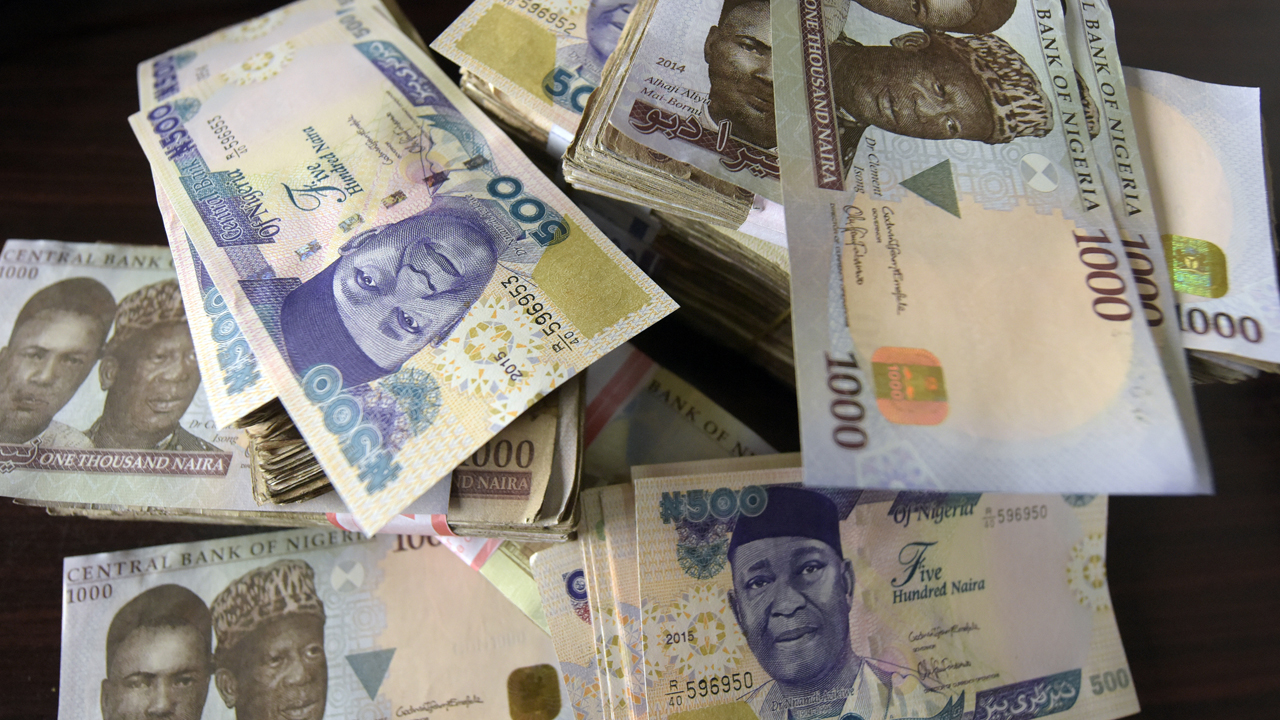
The Nigerian naira posted modest gains against the U.S. dollar on Monday, opening the week on a positive note across both official and parallel foreign exchange markets, as traders monitored a confluence of domestic policy successes and international monetary developments.
Data from the Central Bank of Nigeria (CBN) showed the naira appreciated by N5.16 to close at N1,452.79 per dollar in the official market, compared to Friday’s rate of N1,457.95. The 0.35 percent gain extends a strengthening trend that has persisted through recent weeks, providing a measure of relief to Africa’s largest economy, which has grappled with persistent currency pressures.
The local currency’s resilience has drawn praise from currency traders and financial sector operators. Dr. Aminu Gwadabe, President of the Association of Bureau De Change Operators of Nigeria (ABCON), attributed the naira’s month-long rally to several converging factors that have bolstered investor confidence in the Nigerian economy.
“The fundamentals are beginning to align in our favor,” Gwadabe told the News Agency of Nigeria in Lagos, highlighting Nigeria’s recent removal from the Financial Action Task Force’s (FATF) “grey list” of jurisdictions under increased monitoring for anti-money laundering and counter-terrorism financing deficiencies.
The delisting represents a significant milestone for Nigeria, potentially opening doors to increased foreign investment and smoother international financial transactions. Gwadabe noted that the parallel market has seen even stronger gains, with the naira appreciating by N10 against the dollar in unofficial trading channels.
Additional tailwinds supporting the currency include rising oil revenues—Nigeria’s primary source of foreign exchange—growing foreign reserves, and increased diaspora remittances, which provide crucial dollar inflows to the economy.
Global Dollar Weakness Provides Additional Support
The naira’s gains come as the U.S. dollar faces headwinds across global markets, with the greenback declining on Tuesday ahead of a critical week of central bank policy decisions. The dollar index, which measures the currency against six major peers, eased 0.19 percent to 98.58, extending losses from the previous session.
Market attention is firmly fixed on the U.S. Federal Reserve’s upcoming policy meeting on Wednesday, where officials are widely expected to deliver another interest rate cut. According to the CME FedWatch tool, traders are pricing in a 97 percent probability of a quarter-percentage-point reduction, which would bring the benchmark federal funds rate to a range of 3.75-4.0 percent.
The anticipated rate cut comes as Fed policymakers navigate conflicting economic signals. While some officials advocate for faster rate reductions to support a softening labor market, others urge caution given that inflation remains stubbornly above the central bank’s 2 percent target.
Complicating matters further is the ongoing U.S. government shutdown, which has deprived monetary policymakers of crucial economic data needed to make informed decisions. Fed Chair Jerome Powell’s post-meeting press conference will be closely scrutinized for clues about the central bank’s future policy trajectory and whether officials might consider ending their quantitative tightening program.
“Any dovish signals from Powell could further weaken the dollar against emerging market currencies, including the naira,” said one currency analyst who requested anonymity.
Geopolitical Developments Add Market Uncertainty
Meanwhile, investors are monitoring President Donald Trump’s diplomatic tour of Asia with particular interest in potential trade developments. Trump met with Japan’s new Prime Minister Sanae Takaichi in Tokyo on Tuesday, where the leaders signed agreements covering rare earth minerals and trade while discussing Japan’s military expansion plans.
The yen strengthened more than 0.6 percent to 152 per dollar as markets await the Bank of Japan’s policy meeting this week. While the Japanese central bank is expected to hold interest rates steady, traders will parse officials’ statements for hints about the timing of the next rate increase.
The diplomatic spotlight will shift to South Korea on Thursday when Trump is scheduled to meet with Chinese President Xi Jinping. Investors are cautiously optimistic that the high-stakes meeting could produce progress toward resolving trade tensions between the world’s two largest economies, though concrete outcomes remain uncertain.
For Nigeria, the combination of improved domestic fundamentals and a weakening dollar presents a window of opportunity to rebuild foreign exchange reserves and restore confidence in the naira. However, analysts caution that sustained currency stability will require continued policy discipline and structural reforms to diversify the economy beyond oil dependence.
The coming weeks will test whether the naira’s recent gains represent a durable shift or a temporary respite in Nigeria’s ongoing currency challenges.
WHAT YOU SHOULD KNOW
The Nigerian naira has strengthened against the dollar, gaining N5.16 to close at N1,452.79 in the official market—a positive trend driven by Nigeria’s removal from the FATF “grey list,” increased oil revenues, and growing foreign reserves.
Nigeria’s improved financial credibility, combined with an anticipated U.S. Federal Reserve rate cut (97% probability), has created favorable conditions for the naira. However, sustaining this momentum will require continued policy reforms and economic diversification beyond oil dependency.
The convergence of domestic policy wins and global dollar weakness presents a critical opportunity for Nigeria to stabilize its currency—but only if structural reforms follow.