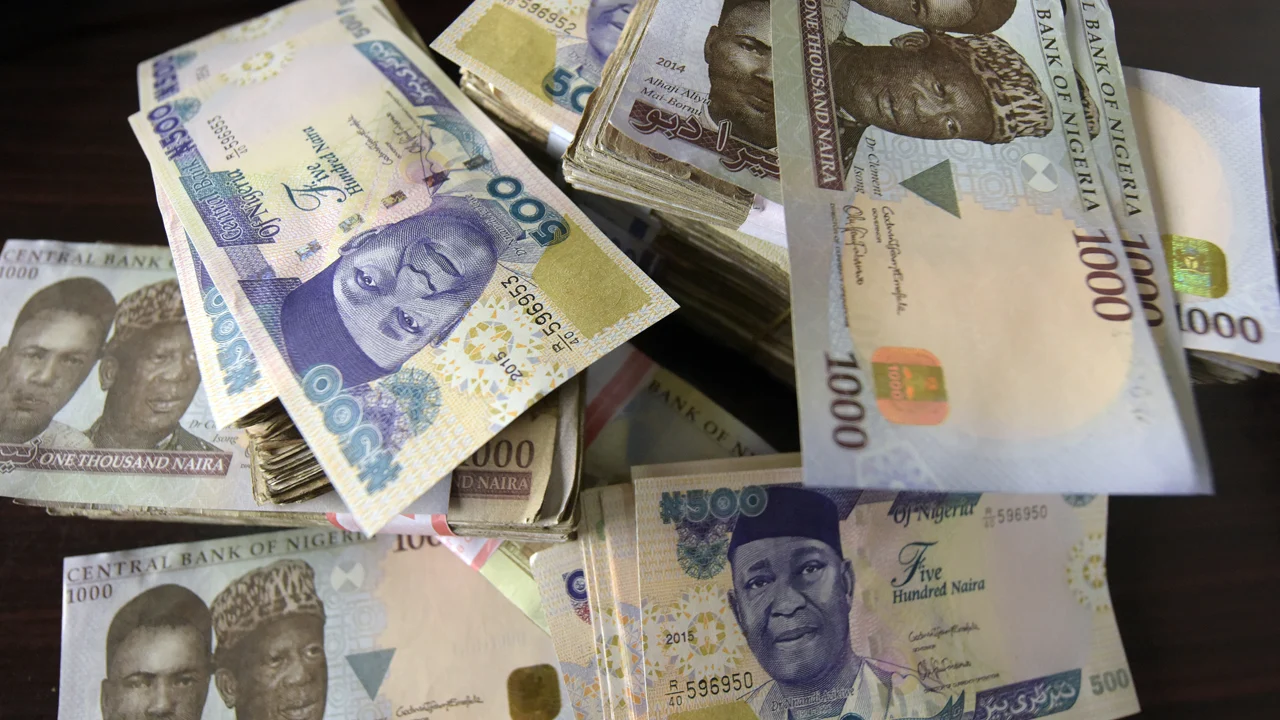
The naira continued its descent on Wednesday, weakening at both the official and parallel foreign exchange markets as a resurgent U.S. dollar, buoyed by hawkish signals from the U.S. Federal Reserve, compounded existing pressures on Nigeria’s local currency.
Data published on the Central Bank of Nigeria’s (CBN) website showed the naira closed at N1,340 to the dollar at the Nigerian Foreign Exchange Market (NFEM), a three-naira slip from the N1,337 recorded the previous session. While the movement may appear marginal in isolation, it is part of a broader pattern of sustained depreciation that has kept traders and policymakers on edge.
Intraday activity revealed moderate volatility beneath the surface of that narrow daily movement. The naira oscillated between a session low of N1,340 and a session high of N1,328 to the dollar before settling at the day’s weakest point, with a simple average rate of N1,337.17 recorded across the trading session—a signal that buying pressure at stronger levels was insufficient to lift the currency out of its downward trajectory.
The more alarming development, analysts say, was the currency’s performance in the parallel market, where the naira tumbled sharply to N1,400 per dollar from N1,382.50 the day before a single-session deterioration of N17.50.
The widening spread between the official window and the black market, now standing at a considerable N60, raises fresh questions about the effectiveness of the CBN’s ongoing foreign exchange reforms and the depth of dollar liquidity available to ordinary Nigerians and small businesses unable to access the official market.
The persistent gap between both segments of the market points to what economists have long described as structural segmentation, a condition in which supply imbalances, speculative activity, and limited access to official channels continue to drive demand underground, undermining confidence in the reform process.
Nigeria’s currency woes on Wednesday did not emerge in a vacuum. The naira’s slide coincided with a broad-based rebound of the U.S. dollar in global markets, triggered by the release of minutes from the Federal Reserve’s latest policy meeting—a document that rattled expectations of an imminent pivot toward interest rate cuts.
The minutes painted a picture of a divided but resolute central bank, with several policymakers signalling they are in no rush to ease monetary conditions and that further rate hikes remain firmly on the table should inflation prove stubborn. U.S.
Treasury yields moved higher in the wake of the release, reinforcing dollar demand and consolidating gains against major global currencies, including the euro, which remained pinned below the $1.18 threshold, and the Japanese yen, which retreated in early Asian trading.
For emerging market currencies like the naira, a stronger dollar typically spells additional pressure. As American assets become more attractive to global investors, capital tends to flow toward the United States, tightening dollar supply in frontier markets and widening current account vulnerabilities.
Perhaps more consequential than Wednesday’s immediate market moves are the longer-term implications of the divisions laid bare within the Federal Reserve. The minutes revealed significant disagreement among policymakers over the future trajectory of interest rates, with some members acknowledging that productivity gains could eventually help temper inflation while cautioning that any such progress was likely to be slow and uneven.
This internal fault line carries implications beyond U.S. borders. The Federal Reserve’s incoming chairman, expected to assume the helm in May, will inherit a central bank at odds with itself and potentially limited in its ability to pivot toward rate cuts without risking a credibility crisis. For Nigeria and other emerging economies hoping that a softer U.S. monetary stance would ease pressure on their currencies, that prospect now appears more distant.
Currency traders and economic analysts will be watching closely in the days ahead to see whether the CBN deploys intervention mechanisms to arrest the naira’s slide or allows market forces to continue determining the exchange rate—a core tenet of the current administration’s reform agenda. Either way, with global headwinds stiffening and domestic dollar demand showing little sign of easing, the road ahead for the naira remains uncertain.
For millions of Nigerians already contending with elevated import costs and inflationary pressures, every tick downward on the exchange rate is more than a data point. It is a lived economic reality.
WHAT YOU SHOULD KNOW
The naira weakened on Wednesday at both the official market (N1,340) and the parallel market (N1,400). and the parallel market (N1,400), widening the gap between both segments to N60—a sign that Nigeria’s forex reforms are yet to fully bridge the divide.
A key driver of the pressure was the rebound of the U.S. dollar following hawkish Federal Reserve meeting minutes, which signaled that interest rate cuts are not imminent and that further hikes remain possible.
For Nigeria, a stronger dollar means tighter forex conditions and a more vulnerable naira. Until global monetary winds shift and domestic dollar supply improves, the naira is likely to remain under sustained pressure.