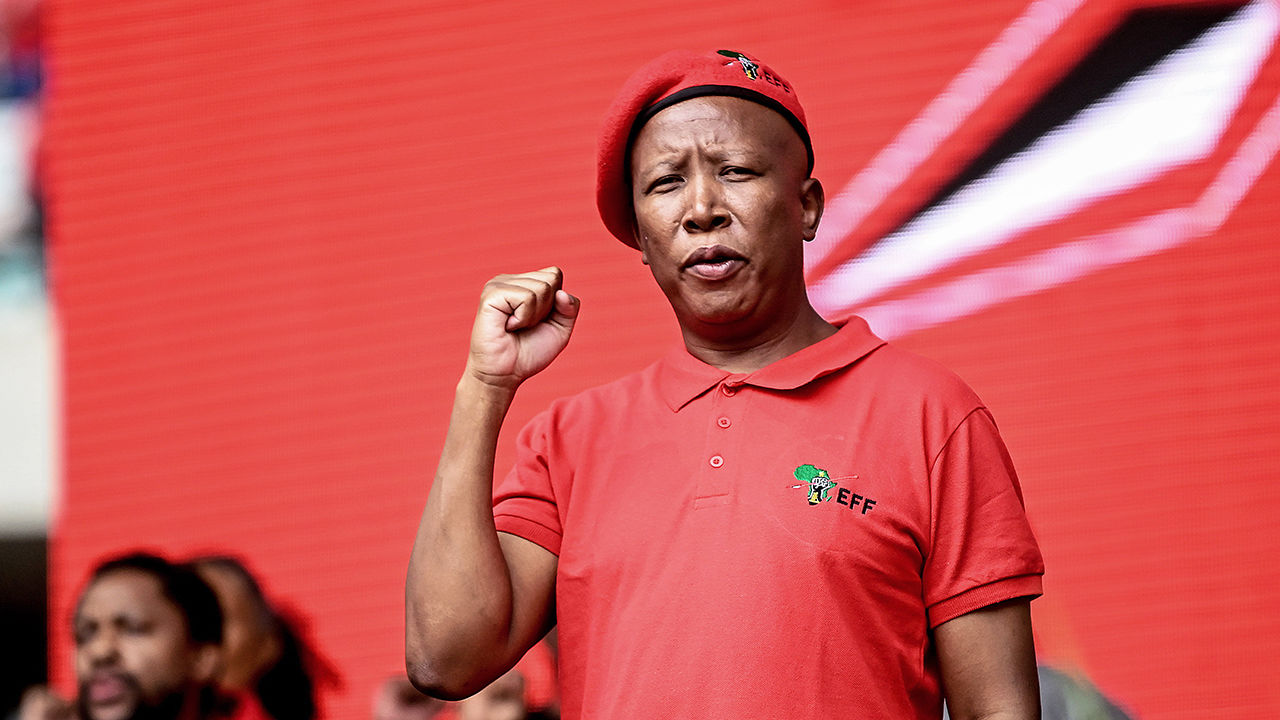
South African opposition leader and President of the Economic Freedom Fighters (EFF), Julius Malema, has strongly criticised xenophobia in South Africa, describing it as a betrayal of African solidarity.
He emphasised that such divisions weaken the continent and undermine its collective progress. Malema also advocated closer economic collaboration between Nigeria and South Africa, insisting that Africa’s growth and prosperity depend on the unity and industrialisation of its two largest economies.
Speaking in Enugu as keynote speaker at the 2025 Nigerian Bar Association (NBA) Annual General Conference themed “Stand out, Stand tall,” Malema urged Africans to resist attempts to divide them, declaring that “Africa is one.” He cautioned African governments against overreliance on international financial institutions like the World Bank and IMF, warning that foreign loans often serve as “debt traps” that compromise the continent’s independence.
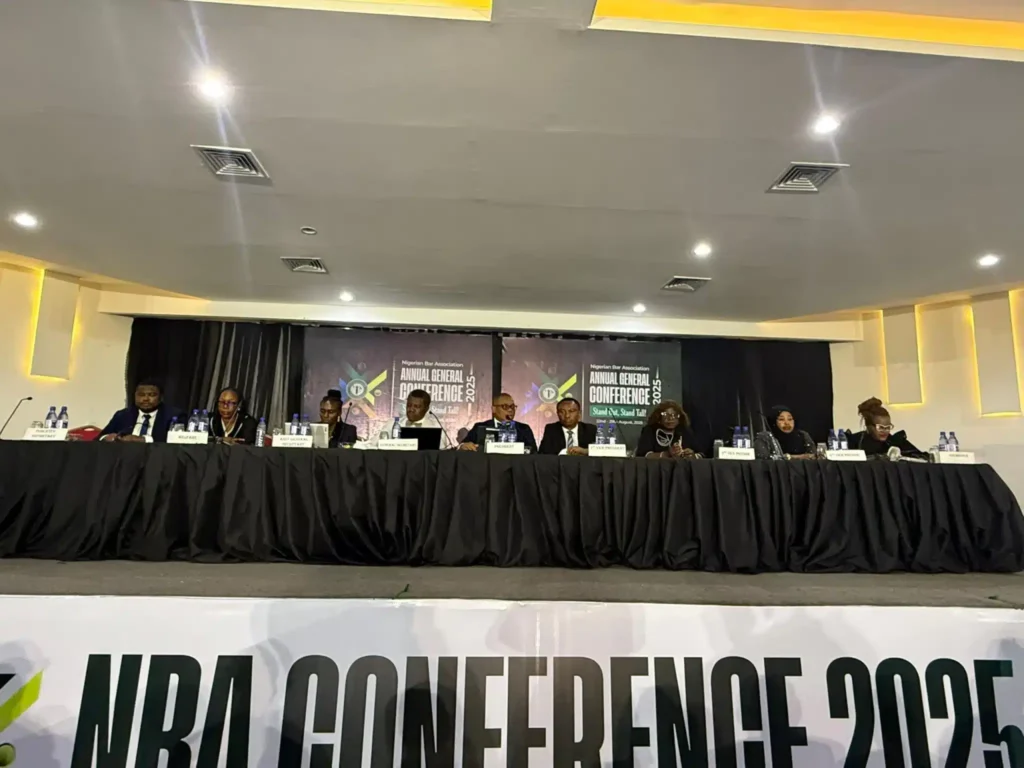
The EFF leader restated his party’s radical Pan-African vision of a borderless continent with a common currency, a unified parliament, and a centralised military command. According to him, Africans must reclaim ownership of their land, resources, and destiny from lingering imperialist structures.
Malema praised Nigeria’s role in South Africa’s liberation struggle, recalling the sacrifices made by Nigerians during the anti-apartheid fight. He noted contributions such as salary deductions, the Mandela tax imposed on students, and government-led boycotts of international sporting events in protest against apartheid. He reminded participants that Nelson Mandela’s early international visits after his release included Nigeria, underlining the depth of this historic relationship.
He stressed that this spirit of solidarity must not be confined to history but transformed into concrete partnerships, especially in economic terms. Malema lamented that both Nigeria and South Africa, despite being richly endowed, remain stuck in colonial economic systems where raw materials are exported cheaply and imported back as expensive finished products.
According to him, the path forward is clear: joint industrialisation. He envisioned partnerships where South African mining expertise and Nigerian oil wealth could be combined to create African-owned enterprises. He added that Nigeria could harness its agricultural capacity to feed the continent, while South African innovation and machinery power continental logistics and infrastructure.
Malema also acknowledged existing ties, with South African companies such as MTN, Shoprite, and Multichoice thriving in Nigeria, while Nigerian music, Nollywood, and literature strongly influence South African society. Yet, he warned that these positive linkages are overshadowed by the recurring problem of xenophobia.
He condemned xenophobic violence in South Africa, describing it as “a sickness born of poverty, inequality and government failure.” He insisted that a Nigerian in Johannesburg or a Ghanaian in Cape Town should not be treated as a foreigner but as an African advancing continental progress. In the same way, South African entrepreneurs should be welcomed in Lagos as partners in a shared African future.
Malema called for freer continental movement, including visa-free travel between Nigeria and South Africa, harmonised trade rules, and cross-border infrastructure that integrates African economies into one united market.
Placing the Nigeria–South Africa partnership in a broader context, Malema tied the struggle for African unity to global liberation movements. He pledged solidarity with oppressed peoples across the world, from Western Sahara and Palestine to Cuba, Haiti, and the Democratic Republic of the Congo. He argued that true African liberation cannot be achieved while turning a blind eye to other struggles against occupation, imperialism, and exploitation.
He denounced the double standards of international justice, claiming it moves swiftly against leaders from the Global South but drags its feet when Western nations or their allies commit atrocities. Referring to South Africa’s case at the International Court of Justice accusing Israel of genocide in Gaza, he stressed that Africa must strengthen its own courts and legal frameworks to ensure justice for its people.
In conclusion, Malema restated his vision for a borderless Africa, united under a single currency, parliament, and military command. He urged Africans to reclaim their wealth and redefine their destiny, declaring: “We are not a dark continent. How can we be dark when we have diamonds that shine among us?” His remarks drew resounding applause from lawyers and dignitaries in attendance.
He ended by stressing that Africa’s salvation lies not in Western capitals but in African cooperation, declaring that Nigeria and South Africa must lead the way. “Together, Nigeria and South Africa can lead Africa into a future where we are not beggars but giants, not divided tribes but one people. Our salvation will not come from Washington or Brussels; it lies here, in Lagos and Johannesburg, in Abuja and Pretoria, in the hands of Africans who refuse to be divided.”
What you should know
At the 2025 NBA Annual General Conference in Enugu, Julius Malema denounced xenophobia as a betrayal of African unity and urged stronger economic cooperation between Nigeria and South Africa.
He warned against foreign loans, describing them as debt traps, and called for a radical Pan-African vision that includes a borderless continent with one currency, parliament, and military.
Malema praised Nigeria’s role in ending apartheid and insisted that solidarity between the two nations must now translate into industrialisation, economic collaboration, and continental integration. He also criticised international justice systems and advocated for Africa to build its own legal institutions.