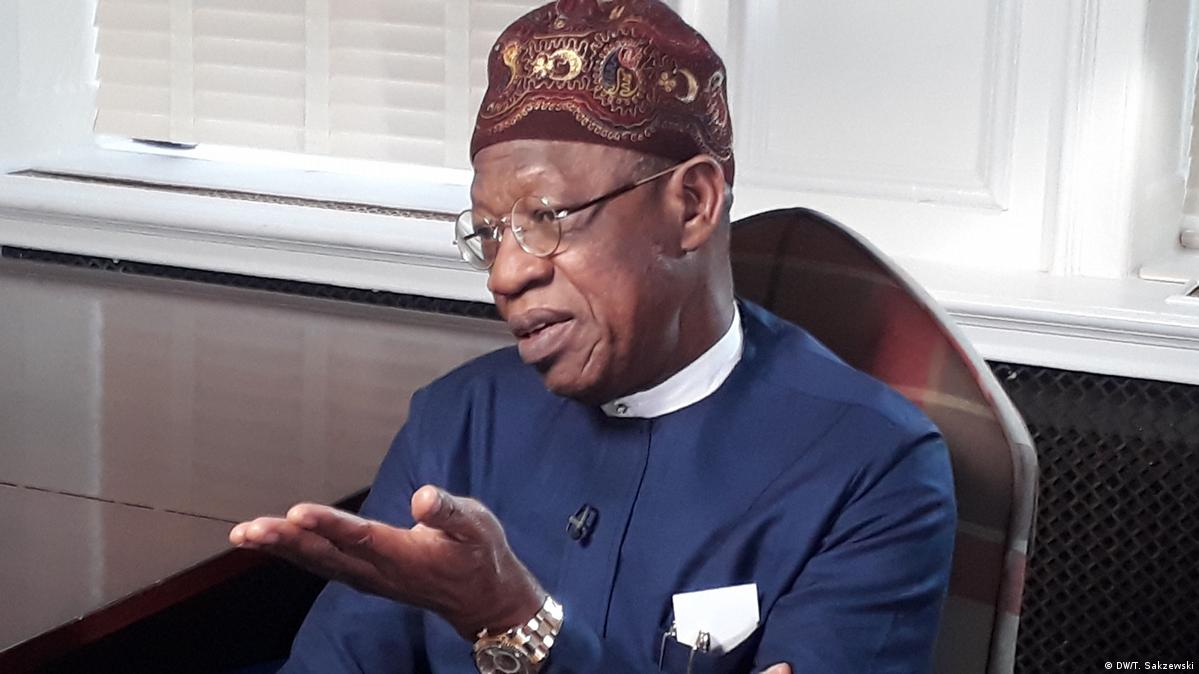
Former Minister of Information and Culture, Lai Mohammed, has defended the Nigerian government’s decision to suspend Twitter, now known as X, arguing that the eventual agreement reached with the platform proved the Muhammadu Buhari administration acted correctly.
Mohammed made the remarks on Tuesday during an interview on Channels Television’s Politics Today, where he insisted that the conditions Twitter later accepted aligned with long-standing demands by the Nigerian government and validated its stance.
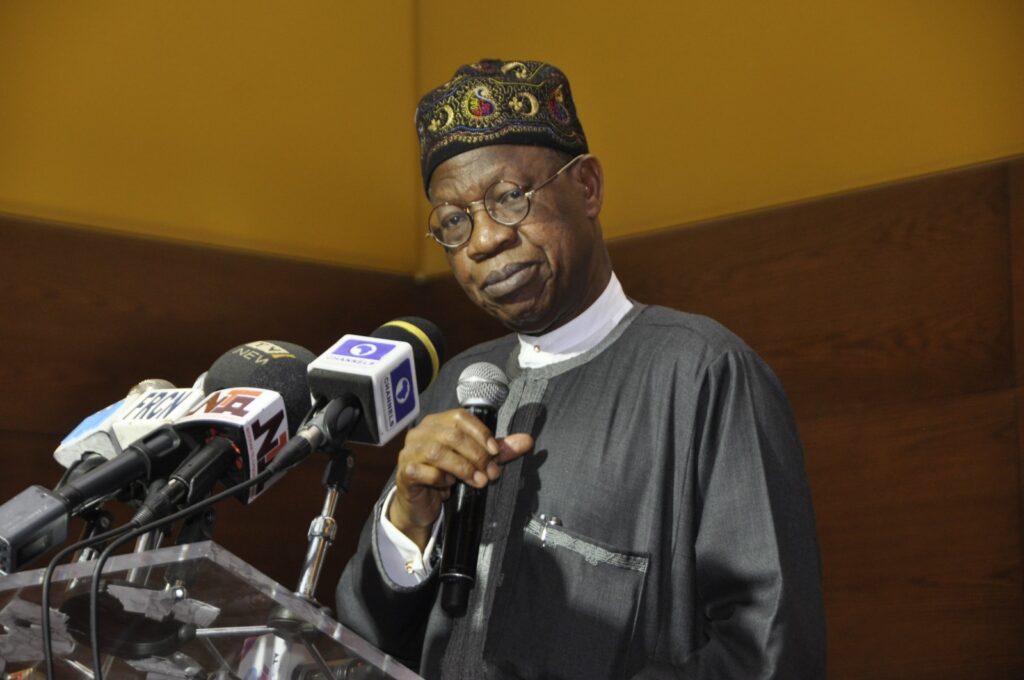
According to the former minister, the agreement reached after months of negotiations addressed issues that had been raised well before the suspension. He referenced his book, Headlines and Soundbites: Media Moments That Define an Administration, noting that it contains detailed records of exchanges between Nigeria and Twitter prior to the lifting of the ban.
“When you go through this book, you’ll see all the correspondence between us and Twitter. The agreement that was signed showed that prior to that time, Twitter was not even registered in Nigeria to do business, talk less of paying taxes.
You can find out from the NCC and other parastatals that the agreement they signed with us is contained in this book. It’s evident that, yes, we did the right thing,” he said.
Mohammed rejected suggestions that the decision was motivated by political pride or personal grievances, explaining instead that it stemmed from concerns about national unity and the risks posed by unchecked online activity.
“It’s because there is a country called Nigeria, that’s where there’s all kinds of freedom. You must not push that to the extent that you are going to set one part of the country against the other.
“It got to a stage that social media was becoming dangerous to everyone, unlike the television, radio or newspaper, where you have the gatekeepers,” he said.
Speaking further on what he described as the dangers of unregulated digital platforms, Mohammed said the government’s worries dated back to 2017, when he began raising alarms over fake news, hate speech and misinformation.
He explained that the government held multiple engagements with media organisations and social media companies, initially favouring self-regulation over legal controls.
“I think it was 2017 when I started the campaign against fake news and disinformation. I followed that up in my visit to media houses to assist us in combating the dangers of fake news, hate speeches and disinformation.
“We invited several of these microblogs to plead with them that there should be self-regulation. We were not even thinking of a law to stifle the media. But we were concerned that an unregulated social media was dangerous to society,” he said.
Mohammed added that despite repeated warnings, some platforms became instruments for individuals determined to threaten Nigeria’s cohesion and stability.
Addressing claims that Twitter was suspended because it offended those in power, the former minister dismissed the argument, stating that the move followed years of unresolved regulatory discussions.
He disclosed that when the suspension was approved in June 2021, President Buhari posed a single question to him.
“When we took the decision to suspend the operations of Twitter, the President, God bless his soul, asked me only one question: do I have the capacity to do so? And I said yes.
“I discussed with my colleague, the Minister of Communications and Digital Economy. But the sole purpose why we suspended the operation of Twitter was because it was becoming reckless,” Mohammed stated.
Nigeria and Twitter eventually reached an agreement in 2022, leading to the restoration of the platform after 222 days. Under the deal, Twitter agreed to establish a legal presence in Nigeria, meet tax obligations, appoint a country representative and work with the government on content regulation.
Although some aspects of the agreement took time to fully take effect, the government has consistently maintained that the measures were aimed at safeguarding national interest rather than limiting free expression.
The suspension, which followed the deletion of a tweet by President Buhari in June 2021, triggered widespread backlash and remains one of the most contentious digital policy actions in Nigeria’s recent past. Despite the criticism, Mohammed and other former officials continue to argue that the decision was necessary to preserve national security and unity.
What you should know
Lai Mohammed maintains that Nigeria’s suspension of Twitter was not an impulsive political reaction but the outcome of years of concern over unregulated social media, fake news and threats to national cohesion.
He argues that the 2022 agreement, which required Twitter to register locally, pay taxes and engage with regulators, confirmed the government’s earlier demands.
While the ban sparked intense public criticism and debates over free speech, the former minister insists the action was taken to protect Nigeria’s unity and security rather than silence dissent.