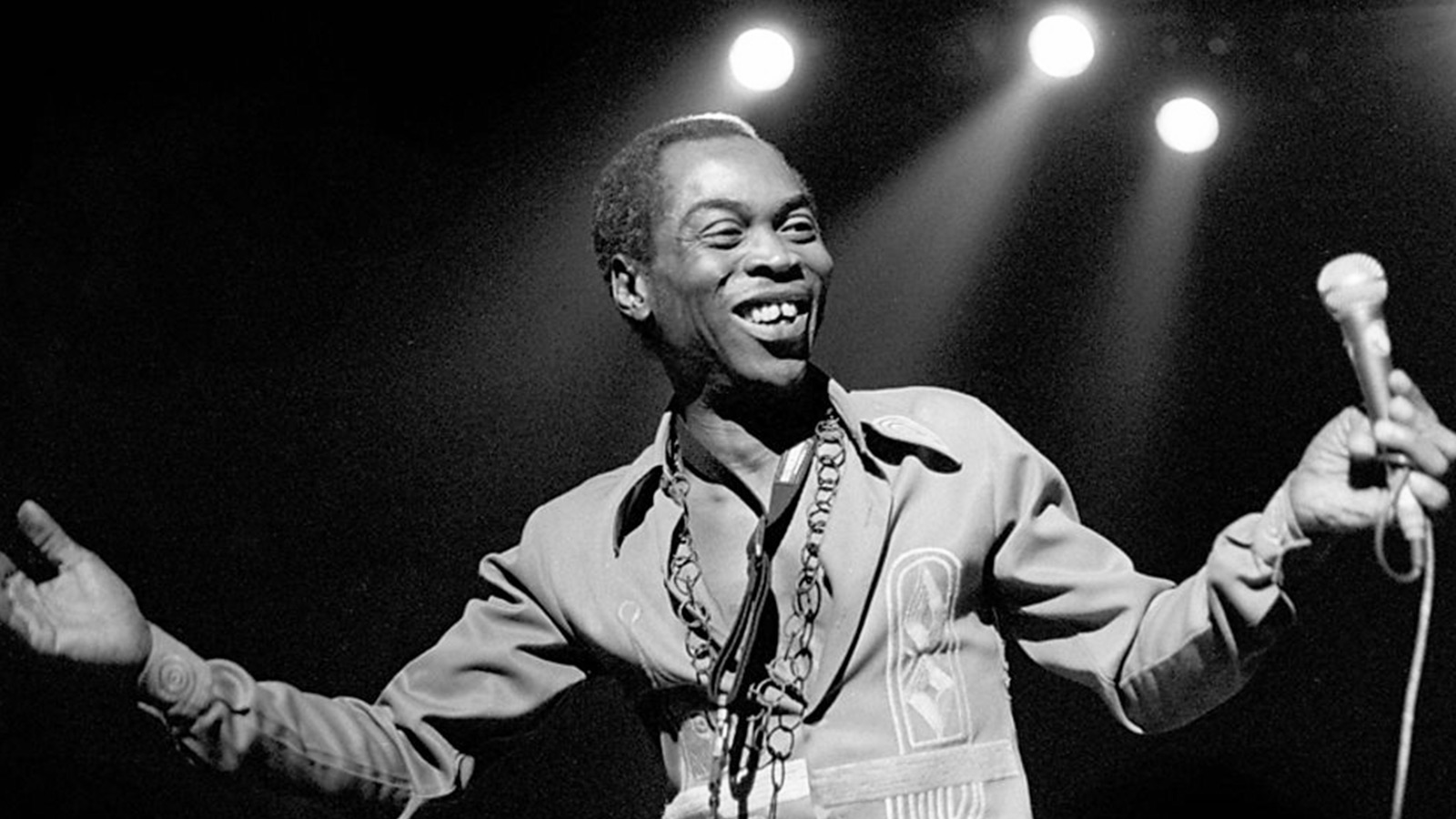
In a candid and wide-ranging interview on the podcast “Our Two Kobo,” Kunle Kuti, son of Afrobeat pioneer Fela Anikulapo-Kuti, has leveled serious accusations against the Nigerian government, claiming officials are systematically erasing his father’s contributions from the nation’s collective memory.
The custodian of the Kalakuta Museum and trustee of Fela’s estate didn’t mince words when discussing what he perceives as a deliberate attempt to diminish his family’s historical significance. “The problem is the government,” Kunle stated emphatically. “If they do not remove history from the school curriculum, people will teach history about Fela.”
Kunle’s concerns extend beyond his father’s musical achievements to encompass the broader Kuti family’s role in Nigeria’s independence movement. He revealed that many Nigerians remain unaware of his grandmother’s participation in the negotiations for Nigeria’s independence, a historical detail he believes should be taught in schools nationwide.
“Most people do not know that my grandmother was one of the people who went to negotiate for Nigeria’s independence,” Kunle explained, his voice carrying the weight of frustration. “Kuti is a big family in Nigeria.”
The younger Kuti emphasized his father’s multifaceted impact on the nation, noting that Fela “put Nigeria on the map—musically, culturally, politically, however you want.” This legacy, he argues, deserves protection and proper documentation for future generations.
In a conversation that touched on the ongoing debate between Afrobeat purists and contemporary Afrobeats artists, Kunle demonstrated a nuanced understanding that defies simple categorization. “The king and creator of Afrobeat studied music. He went to school,” he noted, establishing his father’s formal musical training before addressing the modern genre.
“I personally love Afrobeats. Yes, I love it,” Kunle admitted, revealing his own background in electronic music production. “If you look at it, it is like a break from Afrobeat, too. But you cannot compare.” His words captured the bittersweet reality of watching a new generation build upon—yet potentially overshadow—his father’s groundbreaking work.
Perhaps the interview’s most surprising revelation came when Kunle expressed his deep appreciation for contemporary star Wizkid. “Wizkid is the only artist that I beg to see in my life,” he confessed with disarming honesty. “I want to meet this guy. Show him how much I love him.”
This admission came against the backdrop of recent online tensions between Wizkid’s fanbase and Kunle’s brother, Seun Kuti, highlighting the complex dynamics within Nigeria’s music community.
Kunle’s recollections of his childhood at Kalakuta Republic—Fela’s commune-like compound—painted a vivid picture of state-sponsored violence. He recalled being pulled from primary school by his panicked mother during the infamous 1977 military raid that would ultimately claim his grandmother’s life.
“How would you send a thousand soldiers to kill one person?” Kunle asked rhetorically, his question echoing across decades. “My grandmother died from complications from her injuries.”
He revealed that Fela’s political party, the Movement of the People (MOP), was effectively blocked from participating in elections after authorities witnessed the massive crowds at the party’s convention. “They would not allow him. MOP is still alive today,” Kunle stated, suggesting the movement’s ideals persist despite official suppression.
Despite his father’s combative relationship with authority, Kunle has chosen a different path. “I will not fight the government. I will not marry as many wives as he did,” he said with a hint of wry humor, acknowledging both his father’s activism and his controversial personal life.
Instead, Kunle is channeling his energy into modernizing the Kalakuta Museum, working with Google Arts and Culture to create what he calls “a self-explanatory museum” accessible to people worldwide.
Kunle’s own son has just graduated with a degree in music production and performance, continuing the family’s musical lineage. Though the two are currently “fighting” over whether the 21-year-old should pursue a master’s degree, Kunle’s vision is clear: he wants to create something innovative that builds on the Afrobeats fusion currently dominating global charts.
“I am rooting for him. We are looking forward to that,” Kunle said, his tone mixing paternal pride with entrepreneurial ambition.
Regarding Fela’s estate, Kunle emphasized its dynamic potential. “Life is not a one-time value,” he explained. “You can do music. You can do movies. You can do fashion. He was a fashion icon. He created his own style. His estate keeps evolving. Ideas keep coming every time.”
As Nigeria grapples with questions of historical memory, cultural preservation, and artistic evolution, Kunle Kuti stands at the intersection of these debates—a guardian of the past working to ensure his father’s revolutionary spirit finds relevance in contemporary times, even as he celebrates the new artists carrying Nigerian music to unprecedented global heights.
WHAT YOU SHOULD KNOW
Kunle Kuti, son of Afrobeat legend Fela Kuti, is sounding the alarm that the Nigerian government is deliberately erasing his father’s legacy by removing history from school curricula—effectively wiping out the story of a man who put Nigeria on the global map and whose mother helped negotiate the country’s independence.
While he’s modernizing the Kalakuta Museum and surprisingly embraces both Afrobeats and artists like Wizkid, his central message is urgent: without proper historical education, younger Nigerians will never know the full story of the Kuti family’s sacrifices, including his grandmother’s death from injuries sustained during a brutal 1977 military raid.