Africa’s massive crude oil theft problem is the work of sophisticated international criminal syndicates that exploit weaknesses in continental security infrastructure, the head of Nigeria’s national oil company warned on Monday at a high-level defense summit.
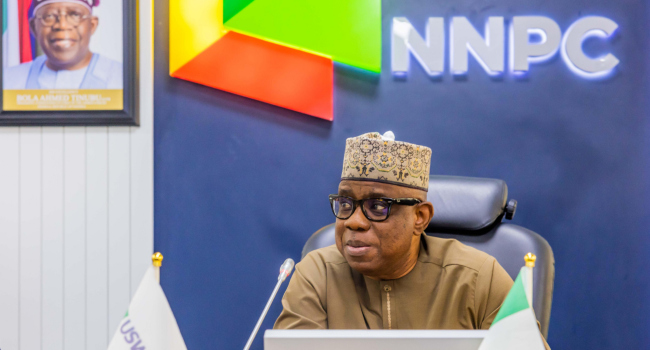
Bashir Ojulari, Group Chief Executive Officer of the Nigerian National Petroleum Company Limited (NNPCL), delivered the stark assessment to defense chiefs from across the continent gathered in Abuja, painting a picture of organized crime that transcends national boundaries and threatens regional energy security.
“Crude theft and its attendant illegal activities are by no means a purely localized occurrence,” Ojulari told the Africa Chief of Defence Staff Conference. “Rather, these operations involve specialized international syndicates that take advantage of gaps within the state, national, and continental security architecture to conduct illegal activities.”
The revelation underscores the scale and sophistication of criminal networks that have plagued Africa’s oil-producing regions, particularly Nigeria’s Niger Delta, where pipeline vandalism and crude theft have persisted for decades despite extensive security operations.
As head of Africa’s largest national oil company, Ojulari emphasized that the theft operations require “cross-border collaboration to tackle effectively,” highlighting the inadequacy of purely national responses to what has become a continental crisis.
The NNPCL chief stressed the strategic importance of energy security, noting that “security forms a key pillar of the energy business and therefore plays a very important and strategic role in achieving national, regional, and continental energy security goals.”
His comments come amid intensified efforts by Nigerian authorities to combat oil theft, which has cost the country billions of dollars in lost revenue over the years. Recent operations by the Nigerian Army‘s 6 Division alone have resulted in the confiscation of over 32,000 liters of stolen petroleum products and the arrest of 69 suspects.
The Nigerian government has deployed an arsenal of modern technologies and collaborative approaches to address the crisis. Advanced surveillance systems, including drones and satellite imagery, now monitor oil pipelines and facilities across the country’s oil-producing regions.
Military and law enforcement agencies have launched comprehensive campaigns targeting illegal oil operations, systematically dismantling bunkering sites and apprehending suspects involved in the sophisticated theft networks.
Recognizing the international dimension of the problem, authorities have forged partnerships with international bodies to track and prevent the illegal sale of stolen crude on global markets. The NNPCL has specifically announced collaboration with the Economic and Financial Crimes Commission (EFCC) and other security agencies, implementing measures such as the Advanced Cargo Declaration system to enhance oversight.
Understanding that sustainable solutions require local buy-in, the government has initiated community engagement programs in oil-producing areas. These initiatives provide incentives for local participation in protecting oil infrastructure while raising awareness about the economic and environmental damage caused by oil theft.
The approach recognizes that many individuals involved in illegal oil activities lack economic alternatives, making community-based solutions essential for long-term success.
Despite these comprehensive efforts, significant obstacles remain. Corruption within both the oil industry and law enforcement agencies continues to undermine anti-theft initiatives. The challenging terrain and infrastructure limitations in many oil-producing areas make effective surveillance and enforcement difficult.
Perhaps most critically, the international nature of these criminal syndicates requires sustained cooperation between African nations and international partners—a coordination challenge that has proven difficult to maintain consistently.
Ojulari’s frank assessment at the defense conference signals a recognition that combating oil theft requires acknowledgment of its true scope and sophistication. His emphasis on the “benefit of collaboration within the energy space” and the “significant improvement in our operating environment” suggests that coordinated efforts are beginning to show results.
As Africa seeks to maximize revenue from its natural resources to fund development and economic growth, the battle against these international criminal syndicates represents more than just law enforcement—it’s a fight for the continent’s economic future and energy security.
The success of current anti-theft initiatives may well depend on whether African nations can maintain the kind of sustained, coordinated response that these sophisticated criminal networks have long exploited the absence of.
WHAT YOU SHOULD KNOW
Africa’s crude oil theft crisis is not the work of local criminals but sophisticated international crime syndicates that exploit security gaps across borders. Nigeria’s oil chief warns that billions in stolen crude require a coordinated continental response, not just national efforts.
While new technologies and international partnerships show promise, the fight against these organized networks remains hampered by corruption and the need for sustained cross-border cooperation to protect Africa’s energy security and economic future.