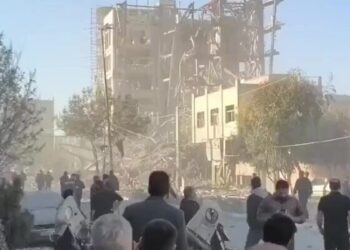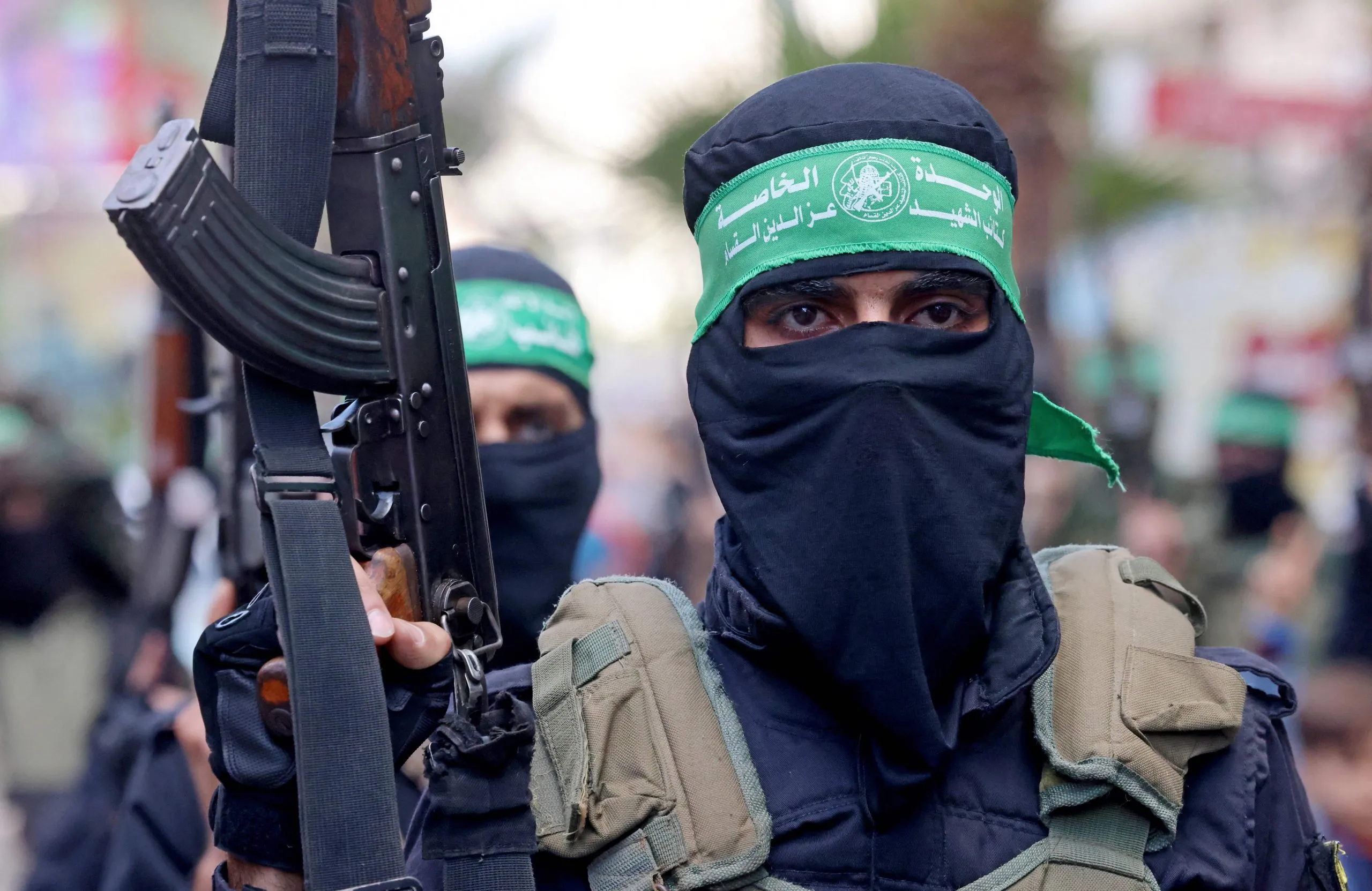
Hamas has pledged to deliver the remains of another Israeli hostage on Friday night, reaffirming its commitment to return all deceased captives still trapped beneath the debris of Gaza’s destruction.
In response to Hamas’s call for assistance, Turkey has dispatched an 81-member specialist team from its Disaster and Emergency Management Authority (AFAD) to help recover the remaining bodies. The team is equipped with life-detection devices, trained search dogs, and advanced rescue equipment but has yet to receive Israeli clearance to enter Gaza.
A Turkish official told AFP that the group’s mission involves locating both Palestinian and Israeli remains, adding, “It remains unclear when Israel will allow the Turkish team to enter Gaza.” A Hamas source later confirmed that the delegation was expected to arrive by Sunday.
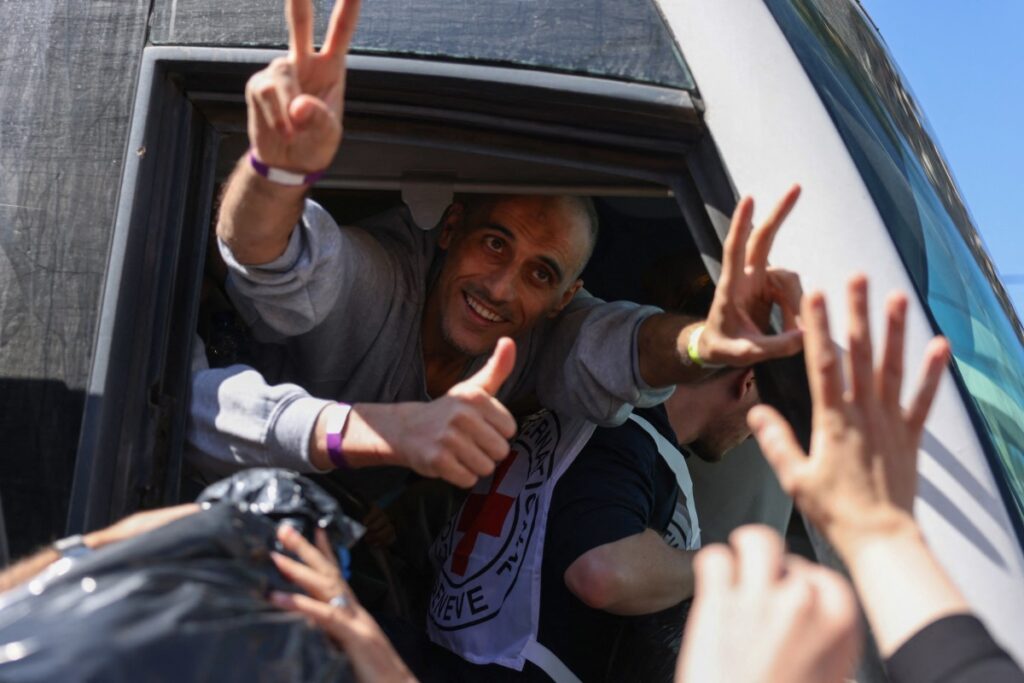
The move follows a ceasefire agreement between Israel and Hamas, mediated by US President Donald Trump, under which Hamas returned 20 living hostages and the remains of nine deceased captives, as well as another body that Israel said did not belong to a former hostage. In exchange, Israel freed nearly 2,000 Palestinian prisoners and paused its military operations in Gaza that began after Hamas’s October 7, 2023, attack.
On Friday, Hamas announced that its armed wing “will hand over the body of one of the Israeli captives, which was recovered today in the Gaza Strip, at 11:00 pm Gaza time (2000 GMT).”
‘May Require Some Time’
Israeli Prime Minister Benjamin Netanyahu reaffirmed his resolve on Thursday to “secure the return of all hostages,” while Israel’s defense minister warned that military operations would resume if Hamas fails to honor the deal.
Senior Hamas figure Ghazi Hamad rejected what he called “unacceptable pressure tactics,” explaining that the process of locating bodies “is complex and requires time, especially after the occupation changed the landscape of Gaza.”
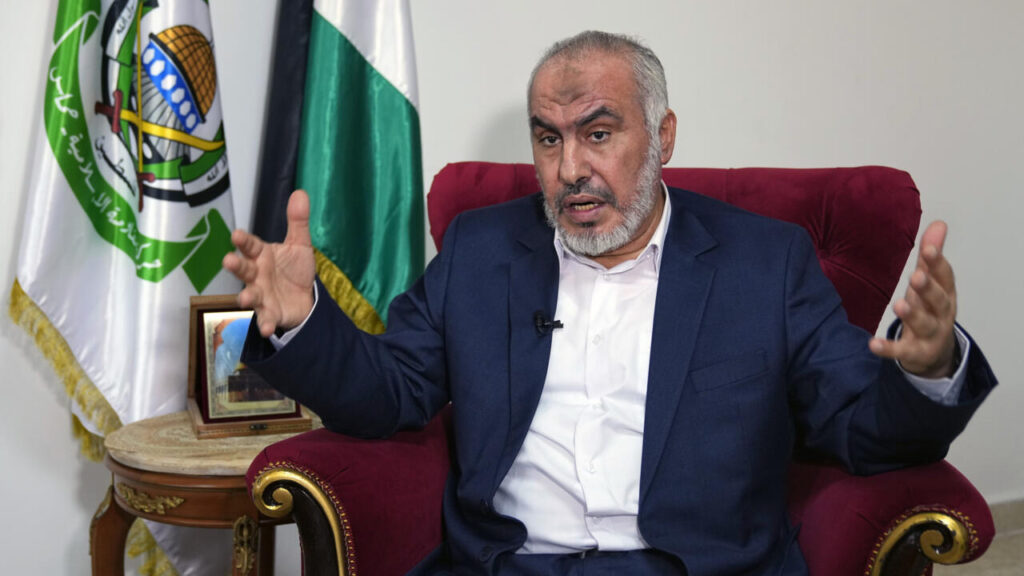
He assured that Hamas “will return the bodies and adhere to the agreement as we promised.”
The truce has brought a temporary halt to hostilities after two years of relentless conflict, offering a reprieve to both the hostages’ families and Gaza’s war-weary population. The UN World Food Programme confirmed on Friday that it had moved nearly 3,000 tonnes of food supplies into the enclave since the ceasefire began.
However, the agency warned that Gaza’s hunger crisis could not be reversed overnight and urged the reopening of all crossings to “flood Gaza with food.”
Trump’s 20-point Gaza plan emphasizes humanitarian aid and reconstruction, with the Rafah crossing seen as a critical lifeline. UN humanitarian chief Tom Fletcher, who entered Gaza on Friday, reported improved aid access. “We’ve begged for this access for months, and finally we’re seeing goods moving at scale: food, medicine, tents, fuel – a lot of fuel got in today,” he said in a social media video.
The next stages of the truce are expected to focus on Hamas’s disarmament, the amnesty of leaders who surrender their weapons, and the creation of a post-war governance structure for Gaza.
‘Better Than Living On the Street’
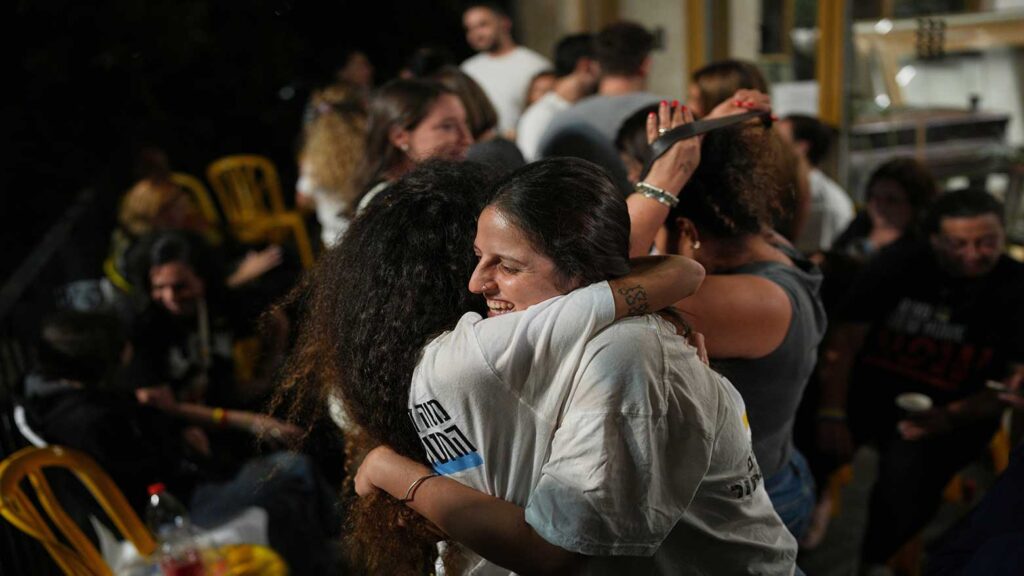
For the families of surviving hostages, the ceasefire has brought long-awaited reunions. Yet for others, it has reopened wounds as they identify the remains of loved ones.
“We’ve been waiting for this for so long, two years that we’ve been fighting for him every single day,” said Gal Gilboa Dalal, whose brother Guy Gilboa Dalal was freed after two years in captivity. He alleged that Hamas starved his brother and another prisoner for over three months to exploit them in a propaganda video. “Their bones hurt, their muscles hurt. Their recovery will be very long,” he added.
At Nasser Hospital in Gaza, families gathered around screens to identify relatives among the returned Palestinian bodies. One man, Akram Khalid al-Manasra, said he recognized his son “thanks to the birthmark on his nose and his teeth.”
Meanwhile, residents like Ahmad Saleh Sbeih continued clearing rubble from their shattered homes, saying, “I’m right under the threat of death. It could collapse at any moment. But there is no choice.”
The Gaza health ministry, governed by Hamas, reports that at least 67,967 people have been killed since the war began—a figure the United Nations deems credible. Over half of the dead are women and children.
Hamas’s October 7 attack on Israel claimed 1,221 lives, mostly civilians, according to official Israeli data.
What You Should Know
Friday’s development underscores a delicate phase in the US-brokered truce as both Israel and Hamas navigate humanitarian recovery and political accountability.
While the return of hostages’ remains may bring closure to grieving families, the broader challenge remains — rebuilding Gaza’s shattered landscape and preventing a resurgence of violence in one of the world’s most volatile regions.