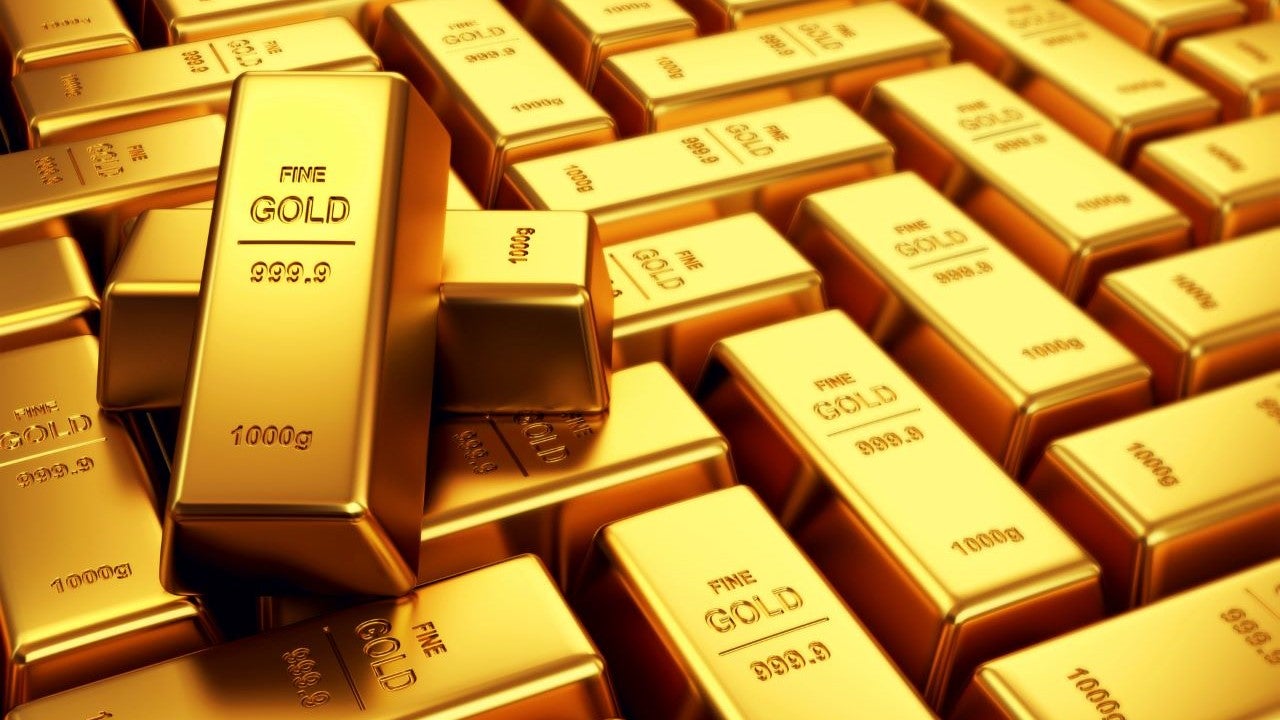
Gold markets demonstrated resilience on Tuesday, consolidating near record-breaking levels as investors positioned themselves ahead of Federal Reserve Chair Jerome Powell’s highly anticipated policy address, with the precious metal’s trajectory increasingly tied to expectations of an accommodative monetary policy stance from the U.S. central bank.
Spot gold advanced 0.2% to $3,753.25 per ounce as of 0604 GMT, maintaining strength after establishing a new all-time high of $3,759.02 earlier in the trading session. The milestone reflects growing investor confidence that the Federal Reserve will continue its rate-cutting cycle, a development that typically benefits non-yielding assets like gold.
The dollar’s continued weakness has emerged as a key catalyst for gold’s ascent, with the U.S. Dollar Index extending losses from the previous session. This currency dynamic has made dollar-denominated gold more attractive to international buyers, providing additional upward momentum for the precious metal.
“I think it’s predominantly a factor of monetary policy expectations, potentially lower interest rates, and upside risks to inflation,” explained Kyle Rodda, an analyst at Capital.com, highlighting the fundamental drivers behind gold’s recent surge.
Despite the bullish momentum, technical analysts are exercising caution about the immediate outlook. Kelvin Wong, senior market analyst at OANDA, noted that while “the short-term trend is still bullish and intact,” the market could experience “a short-term pullback more due to technical factors” on an intraday basis.
The precious metals market is operating in a heightened state of anticipation as investors await Powell’s speech, scheduled for 1635 GMT. The Fed Chair’s remarks are expected to provide crucial insights into the central bank’s policy trajectory, particularly regarding the pace and magnitude of future rate adjustments.
Adding to the market’s focus on monetary policy, Friday’s release of the Personal Consumption Expenditures index—the Federal Reserve’s preferred inflation gauge—will offer additional data points for policymakers and investors alike.
The Fed’s internal policy debate has intensified, with newly appointed Federal Reserve Governor Stephen Miran arguing Monday that the central bank is “misreading how tight it has set monetary policy” and warning of risks to the job market without “aggressive rate cuts.” His dovish stance contrasts sharply with three colleagues who advocate for a more cautious approach to combat persistent inflation concerns.
Market expectations have crystallized around further easing, with the CME FedWatch tool indicating a 90% probability of a 25-basis-point rate cut in October, followed by a 75% chance of another reduction in December. These expectations have provided fundamental support for gold’s rally.
ANZ analysts outlined a compelling case for sustained gold demand in their latest research note, stating, “We see slowing economic growth, higher inflation, the shifting geopolitical landscape, and a weaker USD keeping gold’s investment demand strong.”
The broader precious metals complex presented a mixed picture on Tuesday. Silver, despite falling 0.6% to $43.82 per ounce, continues to trade near 14-year highs. Platinum declined 0.3% to $1,412.64, while palladium managed a modest 0.3% gain to $1,182.24.
Silver’s elevated price levels reflect underlying supply-demand dynamics that ANZ expects to persist. “Sustained tightness in the spot market and continued supply dislocation are expected to keep prices volatile,” the bank noted, suggesting continued attention from precious metals investors.
The convergence of monetary policy expectations, currency weakness, and broader economic uncertainties has created a favorable environment for precious metals, with gold leading the charge to new highs.
As markets await Powell’s guidance and Friday’s inflation data, the precious metals sector remains at the center of investor attention, reflecting broader concerns about economic growth, monetary policy effectiveness, and portfolio diversification strategies in an uncertain global landscape.
WHAT YOU SHOULD KNOW
Gold hit a record high of $3,759 per ounce, driven primarily by expectations that the Federal Reserve will continue cutting interest rates. A weaker dollar is making gold cheaper for international buyers, while markets anticipate a 90% chance of another rate cut in October.
Investors are closely watching Fed Chair Powell’s upcoming speech for policy direction, as economic uncertainty and inflation concerns keep demand for safe-haven assets like gold strong.