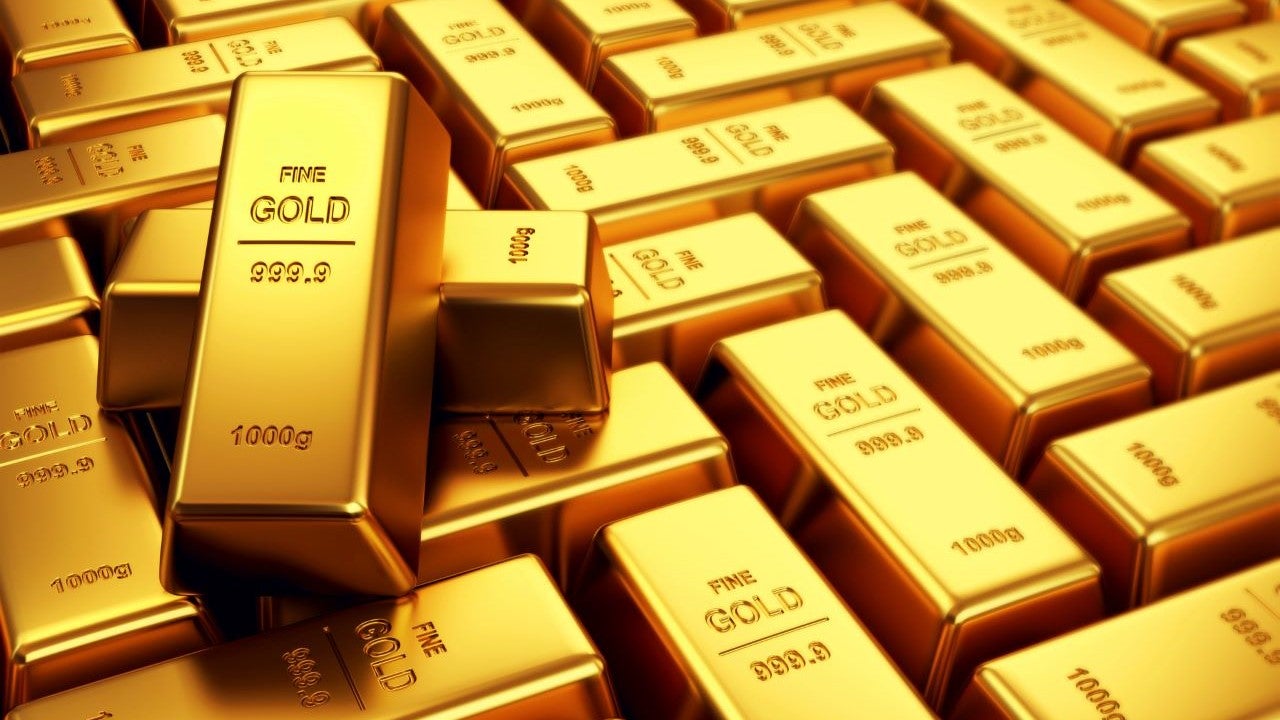
Gold prices tumbled on Monday, surrendering earlier gains as a resurgent U.S. dollar and an unexpected thaw in U.S.-China trade relations diminished investor appetite for the traditional safe-haven asset ahead of a critical week for global monetary policy.
Spot gold declined 0.8% to $4,077.11 per ounce by 0655 GMT, while U.S. gold futures for December delivery fell more sharply, dropping 1.1% to $4,090.90. The sell-off marks a notable retreat for the precious metal, which has been trading near record territory in recent months amid persistent economic uncertainty and geopolitical tensions.
Dollar Strength Pressures Gold
The yellow metal faced immediate headwinds from currency markets, where the U.S. dollar surged to its strongest level against the Japanese yen in more than two weeks. The dollar’s appreciation makes gold more expensive for holders of other currencies, typically dampening international demand for the commodity.
Surprise Trade Deal Framework Shifts Market Sentiment
The catalyst for Monday’s broader market shift came from Washington and Beijing, where senior economic officials from both nations worked through the weekend to hammer out the preliminary framework of a trade agreement. The deal, which now awaits final approval from President Donald Trump and Chinese President Xi Jinping later this week, caught markets off guard after months of escalating trade rhetoric between the world’s two largest economies.
“This potential trade deal between the U.S. and China really came out of the blue and has been a positive surprise for the markets broadly,” explained Kyle Rodda, analyst at Capital.com. “Obviously, the flip side of that is the developments have been negative for gold.”
The unexpected diplomatic breakthrough has alleviated some of the geopolitical anxiety that had been supporting gold prices, prompting investors to rotate out of defensive positions and into riskier assets.
Fed Decision Looms Large
Yet analysts caution against reading too much into Monday’s decline. The precious metal’s medium-term trajectory may depend less on trade headlines and more on the direction of monetary policy, with the Federal Reserve’s policy meeting on Wednesday taking center stage.
Markets have already priced in a quarter-percentage-point rate cut from the U.S. central bank, bolstered by Friday’s softer-than-expected inflation data. However, traders are now focused on forward guidance from Fed Chair Jerome Powell, whose commentary could signal the pace of future rate adjustments.
“A lot of the heat has come out of the market now, and sentiment is neutralizing,” Rodda noted. “The reason gold is finding so much support is the prospect of loose fiscal and monetary policy going forward. Should that remain the case, gold’s uptrend should hold.”
Gold, which offers no yield, typically thrives in low-interest-rate environments as the opportunity cost of holding the metal diminishes relative to interest-bearing assets.
Institutional Positioning Shifts
Institutional investors appear to be reassessing their gold exposure. SPDR Gold Trust, the world’s largest gold-backed exchange-traded fund, reported a 0.52% decline in holdings on Friday, with reserves falling to 1,046.93 metric tons from 1,052.37 tons the previous day. The outflow suggests some profit-taking among large-scale investors as near-term risk premiums compress.
Broader Precious Metals Mixed
Across the wider precious metals complex, sentiment was mixed. Spot silver tracked gold lower, falling 0.6% to $48.31 per ounce, while platinum bucked the trend with a 0.7% gain to $1,616.30. Palladium, used primarily in automotive catalytic converters, added 0.5% to reach $1,435.75 as industrial metal demand showed resilience.
Week Ahead: Central Banks in Focus
The coming days promise to be pivotal for precious metals markets. Beyond Wednesday’s Federal Reserve decision, investors will be parsing statements from other major central banks and monitoring whether the U.S.-China trade framework translates into a concrete agreement.
For gold, the path forward hinges on a delicate balance: easing geopolitical tensions may remove some support, but accommodative monetary policy and longer-term economic concerns could provide a floor under prices. As one veteran trader put it, “The correction may be healthy, but don’t mistake a pullback for a reversal.”
WHAT YOU SHOULD KNOW
Gold prices dropped Monday as the U.S. dollar strengthened and surprise progress on a U.S.-China trade deal reduced demand for safe-haven assets. However, the metal’s broader uptrend likely remains intact, supported by anticipated Federal Reserve interest rate cuts this week.
Investors should watch Fed Chair Jerome Powell’s forward guidance on Wednesday—loose monetary policy ahead could keep gold’s bull run alive despite short-term pullbacks driven by easing geopolitical tensions.