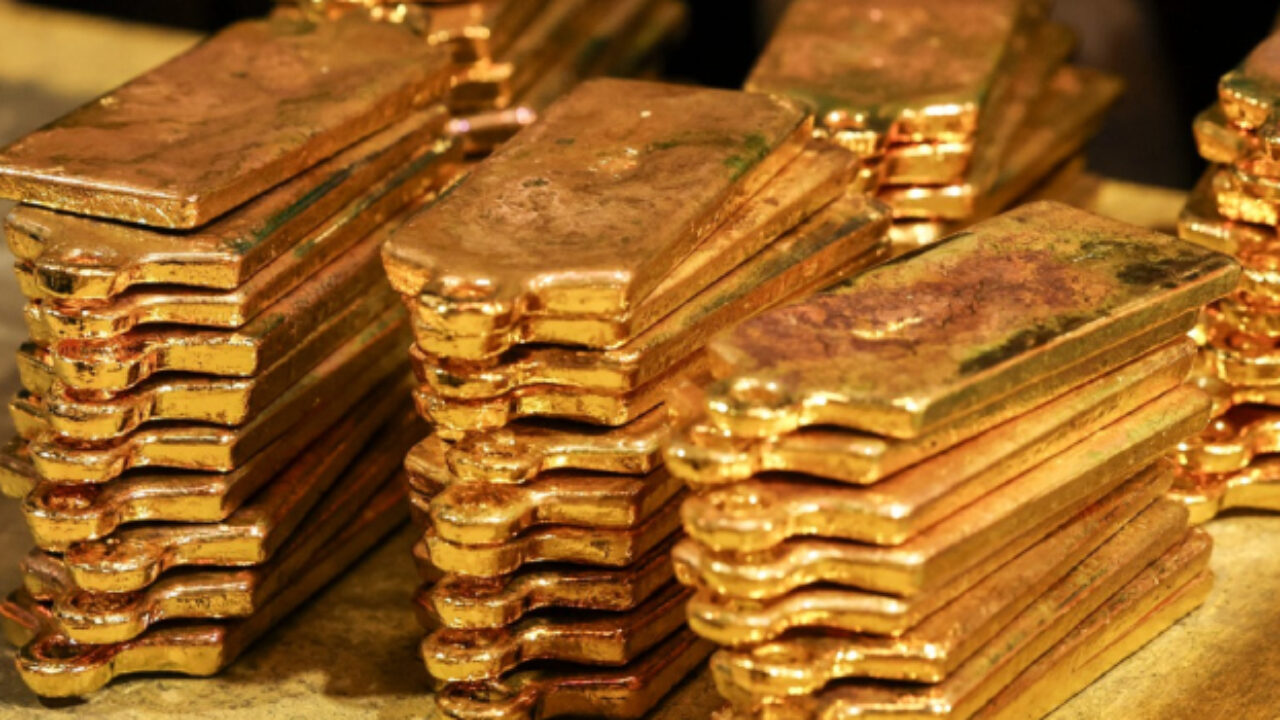
Gold prices staged a robust recovery on Friday, climbing more than 1% as investors seized on yesterday’s sharp sell-off to re-enter the market while keeping a close watch on crucial U.S. inflation figures that could shape the Federal Reserve’s monetary policy trajectory for months to come.
Spot gold gained 1% to reach $4,969.85 per ounce by 1000 GMT, clawing back from Thursday’s precipitous 3% decline that had sent the precious metal to its lowest level in nearly a week. U.S. gold futures for April delivery mirrored the advance, rising 0.9% to $4,990.30 per ounce. Despite this week’s volatility, the yellow metal has managed to post a modest 0.2% weekly gain.
“Dip-buying by market participants in Asia, where demand for gold has been particularly strong, appears to be driving the rebound in gold prices,” said Hamad Hussain, a climate and commodities economist at Capital Economics, highlighting the geographic source of renewed buying pressure.
The recovery comes as the Chinese gold market experiences robust demand ahead of the Lunar New Year holiday, with consumers traditionally purchasing gold as gifts and investments during this culturally significant period. However, the regional picture remains mixed: gold prices flipped to a discount in India this week for the first time in a month as subdued demand took hold, with volatile price swings deterring buyers in the world’s second-largest gold-consuming nation.
Thursday’s selloff was triggered by stronger-than-expected U.S. employment data that dampened market expectations for imminent Federal Reserve rate cuts. Wednesday’s jobs report showed the United States added 130,000 positions in January, nearly double analysts’ consensus estimate of 70,000. The upside surprise reinforced the view that the labor market remains resilient, potentially giving the Fed less urgency to ease monetary policy.
The breach of the psychologically important $5,000 per ounce level on Thursday accelerated selling pressure, as technical traders and stop-loss orders amplified the downward move.
Yet not all market observers are convinced the recent volatility reflects underlying weakness in gold’s investment case. “The moves seem to be irrespective of what the market fundamentals are, not because of them, and the market fundamentals across the complex remain positive,” said Ross Norman, an independent precious metals analyst, suggesting that short-term price action may be disconnected from longer-term drivers.
That view was echoed by analysts at ANZ, who on Friday raised their second-quarter gold forecast to $5,800 per ounce from $5,400, citing the metal’s enduring role “as an insurance asset against a plethora of uncertainties” in the current geopolitical and economic environment.
Market attention now pivots to the Consumer Price Index data due for release later Friday, which will provide fresh insights into the health of the U.S. labor market and inflation trajectory—critical inputs for the Federal Reserve’s policy deliberations. Non-yielding assets like gold typically perform well in low-interest-rate environments, making the inflation outlook a key determinant of the metal’s near-term direction.
Fed funds futures markets are being closely monitored for any shift in rate-cut expectations following the CPI release.
Elsewhere in the precious metals complex, silver mounted an even more impressive recovery, surging 3.9% to $78.11 per ounce after suffering an 11% plunge in the previous session. The white metal was on track for a weekly gain of 0.8% despite Thursday’s carnage.
Platinum and palladium also participated in Friday’s rebound, with platinum rising 1.4% to $2,027.60 per ounce and palladium advancing 1.7% to $1,644.24. However, both metals remained set to post weekly losses, underscoring the choppy trading conditions that have characterized the precious metals sector this week.
As traders await the inflation data release, the question remains whether today’s recovery represents a genuine shift in market sentiment or merely a temporary pause in gold’s recent pullback from record highs.
WHAT YOU SHOULD KNOW
Gold rebounded 1% Friday after Thursday’s sharp selloff, driven primarily by strong Asian buying ahead of China’s Lunar New Year. However, the real story is what happens next: U.S. inflation data due later today will be critical in determining whether the Federal Reserve cuts interest rates this year—the key factor that will drive gold’s direction in the coming months.
Strong jobs data earlier this week already dampened rate-cut hopes, sending gold tumbling 3%. If today’s inflation numbers come in hot, expect further pressure on gold prices.
If they cool, the recovery could gain momentum. Bottom line: gold’s fate hinges on the Fed, and the Fed’s next move depends on today’s CPI release.