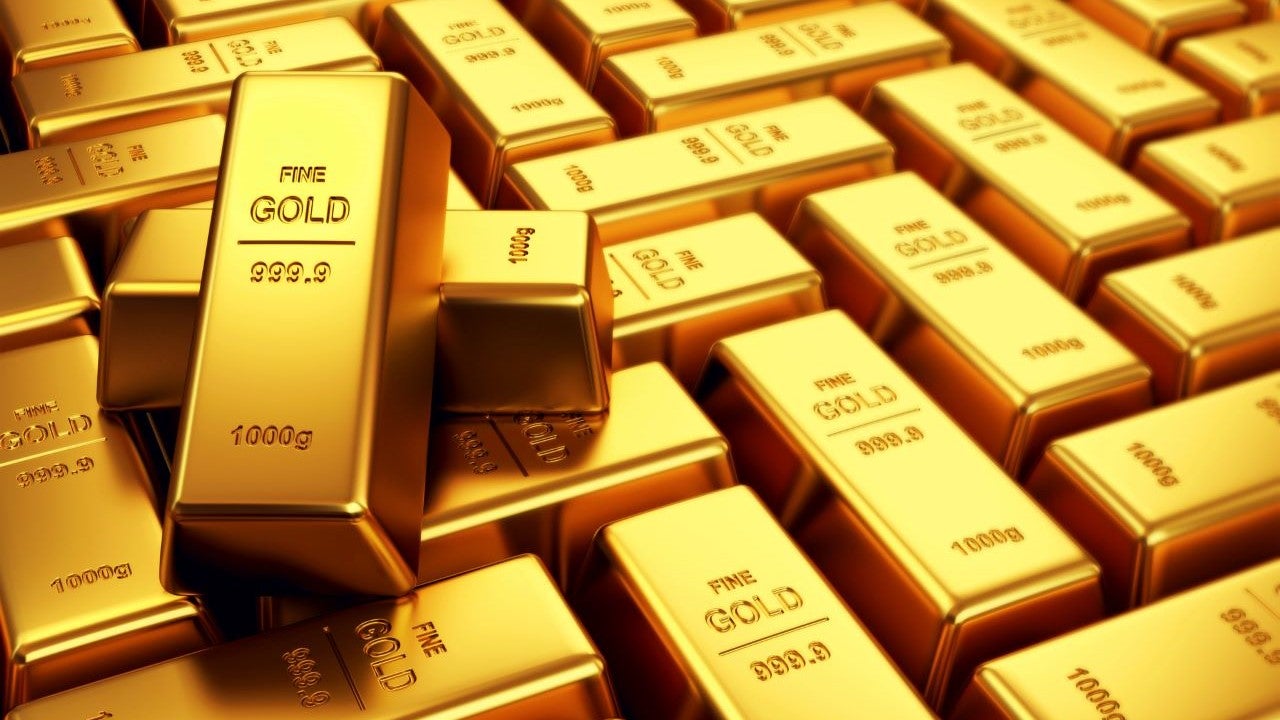
Gold prices mounted a modest recovery on Monday morning, clawing back some ground after suffering their steepest single-day loss in four months, as traders positioned themselves ahead of a pivotal week for both monetary policy expectations and U.S.-China trade relations.
Spot gold advanced 0.3% to $4,259.34 per ounce by early Asian trading hours, while U.S. gold futures for December delivery showed stronger gains, climbing 1.4% to $4,273 per ounce. The uptick comes as markets digest Friday’s tumultuous session that saw bullion retreat 1.8%—its worst performance since mid-May—following comments from President Donald Trump that appeared to soften his hardline stance on Chinese tariffs.
MARKET RECALIBRATION AFTER RECORD RUN
The precious metal’s consolidation follows an extraordinary rally that has seen gold surge more than 60% year-to-date, culminating in an all-time high of $4,378.69 reached just last Friday before the selloff materialized. Analysts attribute Monday’s stabilization to markets attempting to find equilibrium after weeks of relentless upward momentum driven by what some have characterized as speculative fervor.
“The gold market is trying to find its footing after Friday’s sell-off. Sentiment is normalizing, cooling down a bit, after a few weeks of mania,” explained Kyle Rodda, analyst at Capital.com, describing the current phase as a necessary breather in an otherwise parabolic ascent.
The sudden reversal on Friday was triggered by President Trump’s unexpected remarks suggesting that his proposed 100% tariff on Chinese goods would prove unsustainable. The president indicated plans to meet directly with Chinese President Xi Jinping and expressed optimism about the trajectory of bilateral relations, temporarily easing fears of an escalating trade war that had been a primary catalyst for gold’s safe-haven appeal.
CRITICAL DATA POINTS LOOM
Market participants now find themselves in a holding pattern as they await two critical developments that could determine gold’s near-term trajectory. First, direct negotiations between Washington and Beijing are scheduled to take place this week, representing the highest-level engagement between the world’s two largest economies since tensions flared over trade policy.
Second, U.S. Consumer Price Index figures due for release on Friday will provide fresh insight into the Federal Reserve’s likely path forward on interest rates. Economists anticipate core inflation to hold steady at 3.1% for September, a reading that market observers believe should support the current pricing for additional rate cuts.
“The next big hurdle will be U.S.-China talks this week and the CPI release out of the United States on Friday,” Rodda noted. “Something that I think has allowed for this surge in gold prices is the vacuum created by an absence of economic data.”
According to the CME FedWatch Tool, futures markets are currently pricing in a near certainty of a quarter-point Federal Reserve rate cut this month, with another reduction expected in December. Lower interest rates typically benefit non-yielding assets like gold by reducing the opportunity cost of holding the metal while simultaneously weakening the dollar.
BROADER PRECIOUS METALS COMPLEX SHOWS MIXED PERFORMANCE
Silver, gold’s more volatile cousin, gained 0.6% to reach $52.18 per ounce on Monday, attempting to recover from a brutal 4.4% plunge on Friday—its worst single-day performance since early April. The white metal had touched a record high of $54.47 earlier on Friday before surrendering those gains in afternoon trading.
The platinum group metals showed continued weakness, with platinum sliding nearly 2% to $1,589.60 per ounce and palladium declining 0.2% to $1,470.83 per ounce, reflecting ongoing concerns about industrial demand amid uncertain global economic conditions.
STRUCTURAL DRIVERS REMAIN INTACT
Despite the recent volatility, analysts emphasize that the fundamental underpinnings supporting gold’s historic rally remain largely unchanged. Central bank buying has continued at an aggressive pace, with monetary authorities worldwide diversifying reserves away from dollar-denominated assets. This de-dollarization trend, accelerated by geopolitical tensions and financial sanctions, has provided sustained institutional demand for physical gold.
Exchange-traded fund inflows have also remained robust, indicating strong retail and institutional appetite for gold exposure. Combined with persistent geopolitical uncertainties spanning multiple theaters—from Eastern Europe to the Middle East—the structural case for gold as a portfolio hedge appears resilient even as tactical profit-taking creates short-term turbulence.
As Asian markets proceed through Monday’s session, traders will be scrutinizing every development from the diplomatic front while positioning for Friday’s inflation print, knowing that either event could trigger the next significant move in a market that has already rewritten the record books in 2025.
WHAT YOU SHOULD KNOW
Gold prices are stabilizing after a sharp Friday sell-off, but the real story this week is uncertainty. After surging over 60% this year to record highs above $4,378, the precious metal now faces two critical tests: U.S.-China trade talks and Friday’s inflation data. Both will determine whether the Federal Reserve continues its expected rate cuts—the primary driver supporting gold’s rally.
While President Trump’s softer stance on Chinese tariffs triggered profit-taking, the fundamental factors propping up gold remain intact: anticipated rate cuts, central bank buying, geopolitical tensions, and de-dollarization trends.
Traders are essentially in wait-and-see mode, with this week’s events likely to set gold’s direction for the remainder of the year. The market’s message is clear: after weeks of “mania,” a cooling-off period is underway, but the bullish structure hasn’t broken—yet.