Global financial markets experienced sharp volatility on Thursday as investors grappled with mounting uncertainty over potential U.S. military intervention in the escalating Israel-Iran conflict, with President Donald Trump’s ambiguous stance on possible airstrikes against Iranian nuclear facilities sending shockwaves through trading floors worldwide.
President Trump is under fierce pressure from inside Israel and his own MAGA base as he ponders the most fateful national security decision of either of his presidencies—whether to attempt a killer blow against Iran’s nuclear program.
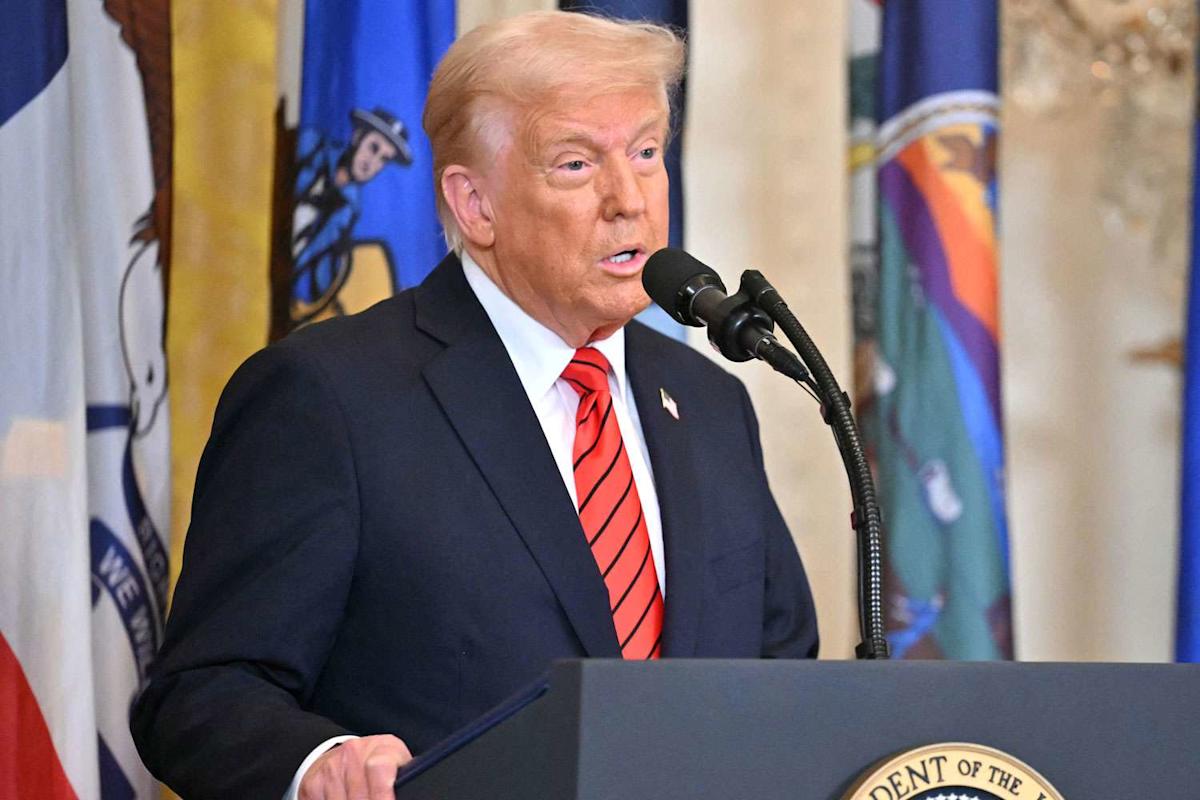
The president’s cryptic remarks outside the White House Thursday morning—”I “may do it. I may not do “it”—left markets on edge as traders scrambled to position for potential military escalation.
According to Wall Street Journal reports, Trump has privately approved attack plans against Iranian nuclear sites but is withholding final authorization while pressuring Tehran to abandon its nuclear ambitions. This strategic ambiguity has created what analysts describe as a perfect storm for market volatility.
European Markets Lead Global Decline
European equities bore the brunt of Thursday’s sell-off, with the STOXX 600 index continuing its third consecutive day of losses. The benchmark index now sits nearly 2.5% lower for the week, marking its steepest weekly decline since the tariff-induced market chaos of April. The persistent weakness reflects growing concerns that escalating Middle East tensions could disrupt global supply chains and energy markets.
U.S. markets saw significant declines earlier in the week, with the Dow Jones Industrial Average plunging 769.83 points, or 1.79 percent, and the S&P 500 falling 1.13 percent as tensions flared. Thursday’s U.S. trading session was curtailed due to a federal holiday, limiting immediate market reaction to Trump’s latest comments.
Energy Markets Surge on Supply Fears
The specter of wider Middle East conflict has sent crude oil markets into overdrive. Brent crude oil has surged 11% over the past week, with Thursday’s session seeing prices climb nearly 1% to $77.40 per barrel, approaching levels not seen since January. Energy analysts warn that any U.S. military action against Iran could trigger severe supply disruptions across the region, which remains critical to global oil production.
Kyle Rodda, senior financial markets analyst at Capital.com, captured the prevailing sentiment: “Market participants remain edgy and uncertain,” noting widespread speculation that the U.S. will intervene, something that would mark a material escalation and could invite direct retaliation against the U.S. by Iran.”
Such an escalation, Rodda warned, “would raise the risk of a greater regional conflict, with implications for global energy supply and probably economic growth.”
Dollar Strength Amid Safe-Haven Demand
Currency markets reflected the classic flight-to-safety pattern, with the U.S. dollar strengthening broadly against major trading partners. The euro declined 0.1% to $1.1466, while risk-sensitive currencies took larger hits—the Australian dollar falling 0.7% and the New Zealand dollar dropping 1%. This dollar strength comes despite recent weeks seeing the dollar hit 2025 lows amid mixed economic signals.
Gold, traditionally viewed as a crisis hedge, managed to pare earlier losses despite dollar strength, trading at $3,366 per ounce as investors sought portfolio insurance against potential conflict escalation.
Federal Reserve Adds to Market Uncertainty
Complicating the geopolitical picture, the Federal Reserve delivered mixed signals Wednesday evening that further unsettled markets. While policymakers held interest rates steady as expected and maintained projections for two quarter-point cuts this year, Fed Chair Jerome Powell struck a notably cautious tone about future monetary easing.
Powell’s warning of “meaningful” inflation ahead, driven by Trump’s aggressive trade tariff policies, has created additional uncertainty for markets already grappling with Middle East tensions. Currency strategists at MUFG criticized the Fed’s approach, arguing policymakers are “underestimating the weakness in the economy that was present before the tariff shock.”
Central Bank Watch Intensifies
With U.S. markets sidelined Thursday, investor attention turned to European central bank decisions. The Swiss National Bank delivered an expected rate cut to zero, though markets had priced in a small chance of a more aggressive half-point reduction. The Swiss franc, a traditional safe-haven currency, remained relatively stable against both the dollar and the euro.
The Bank of England faces its own policy decision ahead, with policymakers weighing recent inflation data against potential energy price impacts from Middle East instability. Sterling edged lower Thursday, trading at $1.341 as uncertainty mounted.
High-Stakes Diplomacy
The current crisis represents a critical juncture for Trump’s Middle East policy. President Trump had repeatedly urged Israel not to strike Iran’s nuclear sites in recent weeks, yet Israel launched Operation Red Lion targeting Iran’s nuclear sites, ballistic missile program, and top military leaders in apparent defiance of U.S. preferences.
Trump signaled Monday that the ongoing conflict was intensifying rapidly, announcing he would return to Washington a day early from the Group of 7 summit in Canada to monitor developments, underscoring the gravity of the unfolding situation.
As markets brace for potential further escalation, the intersection of geopolitical crisis and economic uncertainty continues to challenge investors’ risk appetite. With energy supplies, inflation concerns, and regional stability all hanging in the balance, Thursday’s market turbulence may prove to be just the beginning of a prolonged period of volatility as the world watches Trump’s next move.
WHAT YOU SHOULD KNOW
Global markets are in turmoil as President Trump weighs military strikes against Iranian nuclear sites, creating unprecedented uncertainty for investors. The geopolitical risk is now the primary market driver, with oil up 11% this week, European stocks posting their worst weekly performance since April, and safe-haven assets surging.
Trump’s “I may do it. I may not do it” stance on Iran has left markets guessing about potential U.S. military intervention that could trigger wider Middle East conflict, disrupt global energy supplies, and derail economic growth.