Months of political turmoil in Rivers State reached a turning point on Thursday night as Governor Siminalayi Fubara and his predecessor, the Minister of the Federal Capital Territory, Nyesom Wike, officially ended their rift and pledged to work together for the state’s development.
The long-anticipated reconciliation was brokered during a high-level meeting with President Bola Tinubu at the Presidential Villa in Abuja, which included other key political stakeholders from the state.
Following the closed-door meeting, both leaders addressed the press, confirming that the discord that had divided the state’s political landscape for nearly two years had been resolved. Their statements offered renewed hope for peace, stability, and governance in Rivers, which has seen persistent friction between political camps loyal to either leader.
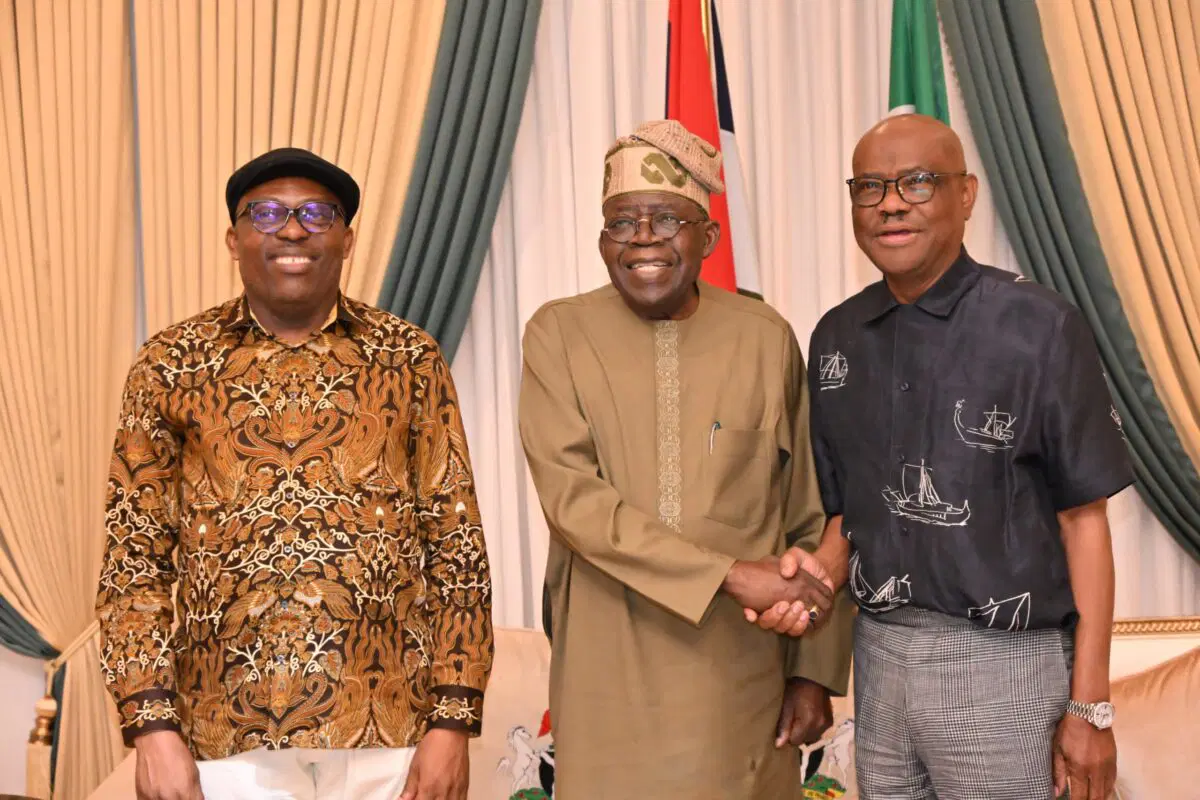
Speaking with notable calm and optimism, Wike said, “I want to give God the glory that today is the 26th of June 2025, that peace has finally returned to the state. We all agreed to work together with the governor, and the governor also agreed to work together with all of us. We are members of the same political family.”
The FCT Minister, who wielded significant influence in Rivers during and after his tenure as governor, acknowledged that disagreements are an inevitable part of politics, but emphasized that reconciliation was equally vital. “Just like humans, you have disagreements, and then you also have a time to also settle your disagreements, and that has been finally concluded today, and we have come to report to Mr President that is what we have agreed,” he added.
Wike’s tone suggested closure as he called for unity among all parties. “So for me, everything is over, and I enjoin everybody to work together with everybody. There is no more acrimony; there is nothing to say. We have disagreed; we have all agreed on everything, so thank God. For me, it’s a day we have to thank almighty God,” he said.
In a parallel expression of relief, Governor Fubara, whose administration had been at odds with factions in the Rivers State House of Assembly allegedly loyal to Wike, welcomed the reconciliation as a foundation for sustainable progress.
“For me, it’s very important that this day has come to be. What we need for the progress of Rivers State is peace, and by the special grace of God this night, with the help of Mr President and the agreement of the leaders of the state, peace has returned to Rivers State,” he stated.
Fubara stressed that peace was not just a political convenience but a necessary condition for real development. He vowed to do everything within his authority to protect and maintain the harmony that had been achieved. “We will sustain the peace. This is the beginning of a new chapter in the governance of our state,” he declared.
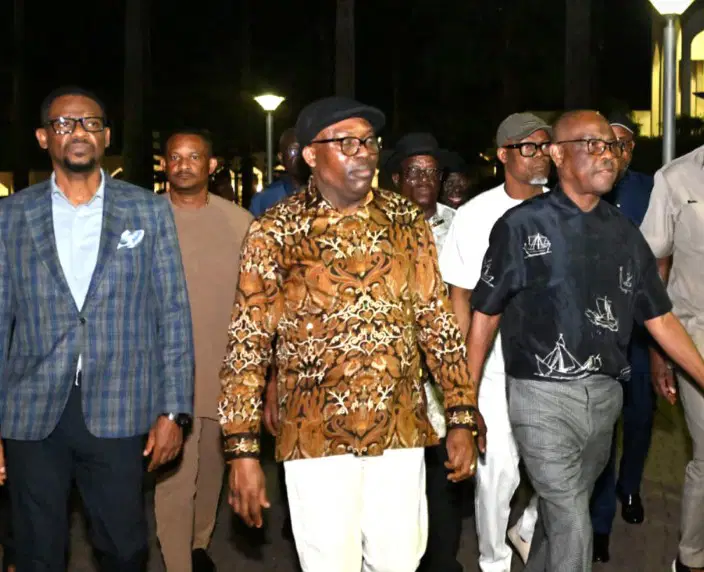
The announcement comes just days after images of Wike and Fubara smiling and walking side by side in the Presidential Villa went viral—pictures that observers interpreted as a strong sign that a breakthrough was imminent.
The reconciliation also follows the fallout from the earlier declaration of a state of emergency in Rivers by President Tinubu, which had led to the temporary suspension of the governor, his deputy, and the state’s legislative body.
While the presidency has yet to issue an official statement on whether the emergency rule will now be lifted, Thursday’s development may set the stage for its reversal. The visible camaraderie between the former rivals offers a new narrative for the state, one of reconciliation and hope after a period marked by power struggles and institutional uncertainty.
With this symbolic handshake and shared commitment to governance, Rivers State now looks toward a future where its leaders are working in unison rather than at odds—a vital shift for one of Nigeria’s most economically significant regions.
What You Should Know
Governor Siminalayi Fubara and former governor Nyesom Wike have ended their long-standing political rift following a peace meeting with President Tinubu. Both leaders pledged to work together for the good of Rivers State, marking a significant step toward restoring political stability and effective governance in the region.