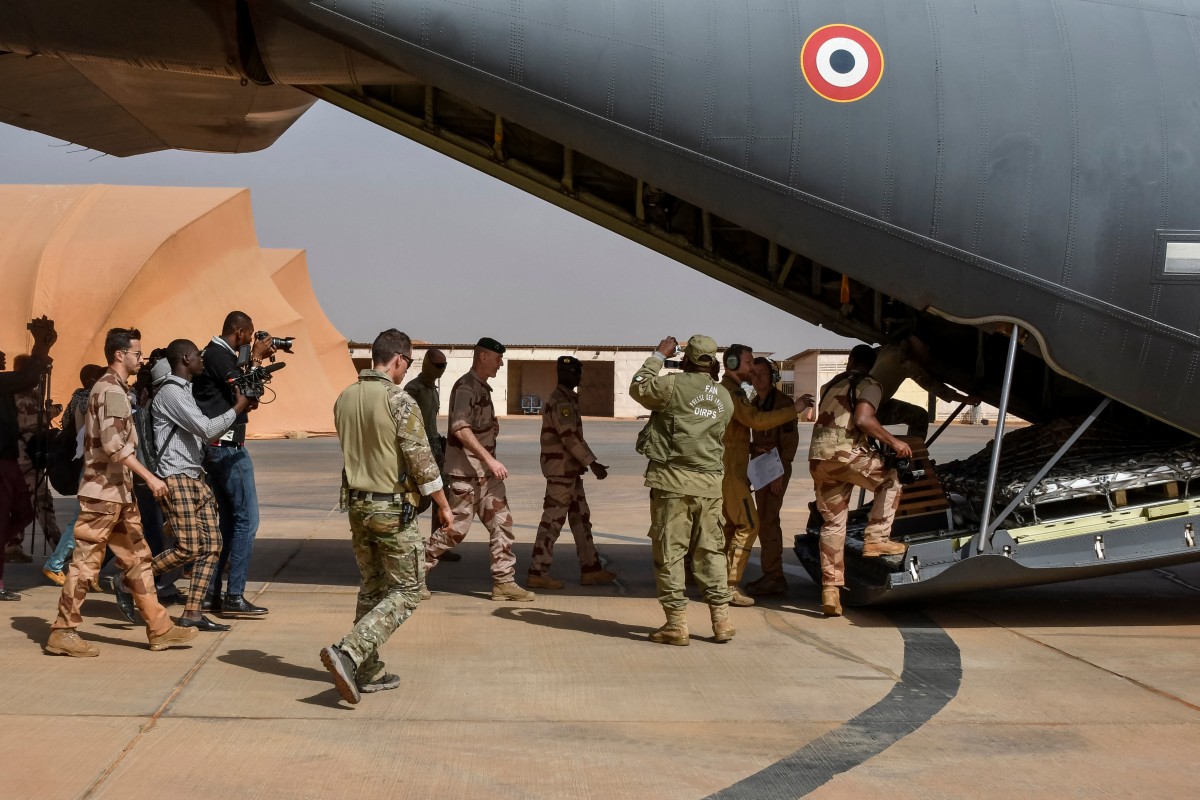
France will officially relinquish control of its last military installations in Senegal on Thursday, drawing a historic close to more than six decades of military presence in the West African nation.
This development effectively ends France’s permanent military footprint in both West and Central Africa, a region once dotted with its strategic bases.
The exit, which follows a gradual three-month disengagement process, will see around 350 French troops depart Senegal. These forces, primarily engaged in joint operations with the Senegalese military, began preparations for their exit in March. Their withdrawal represents a significant shift in Senegal’s foreign military policy, particularly under the administration of President Bassirou Diomaye Faye.
Riding to power on a platform of radical reform in the 2024 presidential elections, Faye has maintained a firm stance on reclaiming national autonomy. While stopping short of severing ties with France entirely, he has called for all foreign military forces to leave Senegal by the end of 2025.
Unlike the military-led governments in Burkina Faso, Mali, and Niger, which have cut ties with Paris and leaned heavily toward Russian support, Faye has opted for a more balanced approach, emphasizing the importance of treating France as an equal partner rather than a privileged former colonial power.
The formal ceremony scheduled for Thursday in Dakar will include the handover of Camp Geille—France’s largest base in Senegal—as well as its associated airfield at Dakar airport. The event is expected to be attended by Senegal’s Chief of General Staff, General Mbaye Cisse, and General Pascal Ianni, the commander of French forces in Africa.
Senegal’s shift in military posture comes amid broader demands for a more independent and self-reliant national strategy. “Senegal is an independent country, it is a sovereign country and sovereignty does not accept the presence of military bases in a sovereign country,” President Faye declared at the close of 2024. Despite this decisive rhetoric, he has repeatedly acknowledged France’s ongoing importance as a diplomatic and economic partner.
The move also ties into a growing continental reevaluation of France’s military involvement. Since 2020, a wave of political upheaval and rising anti-French sentiment has reshaped the landscape across former French colonies.
Following a string of military coups in the Sahel, new leadership in Burkina Faso, Niger, and Mali has expelled French forces and aligned more closely with Russia for counterterrorism support. Meanwhile, in the Central African Republic, French influence has waned significantly as Russian mercenaries have taken root. Even Ivory Coast and Chad, once reliable staging grounds for French military operations, have seen French forces pack up and leave.
Earlier this year, France closed its last base in Ivory Coast, and in January, it relinquished control of the Kossei base in Chad. In Gabon, French troops now operate in a shared facility with the national army, further signaling a departure from unilateral presence.
Once Thursday’s handover in Senegal is complete, France’s only remaining permanent military base on the African continent will be in Djibouti. Located in the Horn of Africa, the base houses around 1,500 personnel and is now expected to serve as France’s principal headquarters for its operations across Africa.
The Senegalese president has also not shied away from addressing the historical scars of colonialism. He has publicly called on France to apologize for past atrocities, particularly the massacre of African soldiers who had fought for France in World War II, including the infamous December 1, 1944 execution of dozens of Senegalese riflemen.
As France steps back from its historical strongholds, the continent’s former colonies are asserting greater control over their own military affairs. For Senegal, this marks not just the end of France’s military presence, but the beginning of a new era of sovereignty and redefined international relationships.
What you should know
France’s withdrawal from Senegal ends 65 years of continuous military presence in the country. While Senegal under President Faye is pursuing full military sovereignty, it continues to maintain diplomatic and economic ties with France. Djibouti will now be home to France’s only permanent base in Africa.