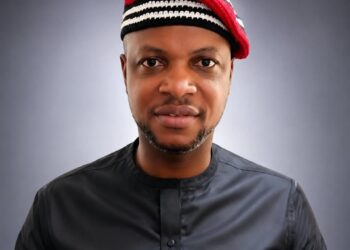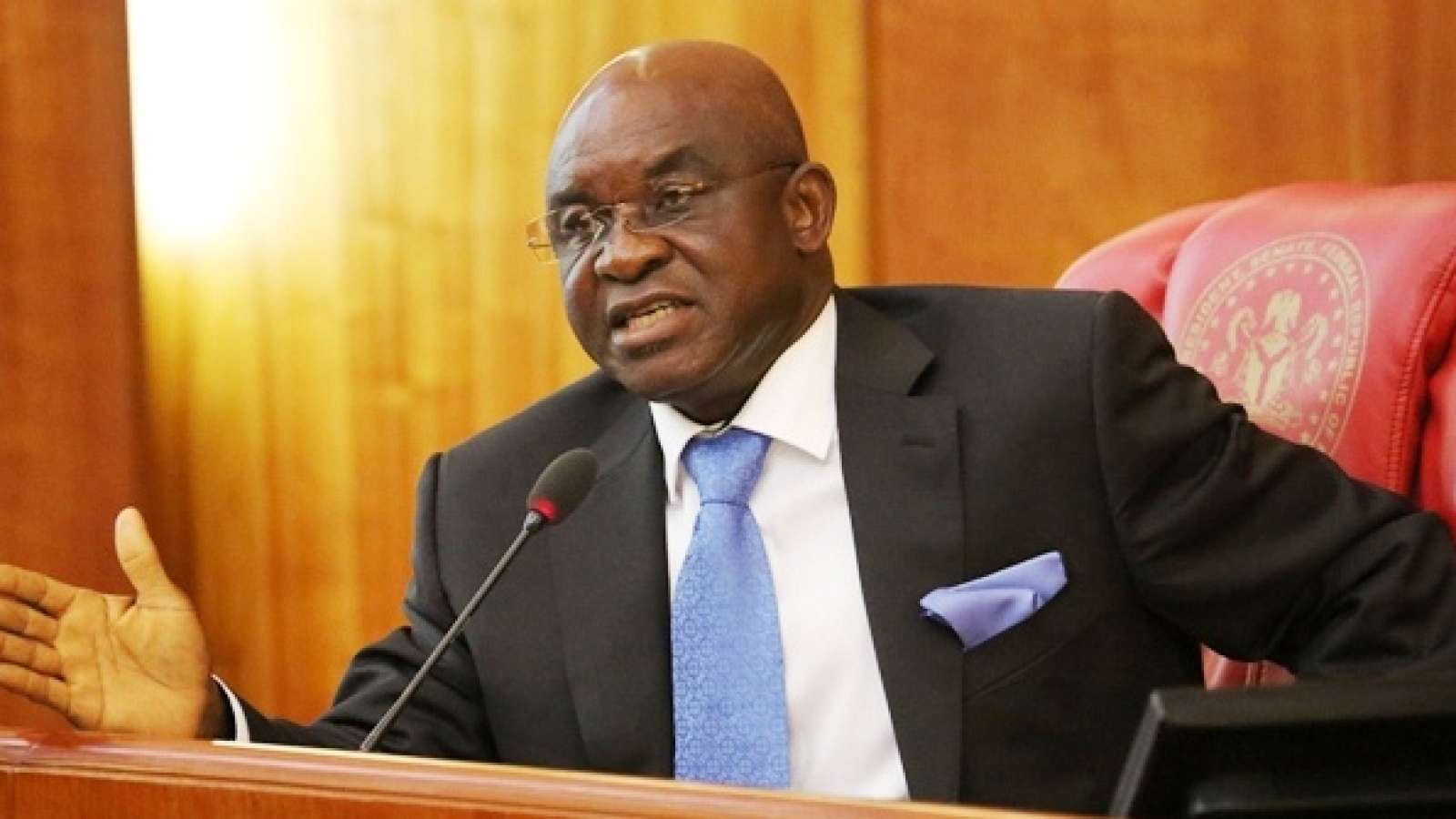
Former Senate President David Mark has launched a blistering attack on the Independent National Electoral Commission (INEC), accusing the electoral body of abandoning its constitutional mandate as an impartial arbiter of democratic processes.
Mark, who now wears the hat of National Chairman of the Action Democratic Congress (ADC), made these explosive remarks on Saturday at a high-stakes national summit of opposition political party leaders held in Ibadan, the ancient city that served as a fitting backdrop for what many in attendance described as the beginning of a coordinated resistance against the ruling All Progressives Congress (APC).
The summit, hosted by Oyo State Governor Seyi Makinde, himself a bastion of opposition politics in southwestern Nigeria, drew a remarkable constellation of Nigeria’s most experienced political heavyweights, signaling that the country’s fragmented opposition may finally be finding common ground ahead of the 2027 general elections.
Speaking with characteristic authority before the packed gathering, Mark did not mince his words. He alleged that INEC, the very institution entrusted with the sacred duty of conducting free and fair elections, has been compromised, accusing it of colluding with the ruling party to tilt the democratic playing field against opposition forces.
“Nigerians have lost confidence in INEC. INEC is no longer an impartial umpire,” he declared, his words landing with the weight of a man who has navigated Nigerian politics for decades and witnessed the full spectrum of its complexities.
The former Senate President went further, alleging a dangerous alliance between the APC-led federal government and the electoral commission, both of which he claimed are actively working to suppress opposition political parties and their figures. It is a charge the ruling party and INEC are yet to formally respond to, but one that resonated deeply with the assembled opposition leaders, who met the allegation with visible agreement.
Perhaps the most striking element of Mark’s address was the framing of the 2027 electoral contest not as a mere political rivalry but as something far more fundamental to Nigeria’s democratic survival.
“The task before us is more of a national rescue mission,” he told the gathering, casting the upcoming election as a battle for the soul of Nigerian democracy itself.
Invoking the principle of political pluralism, a cornerstone of any functioning democracy, Mark warned that the ruling party’s alleged desire to dominate the political landscape was both dangerous and unprecedented in Nigeria’s political history.
“It has never happened in Nigeria that we have only one political party, and it will never happen in our own generation,” he asserted, in what amounted to both a warning to the APC and a rallying cry to his fellow opposition leaders.
Crucially, Mark acknowledged the elephant in the room that has historically undermined opposition efforts in Nigeria’s fragmentation. “We cannot win as fragmented segments,” he said pointedly, urging the assembled leaders to set aside personal ambitions and party differences in pursuit of the larger objective.
“The contest,” he concluded starkly, “is between Nigerians and APC, the ruling party.”
The significance of Saturday’s summit was underscored not just by the words spoken but by the sheer caliber of political figures who deemed it important enough to attend in person, a list that reads like a roll call of Nigeria’s most influential political minds across generations and geopolitical zones.
Former Vice President Atiku Abubakar, the Peoples Democratic Party’s (PDP) perennial presidential aspirant and one of the country’s most recognizable political figures, was present; his attendance alone elevating the summit’s national profile considerably.
Joining him were former Minister of Information Professor Jerry Gana, a seasoned political operator; firebrand civil society activist Aisha Yesufu, whose uncompromising voice has made her a formidable force in Nigerian public discourse; and respected political economist Professor Pat Utomi, who brings intellectual gravitas to the opposition’s cause.
The gathering also featured a formidable lineup of former state governors spanning Nigeria’s diverse regions. Former Osun State Governor Rauf Aregbesola, himself a one-time APC stalwart who famously fell out with the ruling establishment — was present alongside Prince Olagunsoye Oyinlola, former Sokoto State Governor Aminu Tambuwal, and former Kano Governor Rabiu Kwankwanso, whose Kwankwasiyya movement commands enormous grassroots support in the North.
Yunusa Tanko, former Kwara State Governor Abdulfatai Ahmed, former Rivers State Governor Rotimi Amechi another APC defector whose presence at an opposition summit is deeply symbolic and former Niger State Governor Babangida Aliyu rounded out an attendance list that spanned virtually every corner of the Nigerian federation.
The Ibadan summit arrives at a politically charged moment. With President Bola Ahmed Tinubu’s administration facing mounting public criticism over economic hardship, fuel subsidy removal fallout, and a depreciating naira, the opposition senses an opportunity, but only if it can achieve what has eluded it for years: unity.
The presence of figures from vastly different political parties and ideological persuasions under one roof suggests that the machinery of opposition coalition-building may be slowly, but purposefully, clicking into gear. Whether Saturday’s summit translates into a durable alliance or dissolves, as many previous opposition arrangements have, into competing personal interests and ambitions remains the critical question.
What is beyond doubt is that David Mark and his colleagues have fired an opening salvo. The 2027 election season, it appears, has begun in earnest, and the battle lines are being drawn in Ibadan.
WHAT YOU SHOULD KNOW
Nigeria’s opposition is done playing it safe. At a landmark summit in Ibadan, some of the country’s most powerful political figures gathered with one clear message—unite or lose.
Former Senate President David Mark set the tone, accusing INEC of bias and the ruling APC of systematically strangling political competition. With a formidable roll call of ex-governors, former vice president Atiku Abubakar, and prominent activists in the room, this was no ordinary political meeting.