Nigeria’s immigration authorities have received a significant boost from their Dutch counterparts, as the two countries deepen a two-decade partnership aimed at reshaping how border and migration officials engage with the public.
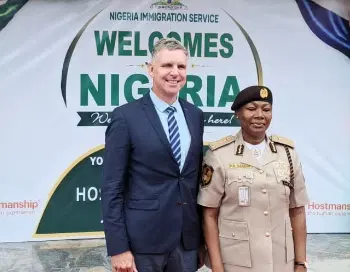
At a ceremony in Abuja, the Repatriation and Departure Service of the Netherlands’ Ministry of Justice and Security handed over a substantial equipment package to the Nigeria Immigration Service’s (NIS) Hostmanship Unit, the latest milestone in a bilateral relationship that officials on both sides say has evolved from routine technical assistance into something closer to genuine partnership.
At the heart of the donation is a training philosophy the NIS calls Hostmanship, a specialized service-delivery and human-dignity program developed jointly with the Dutch Repatriation and Departure Service.
The concept, still relatively new within the Nigerian service, is built around a simple but ambitious idea: that officers at borders, airports, and immigration offices should meet every member of the public with empathy, hospitality, professionalism, and respect, rather than the bureaucratic indifference migration agencies are sometimes accused of.
Though the Hostmanship Unit itself is barely over a year old, it has already rolled out structured training programmes and produced the NIS Guest Engagement Guidelines, a framework meant to standardize courteous, dignified treatment of travelers across the service.
The equipment handed over was extensive and practical, clearly aimed at strengthening the unit’s training infrastructure rather than symbolic gestures. It included a 24 KVA solar inverter system and a 20-kilowatt backup lithium battery, suggesting a deliberate emphasis on reliable, self-sufficient power for training sessions.
Also included were two 75-inch LG Smart TVs with a stand and wall mount, a digital projector and screen, an integrated sound system with two wireless microphones, an outdoor wireless internet router, four solar-powered standing fans, nine sun-shaped window blinds, an HP laptop, and a whiteboard with stand essentially a full multimedia training suite.
Comptroller General of Immigration Kemi Nandap framed the gift in institutional rather than material terms, calling it “an investment in people and institutional excellence” that went beyond office assets.
She described the items as symbols of “collective resolve to build an organization where professionalism, empathy, courtesy, and excellence define every interaction with members of the public,” and pledged that the equipment would be properly maintained and put to judicious use.
She was particularly effusive about the Dutch partnership, describing it as one that had “gone beyond technical assistance” to become a relationship built on trust and shared learning.
Ronnald Sonnemans, Charge d’Affaires at the Netherlands Embassy in Abuja, echoed that sentiment, saying he had personally observed the transformation Hostmanship training had produced in NIS officers over the years.
He confirmed the Netherlands’ continued commitment to migration cooperation with Nigeria, noting that an ongoing mobile team project was designed to further professionalize the country’s border management.
Jan-Willem Keuninck, a senior Dutch adviser, placed the donation within a much longer history of a working relationship stretching back 25 years, marked by annual municipal visits, a signed Memorandum of Understanding on migration, and various capacity-building initiatives.
He revealed that NIS officers have already been certified as Hostmanship trainers in the Netherlands, and announced a new training programme for the service’s senior executives set to launch there in September.
ACI Samson Thomas, the NIS Hostmanship Coordinator, called the ceremony “historic,” describing the donation not just as material support but as evidence of trust and friendship between the two nations. He vowed the unit would use the support to entrench hostmanship as a lasting institutional culture.
The donation arrives as migration agencies worldwide face growing scrutiny over how they treat travelers, deportees, and asylum seekers.
For the Netherlands, a country deeply engaged in its own migration and repatriation debates, investing in “soft skills” training abroad reflects a broader European interest in shaping migration management practices in partner countries like Nigeria, a key source and transit country for migration to Europe.
For Nigeria, the partnership offers both tangible resources and reputational benefits, as the NIS seeks to project an image of professionalism and dignity at a time when immigration services globally are often associated with the opposite.
WHAT YOU SHOULD KNOW
This story is fundamentally about a 25-year Nigeria–Netherlands partnership maturing into a concrete investment in how Nigerian immigration officers treat the public.
The Dutch donation isn’t just equipment; it’s targeted support for NIS’s “Hostmanship” program, a training culture aimed at replacing bureaucratic indifference with empathy, dignity, and professionalism in every interaction with travelers and migrants.
The real significance lies less in the hardware and more in what it signals a sustained bilateral commitment to reshaping migration management through people-centered training, not just policy or enforcement.