In a much-anticipated decision on Wednesday, the U.S. Federal Reserve opted to leave its benchmark interest rate unchanged, maintaining the target range at 4.25% to 4.50%, while signaling that a rate cut is still likely later this year.
However, the central bank also hinted at a more cautious and drawn-out path of monetary easing in the years ahead, as policymakers brace for the inflationary aftershocks of the Trump administration’s renewed tariff agenda.
The Federal Open Market Committee (FOMC), the Fed’s rate-setting body, released updated economic projections that painted a less optimistic picture of the U.S. economy. The new forecasts project economic growth slowing to 1.4% for 2025 — down from 1.7% in March — with inflation expected to close the year at a stubbornly high 3%. Unemployment, meanwhile, is projected to rise to 4.5% by year’s end, up from 4.4% previously projected and significantly higher than the 4.2% recorded in May.
Despite these headwinds, the Fed reiterated its expectation to cut rates by half a percentage point before the end of the year — consistent with prior forecasts — but dialed back its longer-term outlook. The Fed now envisions just a single 25-basis-point cut in both 2026 and 2027, signaling a slower pace of monetary easing as it works to nudge inflation back toward its long-held 2% target.
“Uncertainty about the economic outlook has diminished but remains elevated,” the Fed stated in its post-meeting policy release — a softened tone compared to the more alarmist rhetoric used in May when inflation and employment risks were both intensifying due to trade tensions.
Indeed, the Fed’s latest projections are deeply intertwined with expectations about how President Donald Trump’s aggressive tariff measures — a cornerstone of his economic agenda — will ripple through the U.S. economy. The tariffs are widely expected to push prices higher, at least in the short term, while complicating global supply chains and dampening consumer and business confidence.
Federal Reserve Chair Jerome Powell, speaking at a press conference following the meeting, emphasized a wait-and-see approach, underscoring the Fed’s readiness to adjust policy as fresh data emerges. “For the time being, we are well positioned to wait to learn more about the likely course of the economy before considering any adjustments to our policy stance,” Powell said, reiterating the Fed’s data-dependent strategy.
Markets reacted with measured calm to the Fed’s announcements. U.S. stock indexes held on to modest gains, and the 10-year Treasury yield edged slightly lower. Futures pricing continued to point to the Fed’s next likely move coming at its September 16–17 meeting, where a quarter-point rate cut appears increasingly probable.
Financial analysts widely characterized the June meeting as a “placeholder,” with the Fed holding firm amid a highly fluid economic environment. “Barring any surprises at the presser, the June FOMC looks set to be a ‘placeholder’ meeting,” said Michael Brown, senior research strategist at Pepperstone. “Powell & Co. continue to sit on the sidelines, awaiting further clarity on how the economy evolves, and how the balance of risks to each side of the dual mandate is evolving.”
Notably absent from the Fed’s statement was any mention of the escalating military conflict between Israel and Iran — a development that poses potential risks to global oil supplies and broader market stability.
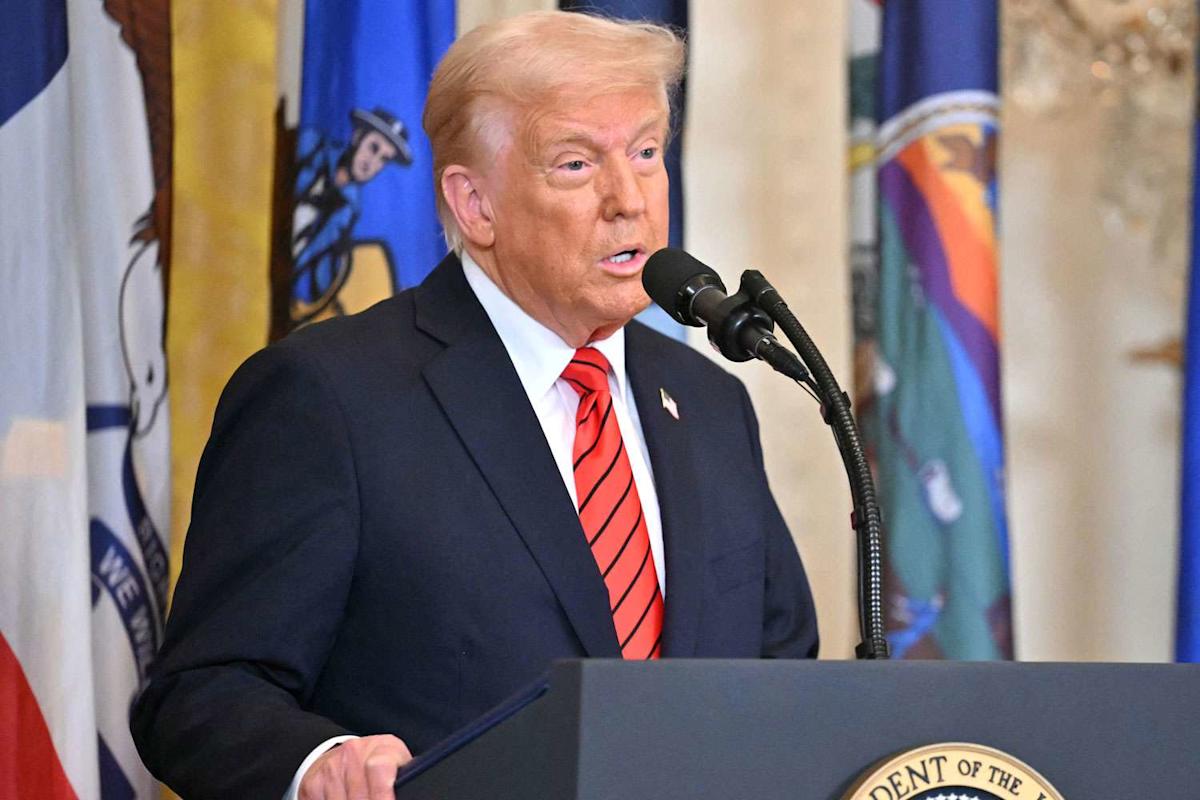
Meanwhile, political pressure on the Fed is escalating. As Fed officials met behind closed doors, President Trump took to social media with another broadside against Powell, calling him “stupid” and demanding an immediate and drastic rate cut — as much as a 50% slash — a move typically reserved for economic crises.
The president went so far as to suggest he might install himself as Fed chairman, underscoring the deepening rift between the White House and the traditionally independent central bank.
The Fed has so far resisted political interference, remaining focused on its dual mandate of maximum employment and price stability. Officials continue to stress the need to better understand how tariffs and trade disruptions will impact inflation dynamics before making any bold moves.
For now, the Fed’s steady hand suggests a central bank proceeding with caution — navigating between the inflationary storm clouds gathering on the horizon and the political lightning bolts striking from the White House. Whether that balance can hold through the second half of the year remains to be seen.
WHAT YOU SHOULD KNOW
The Federal Reserve has kept interest rates unchanged but signaled a cautious path forward, with limited rate cuts expected in the coming years due to persistent inflation risks.
Inflation remains elevated—driven in part by the Trump administration’s renewed tariff plans—forcing the Fed to slow its pace of rate reductions even as economic growth weakens and unemployment ticks up.
Despite political pressure from President Trump, the Fed is holding firm, prioritizing economic data over political rhetoric as it works to bring inflation back to its 2% target.