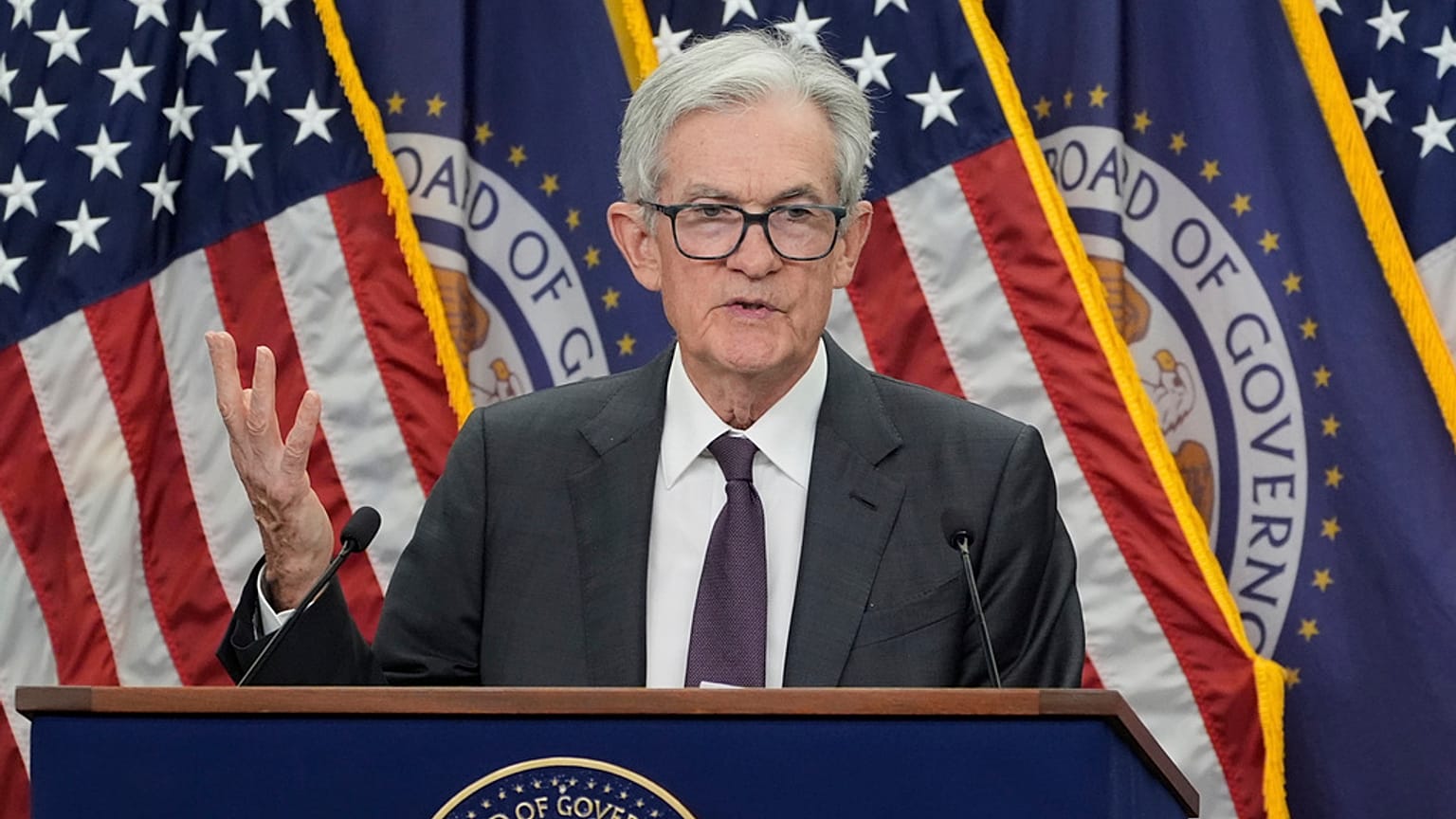
The Federal Reserve delivered its third consecutive interest rate cut on Wednesday, but Chair Jerome Powell made clear the central bank is prepared to hit the brakes on further reductions as it navigates an increasingly complex economic landscape and deepens internal rifts.
The quarter-point cut brings the federal funds rate to a target range of 3.50 to 3.75 percent—the lowest level in approximately three years—matching market expectations. However, the Fed’s accompanying statement and Powell’s remarks at his press conference indicated a markedly more cautious stance going forward, reviving language from late 2024 that previously signaled a pause in the cutting cycle.
“We are well positioned to wait and see how the economy evolves from here,” Powell told reporters, emphasizing that officials will determine “the extent and timing of additional adjustments based on the incoming data, the evolving outlook, and the balance of risks.”
A Central Bank Divided
The decision revealed deepening fractures within the Fed’s leadership, with three of the committee’s 12 voting members dissenting—an unusually high number that underscores the challenges facing monetary policymakers.
Chicago Fed President Austan Goolsbee and Kansas City Fed President Jeffrey Schmid both voted to hold rates steady, while Fed Governor Stephen Miran advocated for a more aggressive half-percentage-point reduction. The split reflects competing concerns about persistent inflation running well above the Fed’s 2 percent target and signs of softening in the labor market.
“It’s a close call,” Powell acknowledged when asked about the dissents, pointing to the tension between these conflicting economic signals.
Mike Fratantoni, chief economist at the Mortgage Bankers Association, captured the dilemma succinctly: “Inflation is well above the Fed’s target, but the job market appears to be softening. Thus, there is ammunition for both sides of the debate.”
The Path Forward
The Fed’s updated economic projections penciled in just one additional rate cut for next year, a notable scaling back of expectations. Officials also flagged heightened risks to employment while lifting their 2026 growth forecast and easing inflation expectations. The unemployment rate projection remained unchanged.
Powell indicated the Fed now views rates as being “in the high end of the range of neutral”—a significant shift in language. Previously, the central bank characterized rates as “modestly restrictive.” The move toward describing policy as neutral, a level that neither stimulates nor restrains economic activity, could signal less urgency for additional cuts.
“We expect the Fed will want to pause for a while to allow time for this and prior cuts to feed through the economy,” said Ryan Sweet, an economist at Oxford Economics.
Powell also addressed longer-term affordability concerns, noting the economy needs “several years where wages are higher than inflation for people to start feeling good about affordability”—an acknowledgment that monetary policy alone cannot quickly resolve cost-of-living pressures facing American households.
Political Pressure Mounts
The meeting comes at a pivotal moment for the central bank, which faces mounting political pressure and significant leadership changes ahead. Powell’s term as chair expires in May, and President Trump wasted no time weighing in on Wednesday’s decision.
“The Fed could have at least doubled its rate cut,” Trump said, reiterating his preference for more aggressive monetary easing. In a Tuesday interview with Politico, the president indicated he would judge Powell’s successor based on whether they immediately slash rates—a statement that raised fresh concerns about political interference in monetary policy.
According to reports, Trump’s interviews for Powell’s replacement are entering final stages, with White House chief economic adviser Kevin Hassett emerging as a top contender. The situation is further complicated by upcoming changes in the Fed’s voting membership and Trump’s attempt to remove Fed Governor Lisa Cook, a case currently before the courts.
Governor Miran’s term expires in January, creating an additional opening among the Fed’s top leadership.
An Uncertain Year Ahead
Gregory Daco, chief economist at EY-Parthenon, warned that the combination of Hassett’s potential appointment and “a more hawkish rotation of voting members” focused on combating inflation means views within the Fed are likely to diverge even further.
“Policy deliberations are likely to become even more divided next year,” Daco said.
Adding to the uncertainty, the central bank acknowledged it is grappling with delayed federal economic data releases following a record-long government shutdown, which could affect the accuracy of future projections and policy decisions.
As the Fed enters what Powell characterized as a “wait and see” period, it faces a delicate balancing act: supporting a labor market showing signs of strain while ensuring inflation continues its descent toward the 2 percent target—all amid unprecedented political pressure and internal discord that could reshape American monetary policy for years to come.
This week’s meeting marks the last gathering before the challenges of a new year, new leadership, and new political dynamics converge on one of the world’s most powerful economic institutions.
WHAT YOU SHOULD KNOW
The Federal Reserve cut interest rates by a quarter point Wednesday but signaled it’s done cutting for now, adopting a “wait and see” approach as it balances stubborn inflation against a weakening job market.
Most notably, the decision exposed deep divisions within the Fed—three officials dissented, an unusually high number—reflecting genuine uncertainty about the right path forward. With Chair Jerome Powell’s term ending in May and President Trump openly pressuring for steeper cuts while interviewing replacements, the central bank enters 2026 facing not just economic crosscurrents but unprecedented political pressure that could fundamentally reshape how America’s most important economic institution operates.
The Fed is hitting pause on rate cuts amid internal disagreement and external political interference, making the path of monetary policy—and the economy—unusually uncertain heading into next year.