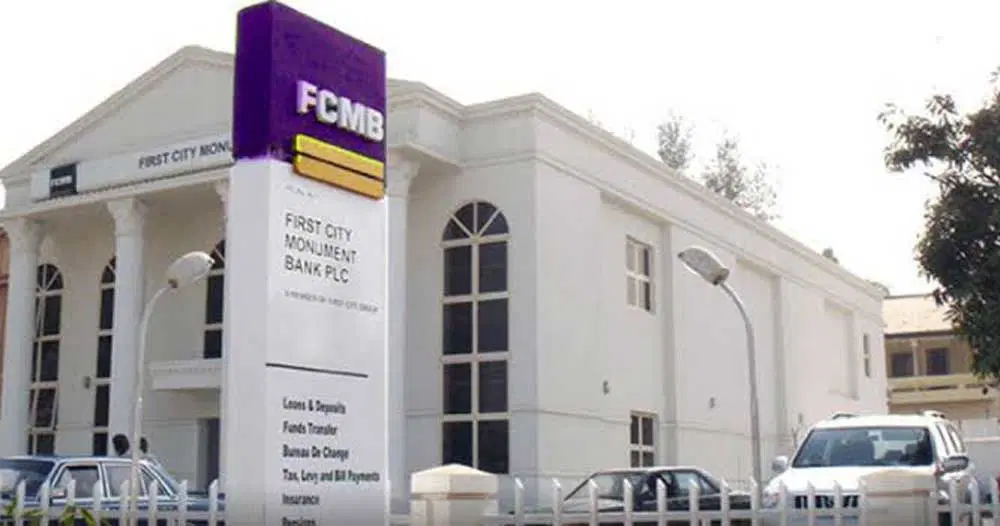
First City Monument Bank (FCMB) Group Plc has set its sights on a remarkable financial turnaround, projecting fourth-quarter profits of N58.8 billion that would cap off what appears to be a transformational year for the mid-tier Nigerian lender.
The bank’s latest regulatory filing with the Nigerian Exchange reveals ambitious targets that, if met, would deliver full-year profits of N171.5 billion—a staggering 135% increase from the N73 billion recorded in 2024. This projection comes as Nigerian banks grapple with a perfect storm of regulatory changes, economic volatility, and stringent recapitalization requirements.
A Pattern of Exceeding Expectations
What makes FCMB’s forecast particularly noteworthy is the bank’s consistent track record of surpassing its own projections throughout 2025. In the first quarter, management predicted N31.2 billion in profit after tax but delivered N32.2 billion. The second quarter saw an even more impressive performance, with actual profits of N41.1 billion against a forecast of N36.6 billion—a 12% outperformance that suggests the bank’s conservative approach to guidance.
This pattern of under-promising and over-delivering has become a hallmark of FCMB’s recent performance, lending credibility to management’s ability to navigate the challenging operating environment while potentially providing additional upside for shareholders.
Revenue Diversification Drives Growth
The bank’s fourth-quarter revenue projections paint a picture of a well-diversified earnings stream. Management expects gross earnings of N265.2 billion, with interest income accounting for N231.8 billion of this total. This heavy reliance on interest income reflects the high-yield environment that has benefited Nigerian banks as the Central Bank of Nigeria maintains elevated interest rates to combat inflation.
Weathering the Forbearance Storm
Perhaps the most significant challenge FCMB faced in 2025 was navigating the end of the CBN’s loan forbearance regime—a regulatory lifeline that allowed banks to defer recognition of loan impairments during the economic turbulence following currency devaluation and monetary policy tightening.
The impact was immediate and severe. In the first half of 2025, FCMB booked a total earnings write-down of N36.2 billion, with N26.7 billion recorded in the second quarter alone—more than double the forecasted N11.3 billion provision. This massive provisioning exercise pushed the bank’s cost of risk to 2.8% from 1.8% in 2024, reflecting the true extent of asset quality pressures across the Nigerian banking system.
However, FCMB’s ability to still exceed profit forecasts despite this heavy provisioning demonstrates remarkable operational resilience and effective cost management. Management’s confirmation that the bank has “fully exited forbearance” suggests the worst of the impairment charges are now behind them, clearing the path for more predictable earnings going forward.
Recapitalization Race Against Time
Like its peers, FCMB faces the CBN’s recapitalization mandate, which requires banks to significantly boost their capital buffers. Industry estimates suggest the lender needs to raise approximately N188 billion more to meet regulatory thresholds—a substantial sum that will test management’s ability to access capital markets efficiently.
The bank has already demonstrated its fundraising capabilities, successfully raising N144.6 billion through a public offer in 2024. The recent verification of a second phase, including a N22.5 billion mandatory convertible note, will increase issued shares to around 42.8 billion units, providing an additional capital buffer.
While this progress positions FCMB ahead of many competitors, the need for further fundraising introduces the specter of shareholder dilution—a delicate balancing act between regulatory compliance and protecting existing investor returns.
Market Implications and Outlook
FCMB’s aggressive profit projections come at a critical juncture for Nigerian banking. The sector is emerging from a period of significant regulatory adjustment, with banks now operating under a more stringent provisioning regime while facing pressure to expand their capital base substantially.
The bank’s consistent outperformance of guidance suggests a management team that has successfully adapted to this new operating reality. However, investors will be watching closely to see whether the ambitious fourth-quarter targets can be achieved, particularly as economic headwinds persist and competition for deposits intensifies across the sector.
For the broader Nigerian banking landscape, FCMB’s projected performance offers a glimpse of what’s possible for institutions that can effectively manage the transition from forbearance while maintaining operational efficiency.
As the recapitalization deadline approaches, the bank’s ability to deliver on its promises while successfully raising additional capital will serve as a crucial test case for the sector’s resilience and growth potential in 2026 and beyond.
WHAT YOU SHOULD KNOW
FCMB is projecting a remarkable 135% profit surge to N171.5 billion in 2025, demonstrating strong operational resilience despite absorbing N36.2 billion in loan impairments after the Central Bank ended its forbearance program.
The bank has consistently beaten its own forecasts throughout the year and has made significant progress toward meeting recapitalization requirements, though it still needs to raise about N188 billion more.
This performance positions FCMB as a standout performer in Nigeria’s challenging banking environment, but investors should watch for potential shareholder dilution from future capital raising activities.