The Federal Competition and Consumer Protection Commission (FCCPC) confirmed on Sunday that it had opened an inquiry into the manner of Uber’s exit, with particular attention to whether the company fulfilled its obligations to riders and drivers before pulling the plug on its Nigerian operations.
FCCPC Chief Executive Officer Tunji Bello disclosed the probe in a text message to Bloomberg, framing the Commission’s interest squarely around unfinished business rather than the decision to leave itself.
“We are looking into the manner of their exit, particularly in respect of unfulfilled services to the customers,” Bello said, according to the Bloomberg report that first surfaced the development.
The investigation comes just four days after Uber announced it was winding down operations in both Nigeria and Uganda, effective Wednesday, September 2, a decision the company said followed “a thorough review” of its business but limited strictly to those two markets, with no bearing on its footprint elsewhere on the continent.
The move brought a close to a presence that began in Lagos in 2014, when Uber entered the market as a disruptive newcomer and, for a period, dominated Nigeria’s nascent ride-hailing industry before rivals eroded its lead.
Notably, Uber’s Nigeria and Uganda exit was not an isolated retrenchment. It landed on the same day the company disclosed a sweeping global restructuring that will eliminate more than 3,000 jobs, roughly 10 percent of its workforce, as part of an effort to flatten management layers and redirect spending toward its core business.
That timing has fuelled speculation that the Nigerian withdrawal was less a market-specific verdict than a casualty of belt-tightening happening at Uber’s corporate center.
For drivers and riders on the ground, however, the exit reportedly arrived with little warning, catching many off guard and leaving some trips, payments, and driver entitlements in limbo, precisely the gap the FCCPC now says it wants to examine.
The FCCPC’s authority to act does not evaporate simply because a company has left the country. Under the Federal Competition and Consumer Protection Act of 2018, the Commission retains power to penalize unfair commercial conduct, including abrupt service shutdowns that leave consumers without recourse, and can impose administrative fines running as high as 10 percent of a company’s prior-year Nigerian turnover, in addition to ordering refunds to affected customers.
Uber would retain the right to challenge any adverse finding before the Competition and Consumer Protection Tribunal or the Federal High Court, a process that could stretch well beyond the September 23 date the company has set as its cutoff for driver and rider support.
Uber has already moved to soften the landing for its Nigerian driver partners, disbursing a one-off payout reported at ₦40,000 per driver as part of the wind-down. Whether that gesture or any other transition support satisfies the Commission’s threshold for “fulfilled obligations” is likely to be the crux of the inquiry.
This is not the FCCPC’s only high-profile intervention in recent weeks. In August, the Commission opened a separate probe into suspected manipulation of cement prices, demanding pricing and production data from major players in that sector, part of a broader pattern of the regulator stepping up enforcement across Nigeria’s consumer-facing industries.
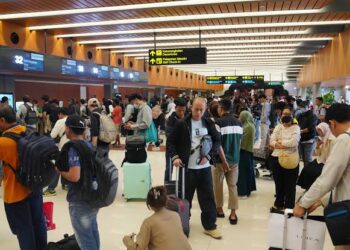
Uber has been at pains to decouple its exit from a separate and more politically charged controversy: recent restrictions imposed by the Federal Airports Authority of Nigeria (FAAN) on e-hailing pick-ups at Nigerian airports.
Those restrictions had triggered public backlash after passengers complained of dwindling transport options and rising fares at affected airports, prompting FAAN to clarify that it had not imposed a blanket ban and that talks were ongoing with ride-hailing operators over a framework covering passenger safety, security, driver accountability, and pick-up logistics.
Asked directly whether the FAAN directive had precipitated its withdrawal, an Uber spokesperson was unequivocal: “No.” The company maintained that its decision stemmed from a review of its “evolving business priorities and investment focus across Africa,” not from friction with Nigerian aviation authorities.
Uber’s relationship with its Nigerian driver base had, in any case, been fractious well before this latest chapter marked by driver protests over fares, commission structures, and alleged mistreatment in 2017, 2023, and again in 2025.
Uber’s departure has opened a scramble among rivals for its share of Nigeria’s ride-hailing market. Estonia-based Bolt and Russia’s inDrive have both signaled plans to expand aggressively into the space Uber vacated, while smaller local platforms, including Lagride, are positioning themselves to absorb a portion of Nigeria’s displaced driver fleet, estimated at more than 20,000 drivers who relied on the Uber platform for income.
For now, the FCCPC’s inquiry remains in its early stages, with no timeline given for its conclusion. But the Commission’s swift move to open a case barely days after Uber’s exit took effect underscores a broader message to multinational platforms operating in Nigeria: leaving the market does not mean leaving accountability behind.
WHAT YOU SHOULD KNOW
Uber’s exit from Nigeria wasn’t just a business decision; it’s now a regulatory matter.
The FCCPC is investigating whether the company left riders and drivers with unresolved trips, payments, and entitlements when it shut down operations without adequate warning.
Under Nigerian law, walking away from a market doesn’t erase accountability: Uber could face fines up to 10% of its prior-year Nigerian revenue and mandatory refunds if the Commission finds it fell short.
For consumers and drivers, the key takeaway is simple: the door hasn’t closed on getting resolution, even though the app has.