The Nigerian Safety Investigation Bureau (NSIB) has identified poor maintenance and a faulty track switch as the main causes of the Abuja–Kaduna train derailment at Asham Station, where 21 passengers were injured on August 26, 2025.
According to preliminary findings, several damaged sleepers from an earlier incident were inadequately patched instead of being fully repaired. Investigators also discovered that the automatic switch mechanism at the station’s crossing point was unserviceable, forcing manual operation with a point clip that later broke and compromised track alignment.
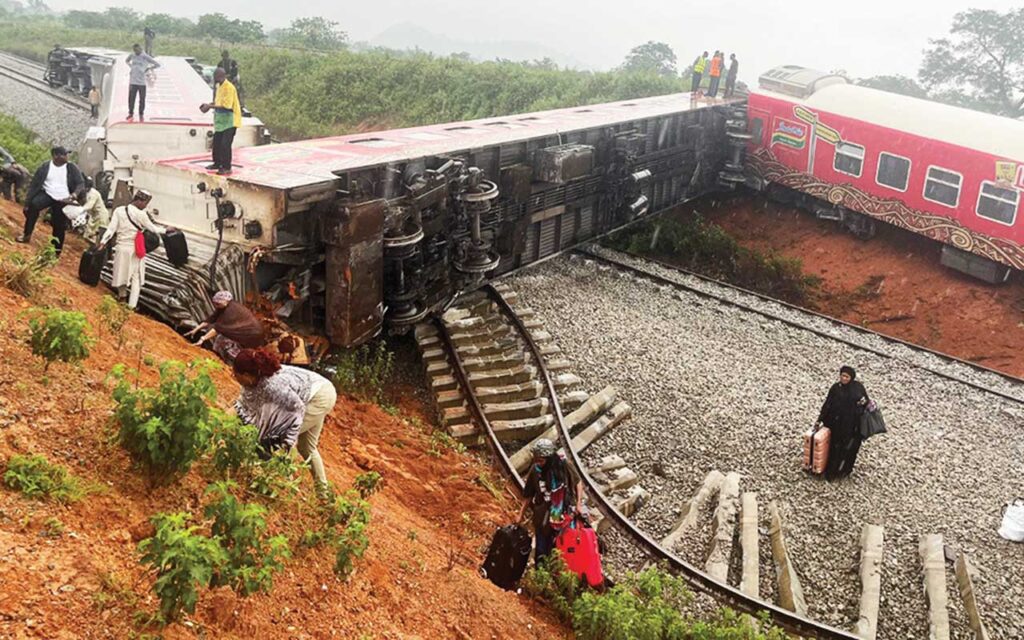
This marks the second derailment at Asham Station in just over a year. The NSIB noted further lapses, including Nigerian Railway Corporation (NRC) staff relying solely on initial training without refresher courses, as well as the unavailability of essential tools and spare parts from the Original Equipment Manufacturer (OEM).
Although no fatalities were recorded among the 618 passengers onboard, the bureau described the incident as a serious safety breach. It has issued immediate recommendations such as replacing all compromised sleepers, installing OEM-standard point switches along the corridor, and restoring defective monitoring equipment, including CCTV systems and communication devices.
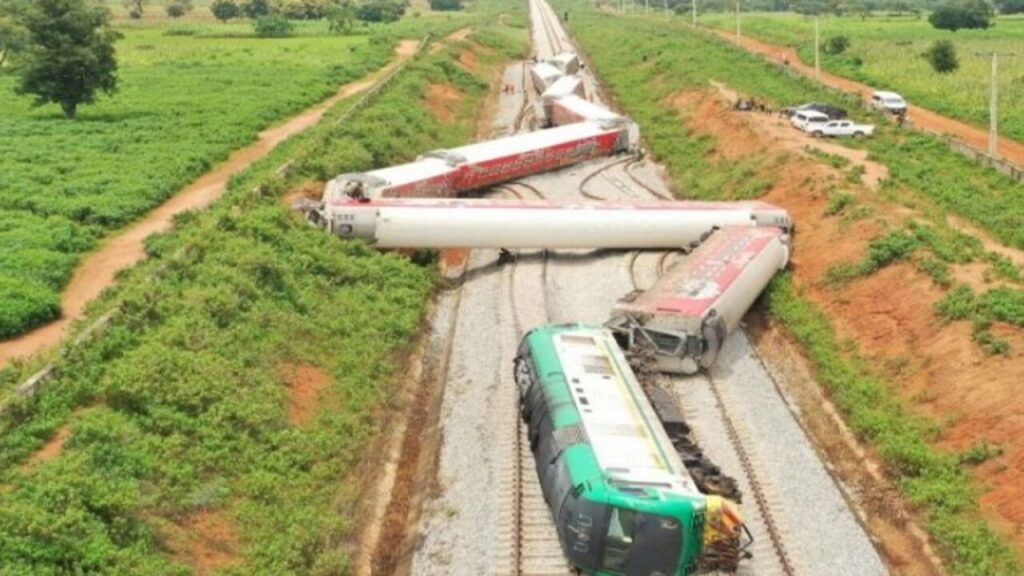
Investigators plan to carry out a technical inspection of Asham Station’s turnout and switch mechanism, review the derailed locomotives and coaches, and analyze operational records like speed logs, signal reports, and communication transcripts. Passenger and eyewitness accounts will also form part of the review.
The bureau stressed that the current findings remain preliminary, with a final report expected to deliver comprehensive conclusions and further safety measures aimed at preventing future derailments.
What you should know
The Abuja–Kaduna train derailment injured 21 passengers but claimed no lives. Preliminary findings point to poor maintenance and a broken track switch. The NSIB has urged urgent repairs, staff retraining, and equipment restoration.
A final report is expected to outline stronger safety measures to protect Nigeria’s busiest rail corridor.